


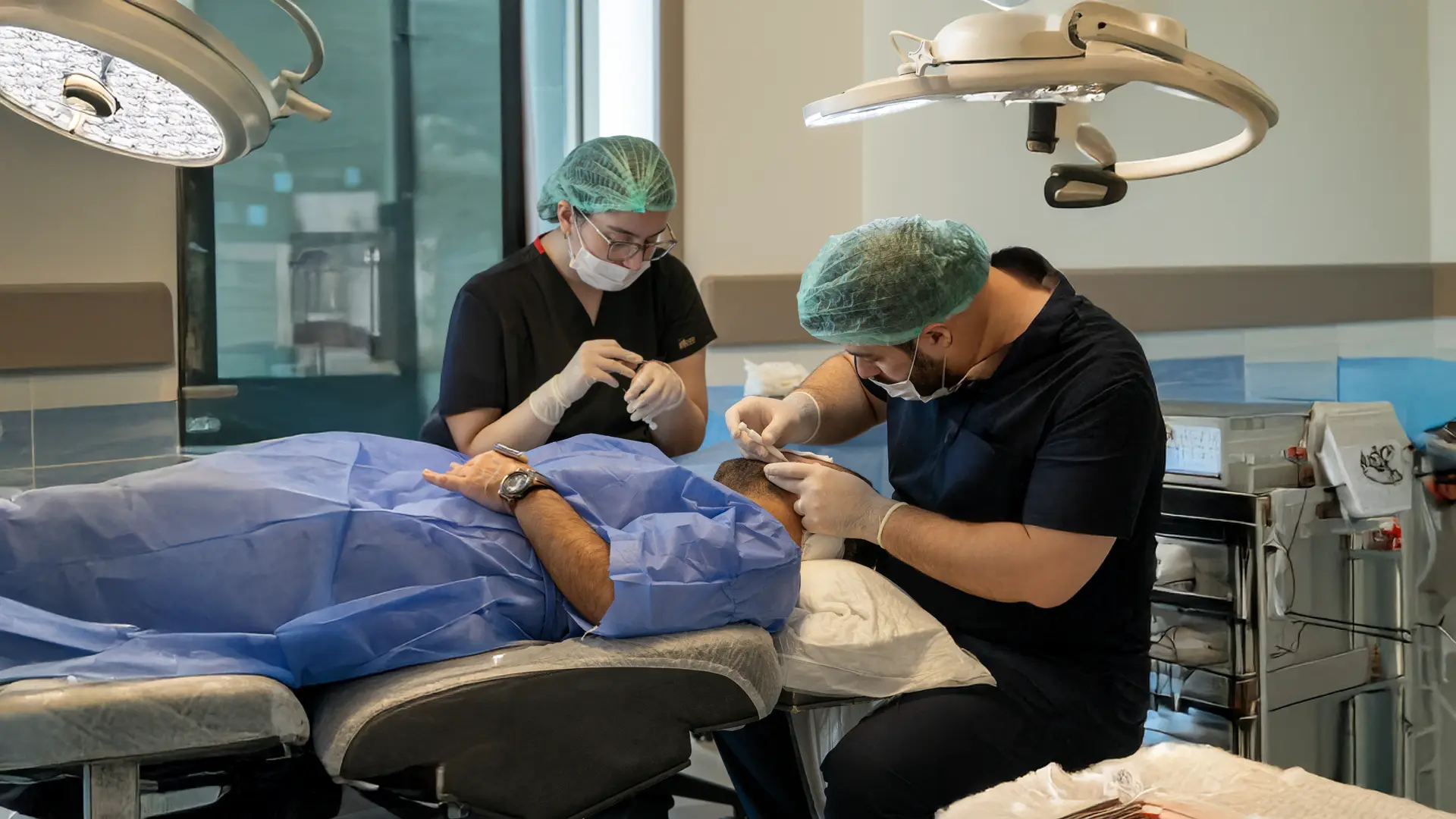
A beard is more than a small detail of one’s appearance. It is an important feature that defines the facial contours and adds balance and character to the overall expression. When the beard has gaps or grows unevenly, beard transplantation can help create a new design suited to the person’s facial shape and preferred style.
The procedure involves carefully placing hair follicles at angles that match the beard’s natural growth direction. Every stage, from designing the beard line to distributing the density evenly, is planned individually. The goal is not only to create a fuller beard but also to achieve a natural and aesthetically balanced result that complements the facial features.
| About Beard Transplantation | Details |
|---|---|
| Procedure Duration | Approximately 4–8 hours |
| Anesthesia | Local anesthesia |
| Donor Area | Usually the back of the scalp |
| Techniques Used | FUE or DHI |
| Recovery Period | Initial recovery usually takes 7–10 days |
| Return to Daily Activities | Within a few days for most people |
| Growth of New Hair | Usually begins within 3–4 months |
To learn more about the beard transplant process in Turkey, the available options, and the points to consider, read our article about beard transplant in Turkey.
What Is a Beard Transplant?
A beard transplant is a hair follicle transplantation procedure performed to address thinning or gaps in the beard, moustache, chin, and sideburn areas. Healthy hair follicles are usually taken from the back of the scalp and placed individually into areas designed according to the person’s facial features.
During transplantation, attention is given to the natural growth direction, angle, and density of the beard hair. The aim is to create a balanced, natural-looking beard that complements the facial features. After the recovery period, the transplanted follicles enter their natural growth cycle, and the growing beard can be trimmed, shaved, and styled as desired.
Who Is Suitable for a Beard Transplant?
Beard transplantation may be considered by people who want to address sparse or uneven facial hair and create a beard design that complements their facial features. The procedure may be particularly suitable for:
- People with sparse or uneven beard growth
- Those with gaps in the beard, moustache, or sideburn areas
- People who have not developed sufficient beard growth due to genetic factors
- Those who want to reshape their beard line
- People who want to conceal scars caused by injuries, burns, or previous procedures
- Those with a sufficient number of healthy hair follicles in the donor area
Suitability is determined by evaluating the person’s general health, skin type, existing beard characteristics, and the availability of sufficient hair follicles in the donor area. A specialist assessment before the procedure is important for establishing realistic expectations and designing a beard that complements the facial features.
Which Areas of the Face Can Be Transplanted?
Facial hair transplantation is not limited to increasing the density of the entire beard. Different areas of the face can be planned separately according to the person’s needs and desired appearance:
- Cheeks: To fill sparse areas and create a more balanced density
- Jawline: To define the beard borders and emphasise the facial contours
- Chin area: To fill localised gaps, increase density in the centre of the beard, and create a more balanced appearance
- Moustache area: To address sparse growth and shape the moustache line
- Sideburns: To create a more seamless transition between the scalp hair and beard
- Areas with wounds or scars: To reduce the visibility of scars with beard hair in suitable cases
The natural growth direction and angle of facial hair differ in each area. For this reason, the recipient areas are planned by considering the existing beard structure and facial anatomy, and the follicles are placed to blend with the natural beard.
What Techniques Are Used for Beard Transplantation?
One of the most commonly used methods for beard transplantation is the FUE technique. In this method, hair follicles are usually extracted individually from the donor area at the back of the scalp using specialised micro punches. The collected follicles are then placed in the required areas according to the planned design and the beard’s natural growth direction.
The follicles may be placed using the channel-opening method or the specialised implanter pens used in the DHI technique. The appropriate method is determined according to the size of the recipient area, the number of follicles required, the skin type, and the targeted density. In addition to the technique used, placing the follicles at the correct angles, directions, and distribution is essential for achieving a natural appearance.
Beard Transplant Procedure Steps
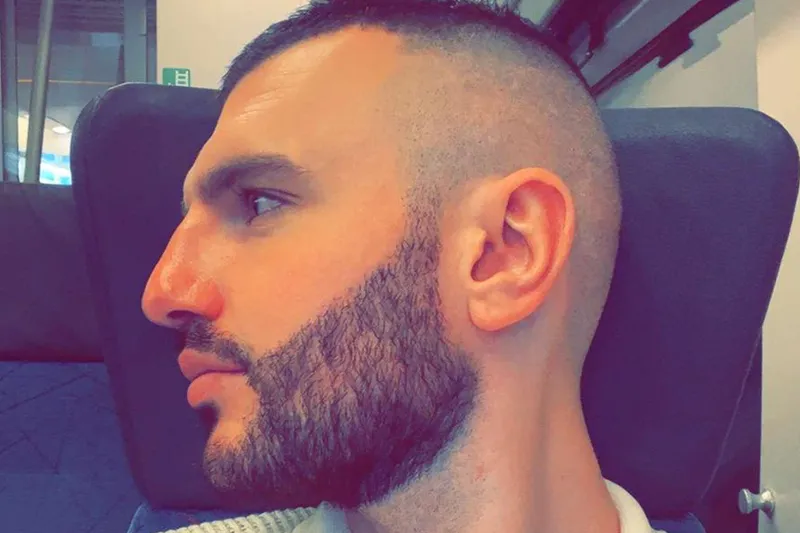
A beard transplant consists of several main stages planned according to the person’s facial structure and expectations. Each stage aims to preserve the natural growth direction, achieve the appropriate density, and create a design that complements the facial features.
Total Time: 4 hours
Consultation and Planning
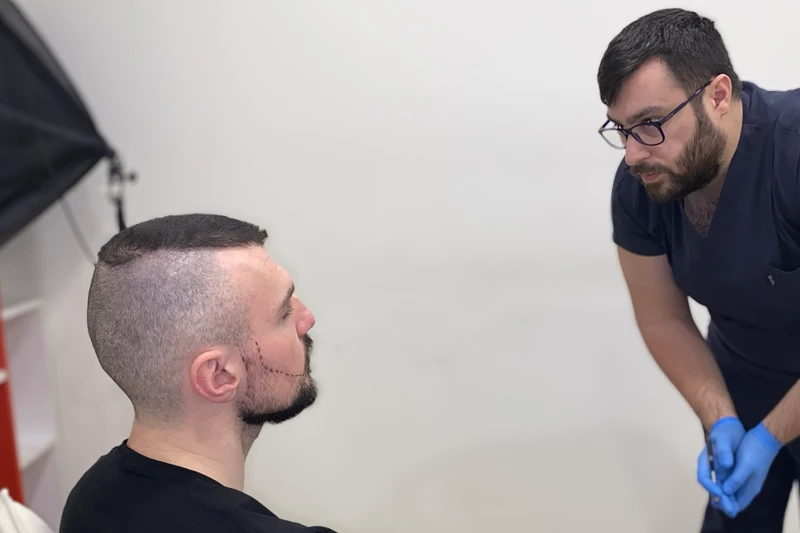
The existing beard structure, the areas requiring transplantation, and the hair follicles in the donor area are assessed. A beard line and target density suited to the person’s facial features are then determined.
Donor Area Assessment and Follicle Extraction
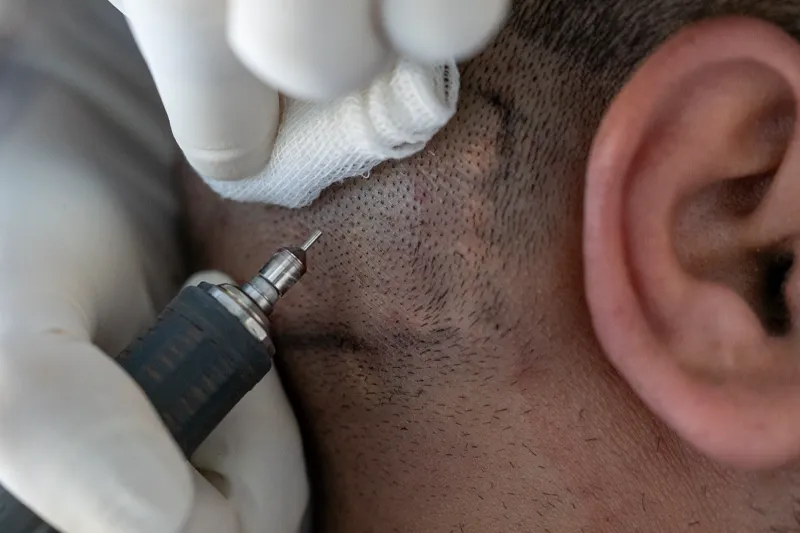
The donor area, usually located at the back of the scalp, is assessed in terms of follicle density, structure, and suitability for transplantation. Once the appropriate follicles have been identified, the area is prepared and local anesthesia is applied. Healthy hair follicles are extracted individually using micro punches and stored under suitable conditions until implantation.
Recipient Area Preparation and Follicle Implantation
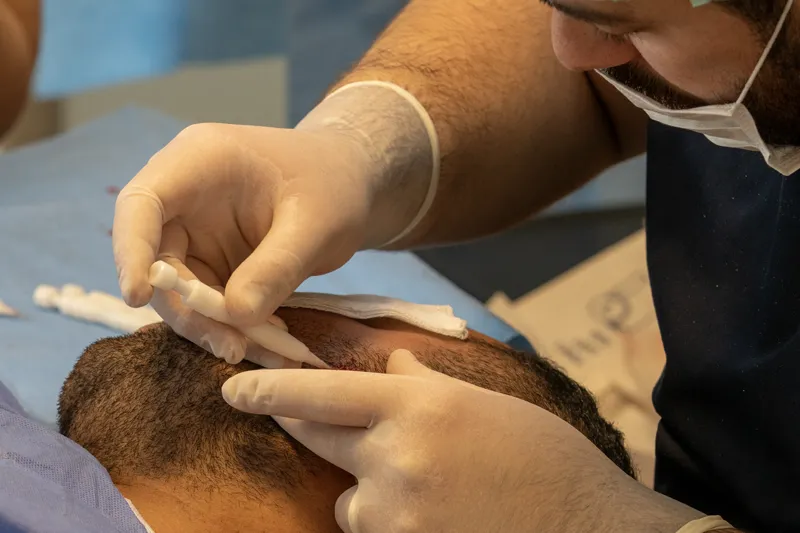
The recipient area is prepared according to the planned beard design, and local anesthesia is applied. The implantation points are planned by considering the growth direction and angle of the existing beard and the targeted density. The collected follicles are then placed individually into these areas. Special care is taken to create softer transitions along the beard line for a natural and balanced appearance.
Post-Procedure Check and Recovery
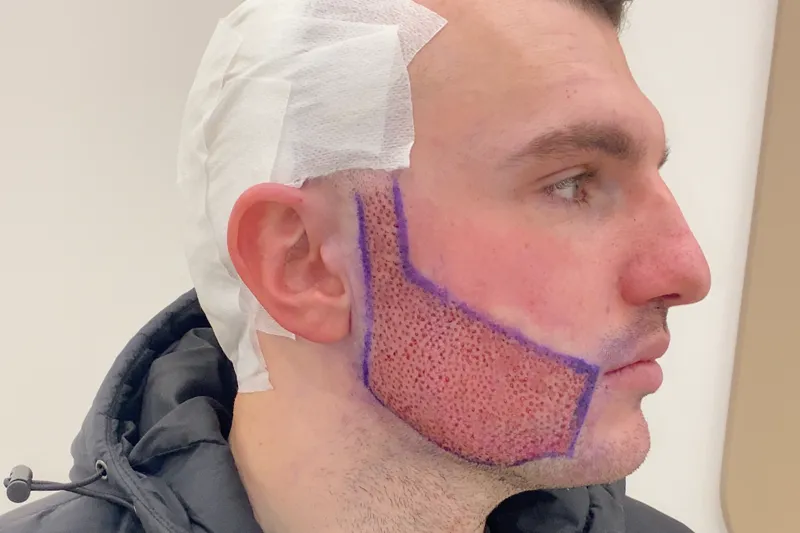
After implantation is completed, the donor and recipient areas are checked, and aftercare instructions are provided. Redness and small scabs that may appear during the first few days gradually decrease as healing progresses.
Estimated Cost: 1450 EUR
How Many Grafts Are Needed for a Beard Transplant?
The number of grafts required for a beard transplant varies according to the size of the recipient area and the targeted beard density. In some cases, 50–100 grafts may be sufficient to fill a small gap or cover a limited scar. When reshaping a large section of the beard or planning a full beard transplant, the required number may reach approximately 3,000 grafts.
Density is not the only consideration when determining the number of grafts. The existing beard structure, facial features, natural transitions along the beard line, and donor-area capacity are also taken into account. The precise number is therefore determined after a detailed assessment and personalised beard design before the procedure.
Beard Design and Beard Line Planning
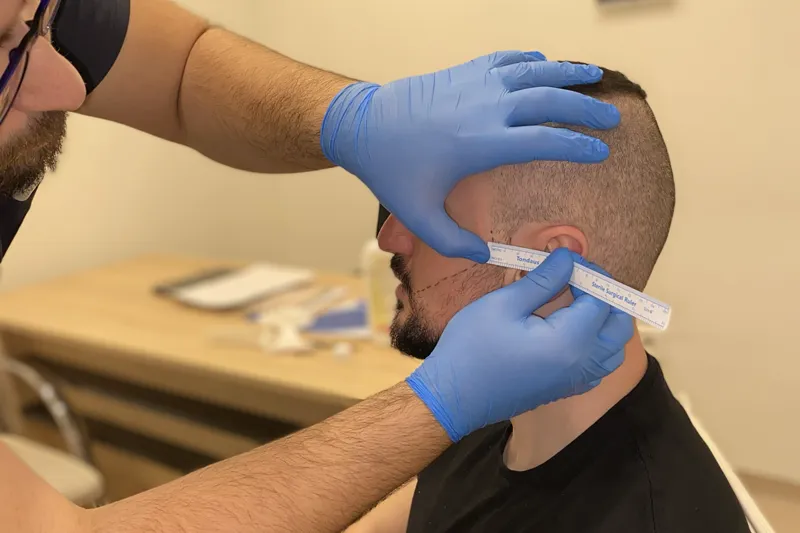
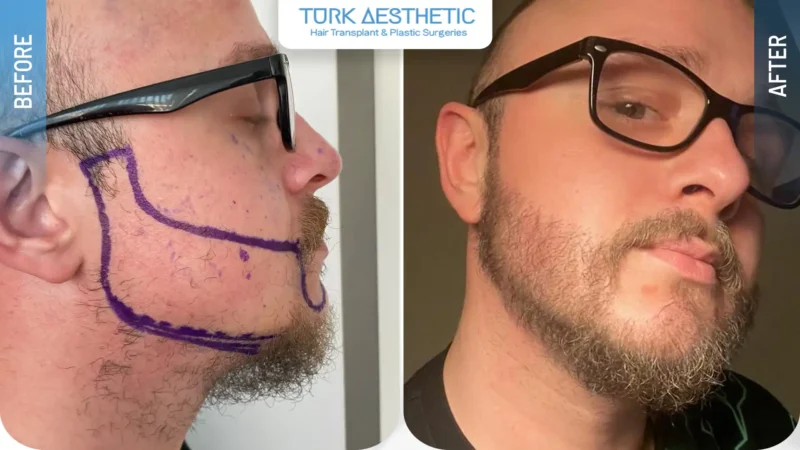
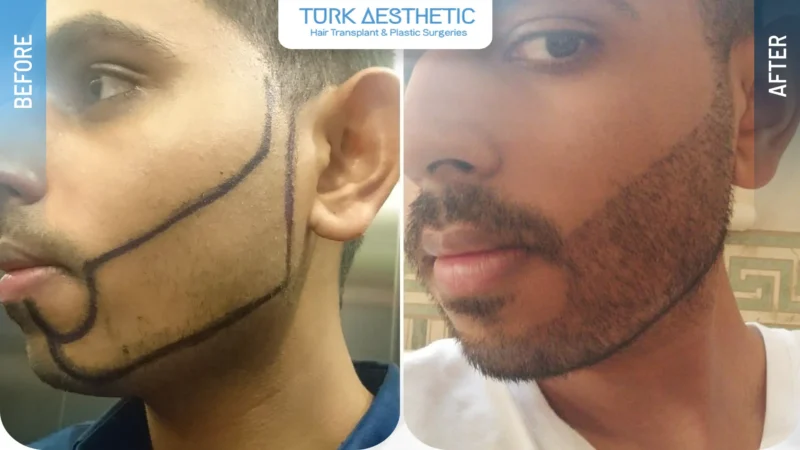
The beard is designed by considering the facial shape, jawline, existing beard structure, and the person’s preferred appearance. Finer follicles are used along the front line, with density increased gradually to prevent the beard line from appearing overly sharp or artificial. Placing the follicles at the correct angles and directions is important for helping the transplanted beard blend with the existing hair and appear natural.
What Should Be Considered Before a Beard Transplant?
Proper preparation before a beard transplant can help the procedure progress more comfortably and support the recovery process. The main points to consider before the procedure include:
- Inform the specialist about any medications being used and existing health conditions.
- Do not stop taking blood-thinning medications without a doctor’s approval.
- Follow the instructions provided regarding smoking and alcohol consumption before the procedure.
- Do not apply creams, lotions, or cosmetic products to the skin on the day of transplantation.
- Eat a light meal and wear comfortable clothing before the procedure.
- Do not shave the beard area unless instructed by the clinic.
Additional preparation may be required depending on the person’s health condition. It is therefore important to follow the personalised pre-procedure instructions carefully.
How to Care for the Area After a Beard Transplant
Aftercare instructions should be followed carefully to protect the transplanted follicles and support a healthy recovery process. Particular attention should be given to the following points during the first few days:
- Do not touch, scratch, or apply pressure to the transplanted area.
- Perform the first wash at the time and in the manner recommended by the clinic.
- Do not remove the scabs; allow them to fall off naturally.
- Prevent the transplanted area from touching the pillow while sleeping.
- Avoid strenuous exercise, excessive sweating, steam baths, saunas, and swimming for the recommended period.
- Protect the transplanted area from direct sunlight.
- Use the prescribed medications and care products as instructed.
Redness, sensitivity, and small scabs may appear during the first few days. Recovery can vary from person to person, and the specialist should be contacted if any unusual symptoms occur.
Beard Growth Timeline After Transplantation
The transplanted follicles undergo a natural healing and growth process after the procedure. Results do not appear immediately; the beard’s appearance develops gradually over several months.
- First 7–10 days: The recipient area begins to heal as redness and small scabs gradually decrease.
- First 1–2 months: Some of the transplanted hairs may shed temporarily. This does not mean that the follicles have been lost.
- Months 3–4: New beard hairs begin to grow. They may initially appear fine and sparse.
- Month 6: Beard density increases, and the transplanted hairs become more noticeable.
- Months 9–12: The hairs become thicker, and an appearance close to the final result emerges.
The growth rate and the time required for the results to become noticeable may vary according to the person’s skin type, recovery process, and the characteristics of the transplanted follicles.
Beard Transplant Results
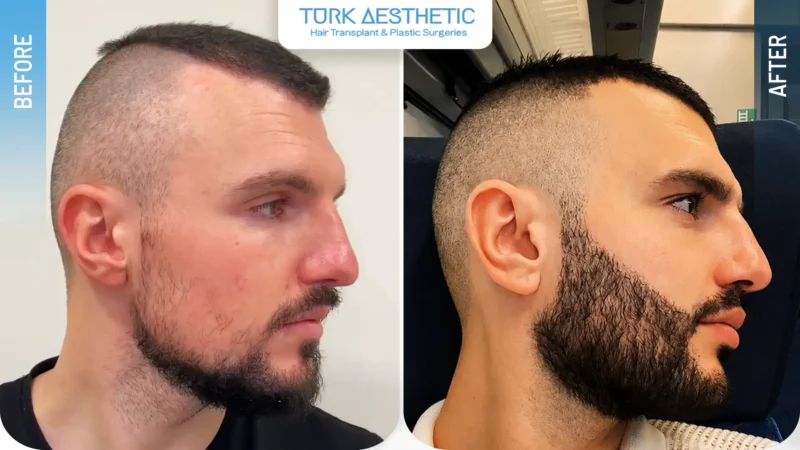
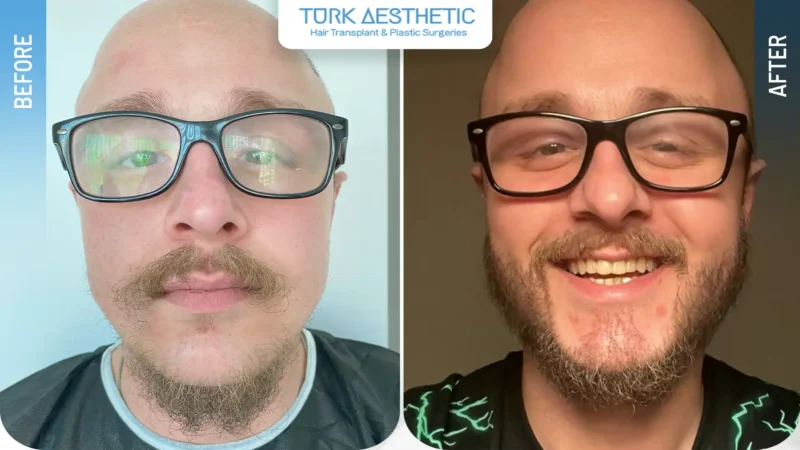
The outcome of a beard transplant is influenced by accurate planning, appropriate graft selection, and placement according to the natural growth direction. Once the healing and growth processes are complete, the aim is for the transplanted hairs to blend with the existing beard, for the beard line to complement the facial features, and for the density to appear balanced.
The beard hairs growing from the transplanted follicles behave like natural hair and can be trimmed, shaved, and styled as desired. Since the resulting density and appearance vary from person to person, results should be evaluated according to the individual’s donor-area capacity and existing beard structure.
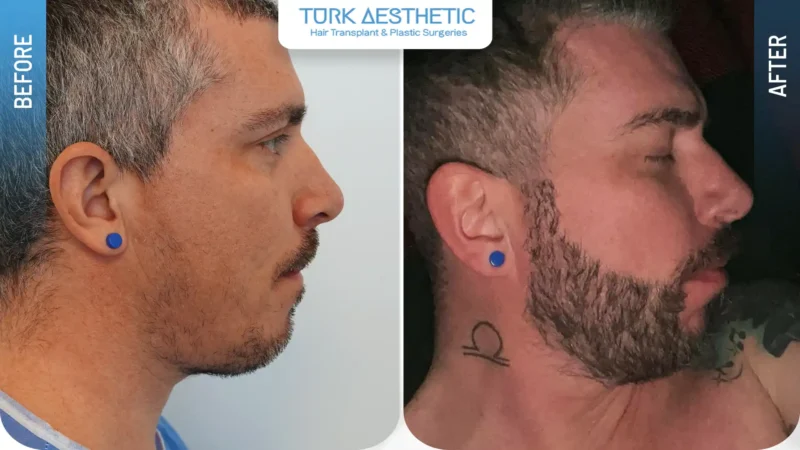
Beard Transplant Before and After
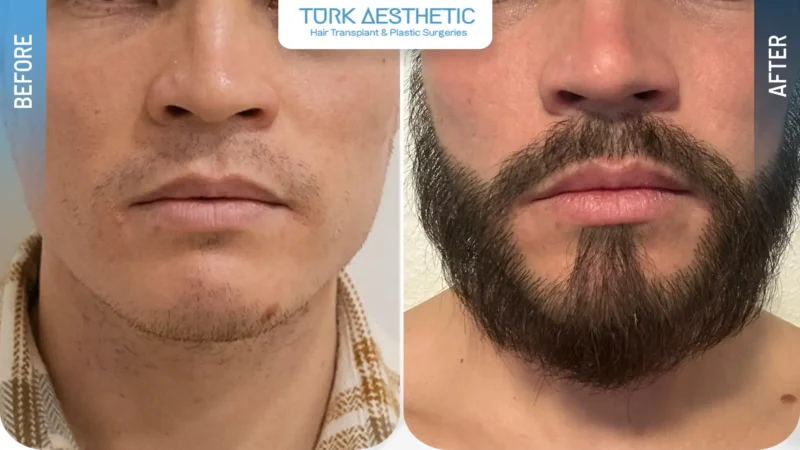
The before-and-after photos below present examples of results achieved for different beard structures and transplantation needs. Results may vary from person to person depending on donor-area capacity, the number of grafts transplanted, skin type, and the recovery process.
What Are the Advantages of a Beard Transplant?
A beard transplant is a personalised procedure that aims not only to fill sparse areas but also to create a beard appearance that is more balanced and better suited to the facial features. Its main advantages include:
- It can help fill gaps in the beard, moustache, and sideburn areas.
- It allows the beard line to be redesigned according to the shape of the face.
- Density can be planned according to the person’s existing beard structure and expectations.
- Once the transplanted hairs grow, they can be trimmed, shaved, and styled.
- In suitable cases, beard hair may help reduce the visibility of scars caused by injuries or burns.
- Implantation at the correct angles and directions can create an appearance that blends with the existing beard.
- Since the person’s own hair follicles are used, the beard continues its natural growth cycle.
The outcome may vary from person to person depending on donor-area capacity, skin type, the technique used, and the recovery process.
What Are the Possible Side Effects of a Beard Transplant?
As beard transplantation is a surgical procedure, some temporary effects and, in rare cases, complications may occur afterward. Possible effects include:
- Redness, sensitivity, or swelling in the recipient and donor areas
- Small scabs around the transplanted follicles
- Temporary itching or numbness
- Inflammation of the hair follicles or acne-like spots
- Some grafts not developing as expected
- Irregular angles or directions of beard hair growth
- Less common complications such as infection, scarring, or changes in skin colour
Having the procedure planned by an experienced specialist and following the aftercare instructions may help reduce the risks. The clinic or doctor should be contacted if severe pain, increasing redness, discharge, fever, or any unexpected symptoms occur.
Frequently Asked Questions About Beard Transplantation
Is a beard transplant permanent?
Yes, a beard transplant is generally permanent. After recovery, the transplanted follicles grow naturally, and the hair can be trimmed or shaved.
Is a beard transplant painful?
The procedure is performed under local anesthesia, so discomfort is generally limited during transplantation. Mild sensitivity or tightness may occur afterward.
How long does a beard transplant take?
The procedure usually takes between 4 and 8 hours, depending on the number of grafts required and the size of the recipient area.
When does transplanted beard hair begin to grow?
New beard hair usually begins to appear from the third or fourth month. Increased density and an appearance close to the final result may take approximately 9–12 months.
Can I shave after a beard transplant?
The beard should not be shaved until the recipient area has healed. The specialist’s recommendations regarding the timing and method of the first shave should be followed.
Does a beard transplant leave scars?
With methods such as FUE, follicles are extracted individually using micro punches, so the likelihood of noticeable scarring is generally low. However, healing characteristics, skin type, and the technique used may affect the result.
How many grafts are used in a beard transplant?
While 50–100 grafts may be sufficient for small gaps or limited scars, filling larger areas or creating a full beard may require approximately 3,000 grafts. The precise number is determined through an individual assessment.