


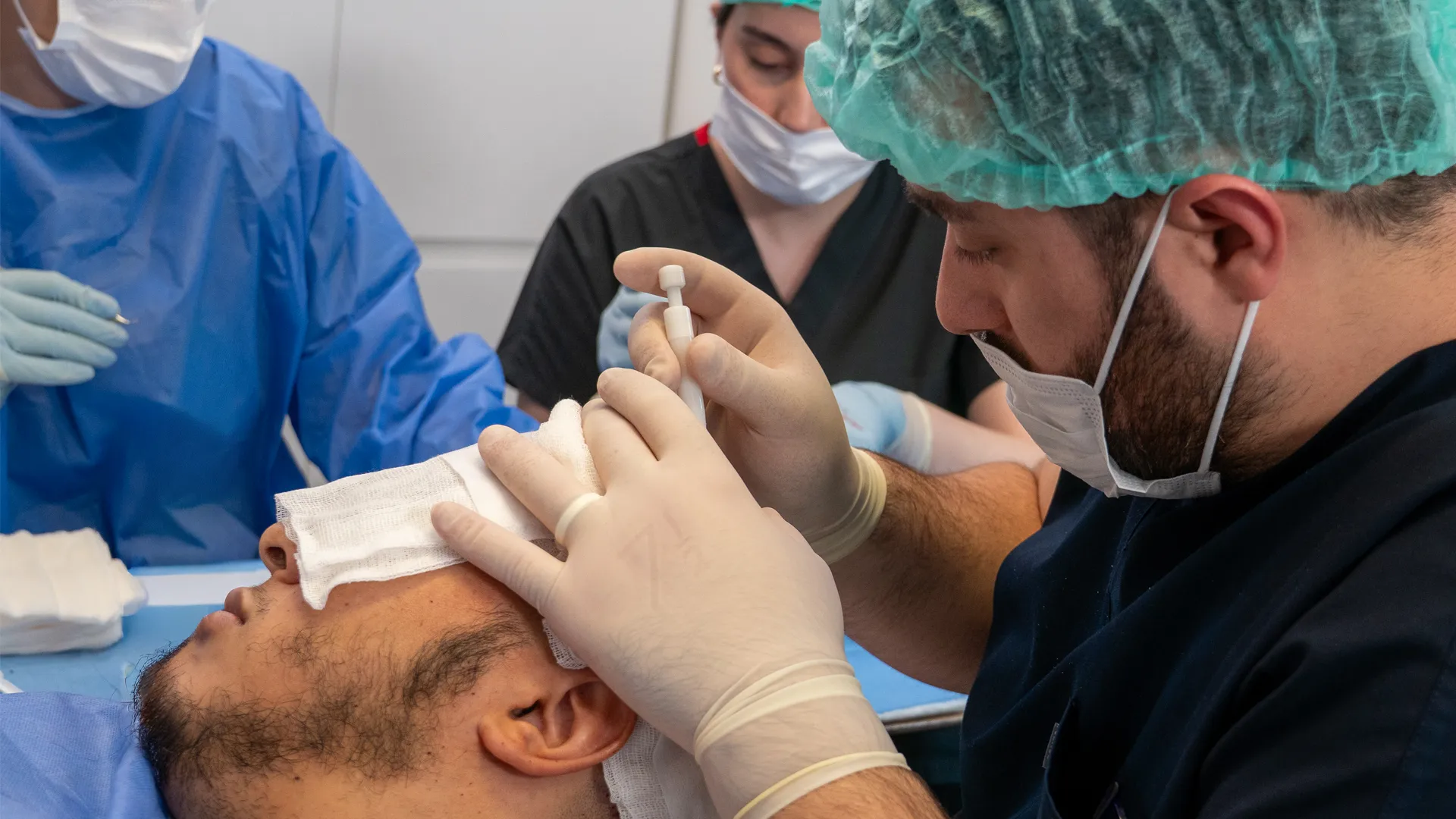
DHI hair transplant is one of the most advanced techniques used to restore hair with natural and precise results. This method involves implanting hair follicles directly using a specialized tool, allowing full control over the angle, direction, and density of the hair during transplantation. Since no pre-made channels are required, it helps achieve a denser and more natural-looking outcome, making it a preferred option for many patients.
| Technique | DHI Hair Transplant |
| Anesthesia | Local anesthesia |
| Procedure Duration | 6–8 hours |
| Number of Grafts | Varies by patient |
| Initial Results | After 3–4 months |
| Final Results | Within 9–12 months |
| Recovery Time | A few days |
For information about pricing, special offers, and treatment options, visit our DHI Hair Transplant in Turkey page. It provides detailed information to help you plan your treatment.
What is DHI Hair Transplant?
DHI (Direct Hair Implantation) is one of the most advanced hair transplant techniques. Hair follicles are extracted from the donor area and implanted directly using a specialized device known as the Choi Pen. Unlike conventional techniques, DHI does not require channels to be created before implantation. Channel creation and implantation are performed simultaneously, minimizing tissue trauma and helping achieve more precise and natural-looking results. For this reason, DHI is considered one of the most advanced hair transplant techniques available today.
Who Is a Suitable Candidate for DHI Hair Transplant?
This technique may be suitable for many people, especially those who:
- Have genetic hair loss
- Want to increase hair density in specific areas
- Require high precision when designing the front hairline
- Prefer natural-looking results
This technique can also be used to restore small areas or improve the results of a previous hair transplant procedure.
Advantages of DHI Hair Transplant
DHI stands out among modern hair transplant techniques thanks to the following advantages:
- High precision:
Provides precise control over the hair’s angle and direction, helping achieve a natural appearance. - No channel creation required:
Hair follicles are implanted directly, minimizing trauma to the tissue. - Higher density:
Allows more grafts to be implanted within the same area. - Shorter graft out-of-body time:
Helps preserve the vitality and survival of the hair follicles. - Natural-looking results:
The transplanted hair closely matches the natural growth pattern.
How Is a DHI Hair Transplant Performed?
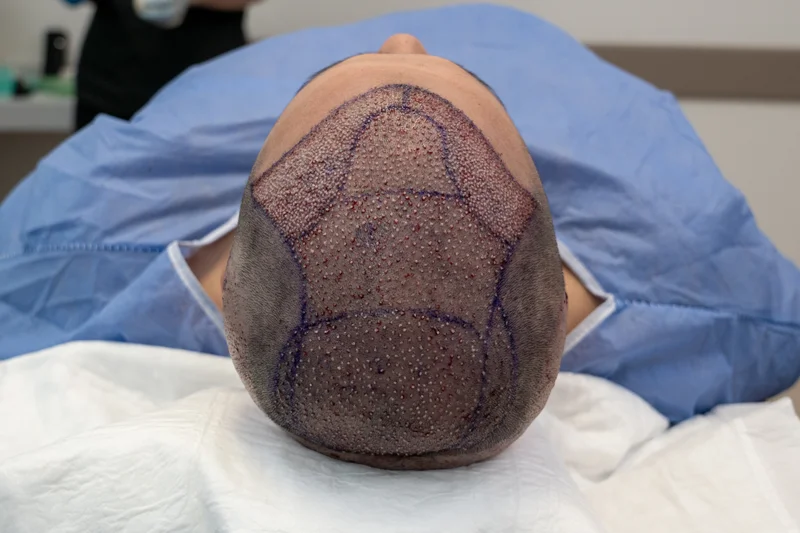
A DHI hair transplant is a step-by-step procedure planned according to the patient’s hair characteristics and individual needs. From the initial consultation to follicle implantation and post-operative care, each stage is performed with precision. The DHI hair transplant process generally consists of the following six steps.
Total Time: 8 hours
1. Consultation and Personalized Planning
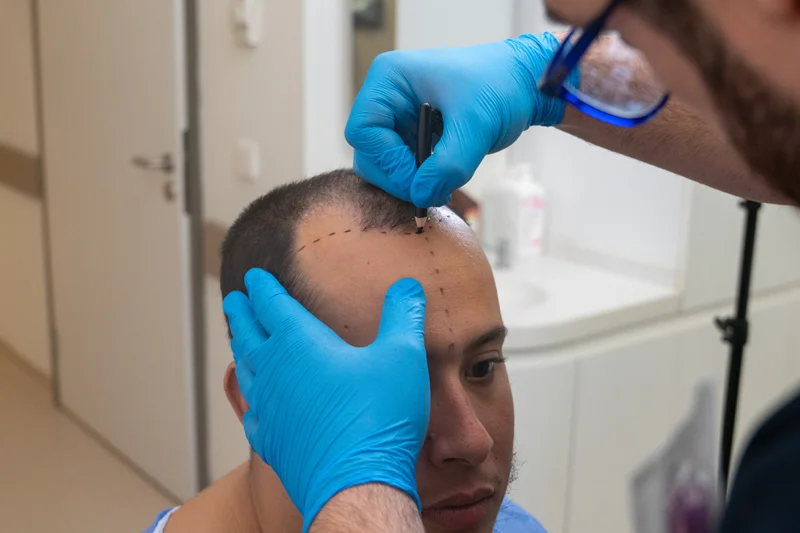
The procedure begins with an assessment of the patient’s hair loss pattern, donor area density, and hair follicle quality. After the necessary blood tests, a natural hairline is designed according to the patient’s facial features and expectations. The number of grafts and the treatment plan are also determined at this stage.
2. Preparation and Local Anesthesia
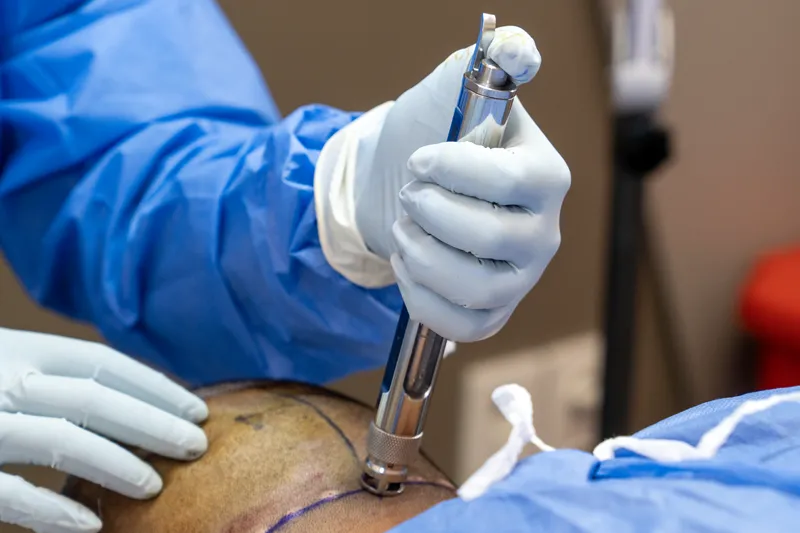
Before the procedure, the hair is prepared according to the treatment plan and the surgical areas are disinfected. Local anesthesia is then applied to both the donor and recipient areas, allowing the patient to remain comfortable throughout the procedure.
3. Graft Extraction from the Donor Area
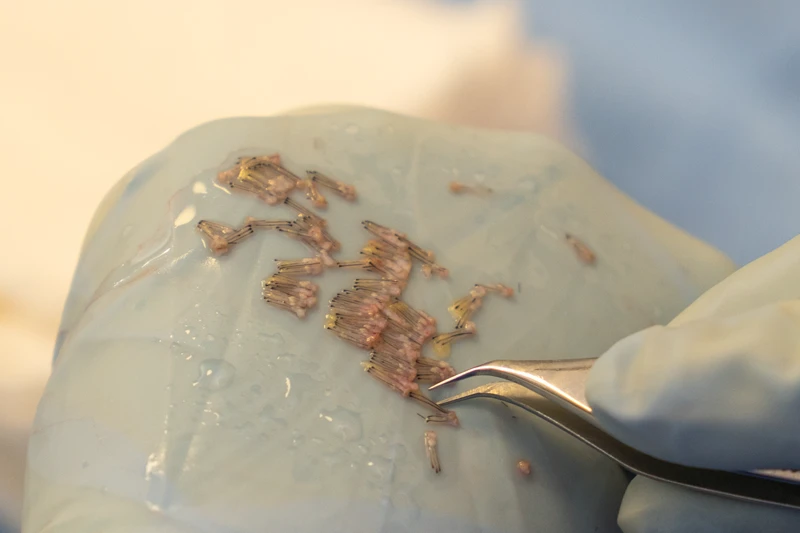
Hair follicles are individually extracted from the donor area, usually the back of the scalp, using a micromotor device. The grafts are carefully examined, sorted according to their characteristics, and preserved under optimal conditions until implantation.
4. Preparation of the DHI Implanter Pens
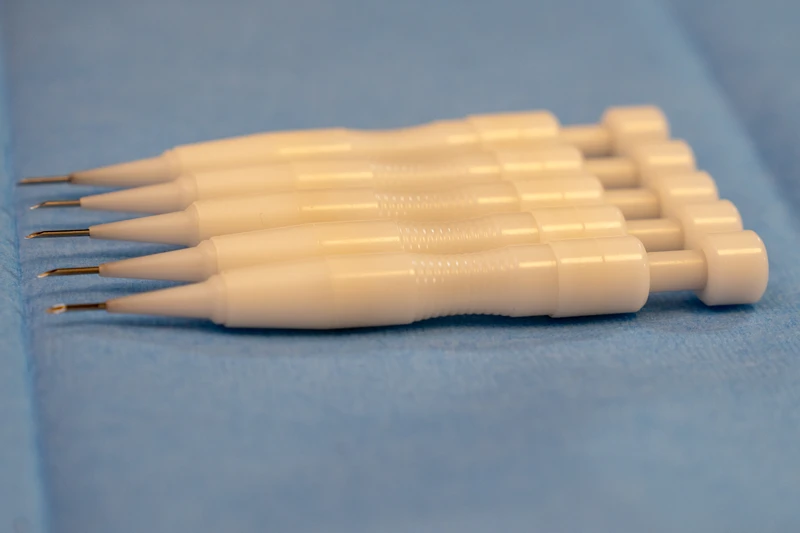
The harvested grafts are individually loaded into the specialized DHI implanter pens at the appropriate angle and position. This preparation helps ensure precise implantation while minimizing the risk of damage to the follicles. The pen tips are selected according to the thickness of the grafts.
5. Direct Hair Follicle Implantation
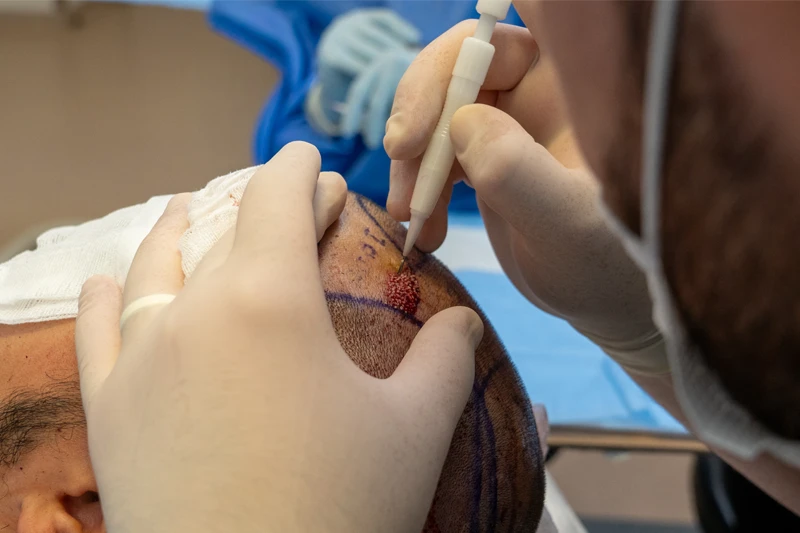
The prepared grafts are implanted directly into thinning or bald areas using the DHI implanter pens. In this technique, channel creation and implantation are performed simultaneously. The angle, direction, and density of the hair are carefully controlled to achieve a natural and balanced appearance.
6. Post-Operative Care and First Follow-Up
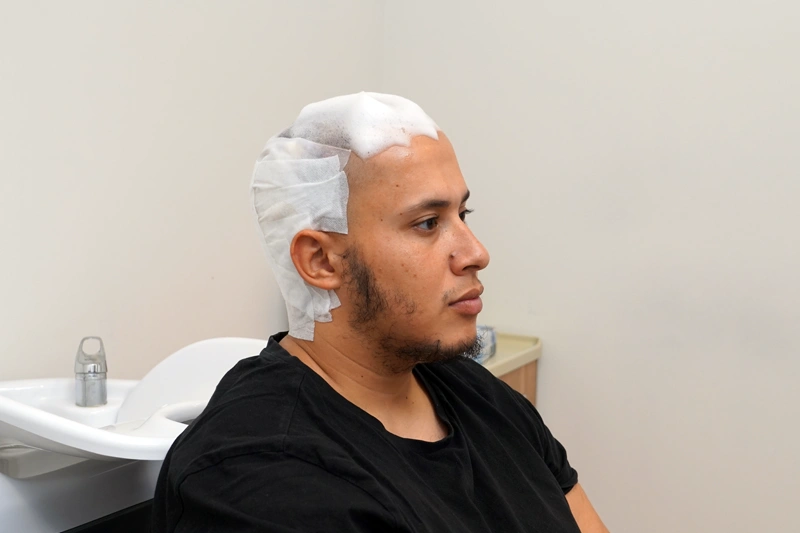
After the implantation is completed, the donor area is dressed and the transplanted area is checked. The patient receives detailed instructions regarding sleeping position, medication, the first hair wash, and scalp care. The timing of the first follow-up and hair wash is determined according to the patient’s condition and treatment plan.
Estimated Cost: 1450 EUR
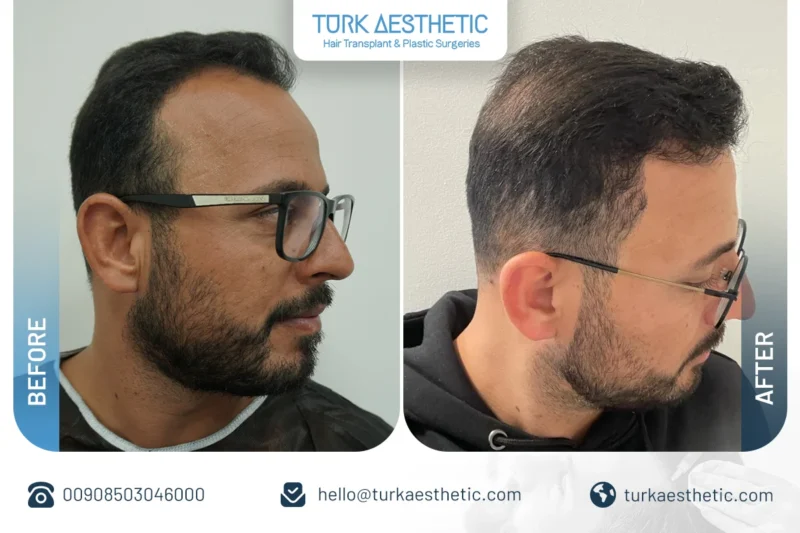
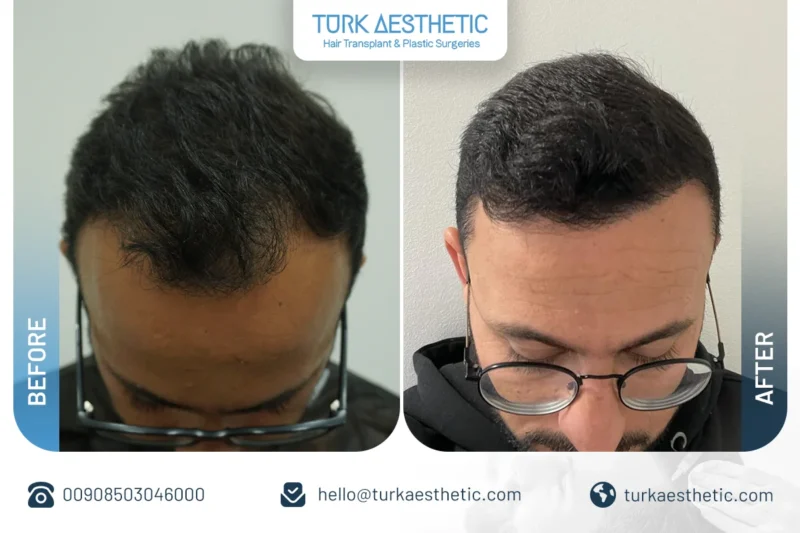
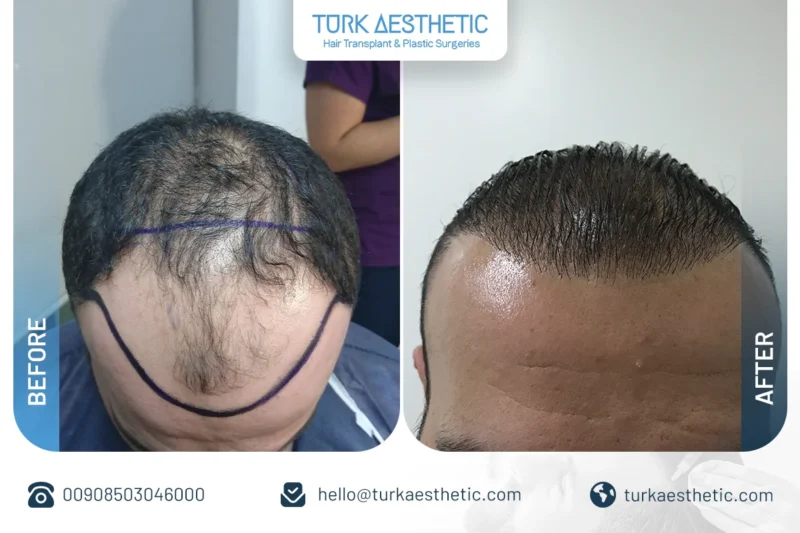
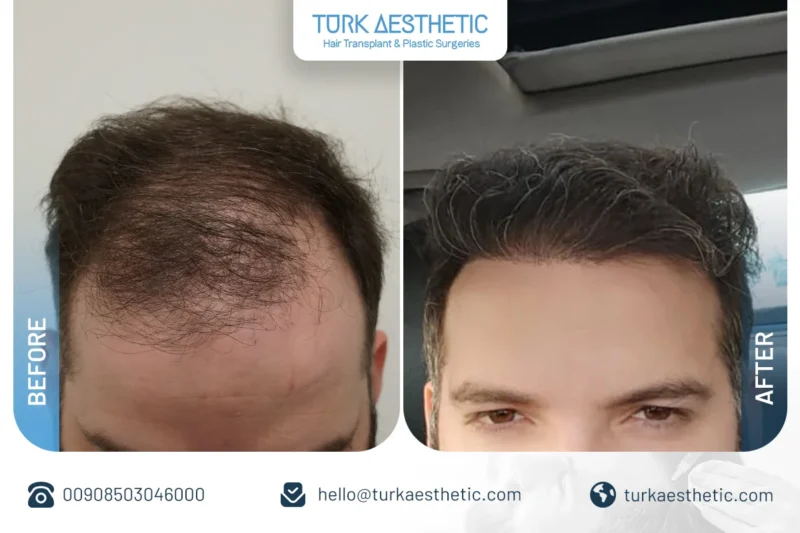
Before and After DHI Hair Transplant
The results of a DHI hair transplant vary depending on the number of grafts implanted, the quality of the donor area, the degree of hair loss, and the individual’s healing process. During the first few weeks, the transplanted follicles enter the healing phase, and temporary shock loss may occur. New hair growth usually begins around the third month, gradually becomes denser, and the final outcome is typically evaluated within 9–12 months.
What Should You Do Before a Hair Transplant?
To achieve the best possible results, the following recommendations should be followed before the procedure:
- Avoid smoking for several days before the procedure.
- Stop taking blood-thinning medications only as advised by your doctor.
- Get enough sleep and rest before the procedure.
- Follow all instructions provided by the medical team.
What Should You Do After a Hair Transplant?
The post-operative care process plays a key role in achieving successful results:
- Avoid touching the transplanted area.
- Follow the recommended hair washing instructions.
- Avoid strenuous physical activities during the first few days.
- Follow your doctor’s recommendations throughout the recovery period.
What Is the Difference Between DHI and FUE?
DHI and FUE are the two most widely used hair transplant techniques. In the FUE technique, channels are created after the hair follicles are extracted, and the grafts are then implanted. In contrast, DHI uses the Choi Implanter Pen to implant the grafts directly without creating channels beforehand, allowing greater control over the angle, direction, and density of the hair.
The most suitable technique depends on the degree of hair loss, the size of the treatment area, and the desired outcome. You can learn more about hair transplant methods on our general hair transplant page, and the table below summarizes the main differences between DHI and FUE.
| Feature | DHI | FUE |
|---|---|---|
| Implantation Method | Direct implantation with the Choi Pen | Implantation after channel creation |
| Density | Higher density | Suitable for larger areas |
| Procedure Duration | Longer | Shorter |
| Angle Control | Very high | Moderate |
| Results | Highly natural | Natural |
Frequently Asked Questions About DHI Hair Transplant
Is the DHI procedure painful?
No. The procedure is performed under local anesthesia, so patients do not feel pain during the operation. Mild tenderness may occur afterward but usually subsides within a few days.
How long does the procedure take?
The procedure usually takes between 6 and 8 hours, depending on the number of grafts being transplanted.
Are the results permanent?
Yes. The transplanted hair follicles are generally permanent when proper aftercare instructions are followed.
When can I return to daily activities?
Most patients can return to light daily activities within a few days, although strenuous activities should be avoided for a while.
Is this technique suitable for everyone?
Not always. The most appropriate technique is determined after an individual medical evaluation.
Is it necessary to shave the entire head for a DHI hair transplant?
No. In suitable cases, DHI hair transplantation can also be performed without shaving or with only partial shaving.
Is This Technique Right for You?
DHI is an advanced hair transplant technique for those seeking natural-looking results with high precision. However, the most suitable method should always be determined through an individual consultation.
If you are considering a hair transplant, a specialist evaluation can help determine the most appropriate technique for your needs.
Get a Free Assessment
Send us photos of your scalp, and our specialists will prepare a personalized treatment plan for you.