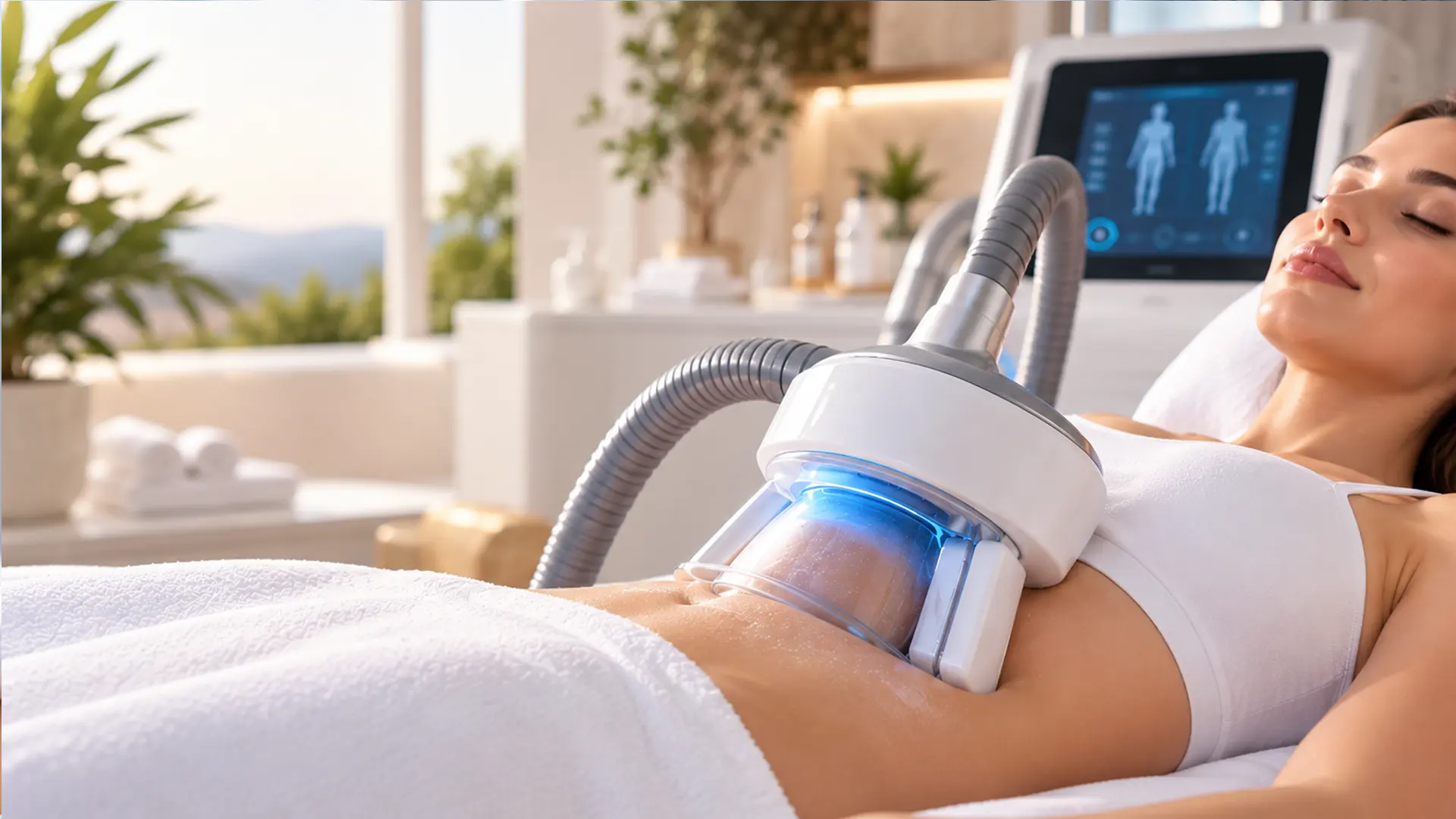
Fat freezing in Turkey is one of the non-surgical options available to local and international patients looking to reduce stubborn fat in specific areas of the body. Also known as cryolipolysis, this treatment uses controlled cooling technology to target subcutaneous fat in areas such as the abdomen, waist, hips, and thighs.
Istanbul is a popular destination for non-surgical aesthetic treatments, attracting patients from other Turkish cities and abroad. For those considering fat freezing, the treatment areas, type of device used, number of sessions, and overall cost are important factors to consider before making a decision.
Why Choose Fat Freezing in Turkey?
Turkey offers a range of surgical and non-surgical aesthetic treatments. In Istanbul, people looking to reduce localized fat without taking much time away from their daily routines may consider fat freezing. Cryolipolysis is among the non-surgical aesthetic treatments in Turkey.
Some of the main reasons patients consider fat freezing in Turkey include:
- Non-surgical treatment: No surgical incisions or general anesthesia are required.
- Targeted fat reduction: The treatment can focus on stubborn fat deposits in specific areas, such as the abdomen, waist, and hips.
- Relatively short treatment time: Sessions are usually completed within a limited period, depending on the treatment area and device used.
- Return to daily activities: Most patients can resume their usual activities after the session.
- Accessibility of Istanbul: International flight connections can make travel planning easier for patients coming from abroad.
However, fat freezing is not a weight-loss treatment. It is primarily intended to reduce localized fat deposits in selected areas of the body.
Fat Freezing Prices in Turkey
Fat freezing prices in Turkey can vary depending on the treatment area, device used, and extent of the procedure. For patients comparing prices in Istanbul, one important consideration is whether the quoted cost covers a single area or multiple treatment areas.
For example, treating only the lower abdomen may be priced differently from treating the abdomen and waist together. Some areas may also require more than one applicator.
Factors Affecting Fat Freezing Costs in Turkey
- Treatment area: The size and characteristics of the area being treated.
- Number of areas: Whether treatment involves one area or several parts of the body.
- Device used: The cooling technology and features of the treatment applicators.
- Session plan: Whether additional treatment sessions may be needed.
Patients planning fat freezing in Istanbul through Turk Aesthetic can request a preliminary assessment and pricing information by specifying the areas they would like treated. The final cost is provided once the treatment plan has been clarified.
Fat Freezing in Istanbul
Fat freezing in Istanbul is one of the available options for people considering non-surgical localized fat reduction. However, treatment outcomes do not depend on the device alone. Appropriate patient selection, correct applicator placement, and a medical assessment before the procedure are also important.
For international patients, a fat freezing session may be arranged during a short visit to Istanbul. Although the procedure generally does not require a hospital stay, the final results do not appear immediately. It is therefore helpful to discuss the follow-up plan before treatment.
Fat Freezing in Turkey: Treatment Process for International Patients
For patients traveling to Turkey for cryolipolysis, the process can be organized from the initial assessment before travel through to post-treatment follow-up.
1. Online Preliminary Assessment
Patients can share the areas they wish to treat, their expectations, and relevant medical history. When necessary, photographs may be used for an initial assessment. However, the final decision about treatment suitability is made after an in-person clinical evaluation in Istanbul.
2. Consultation and Treatment in Istanbul
Upon arrival in Istanbul, the target areas and appropriate treatment approach are assessed. A fat freezing session may then be scheduled for suitable patients. The procedure generally does not require an overnight hospital stay.
3. Post-Treatment Follow-Up
Patients receive instructions on what to consider after their session. Because results develop gradually over time, follow-up may be supported through online consultations when appropriate. Unexpected symptoms may require an in-person medical assessment.
Why Turk Aesthetic?
Turk Aesthetic provides consultation and appointment coordination support for local and international patients planning aesthetic treatments in Istanbul. Patients interested in fat freezing in Turkey can request assistance with treatment options and appointment planning.
- Personalized preliminary assessment: The patient’s expectations and preferred treatment areas are taken into consideration.
- Appointment coordination in Istanbul: Assistance with arranging consultations and treatment sessions.
- Pricing information: Preliminary cost information is provided based on the proposed treatment.
- Multilingual communication: Communication support is available in different languages for international patients.
- Follow-up support: Assistance with post-treatment communication and arranging any necessary check-ups.
Suitability for cryolipolysis and the appropriate treatment plan are determined through an assessment by a qualified healthcare professional.
Frequently Asked Questions About Fat Freezing in Turkey
How much does fat freezing cost in Turkey?
Prices vary depending on the treatment area, device used, and session plan. The final cost is confirmed once the treatment requirements have been established.
How many fat freezing sessions are needed in Turkey?
The number of sessions depends on the treatment area and the patient’s expectations. One session may be sufficient for some patients, while others may be advised to consider additional sessions after assessment.
Can I travel on the same day after fat freezing in Turkey?
The procedure generally does not require hospitalization, and most patients can return to their daily activities on the same day. However, flight and travel plans should take the patient’s health condition and any post-treatment symptoms into account.