


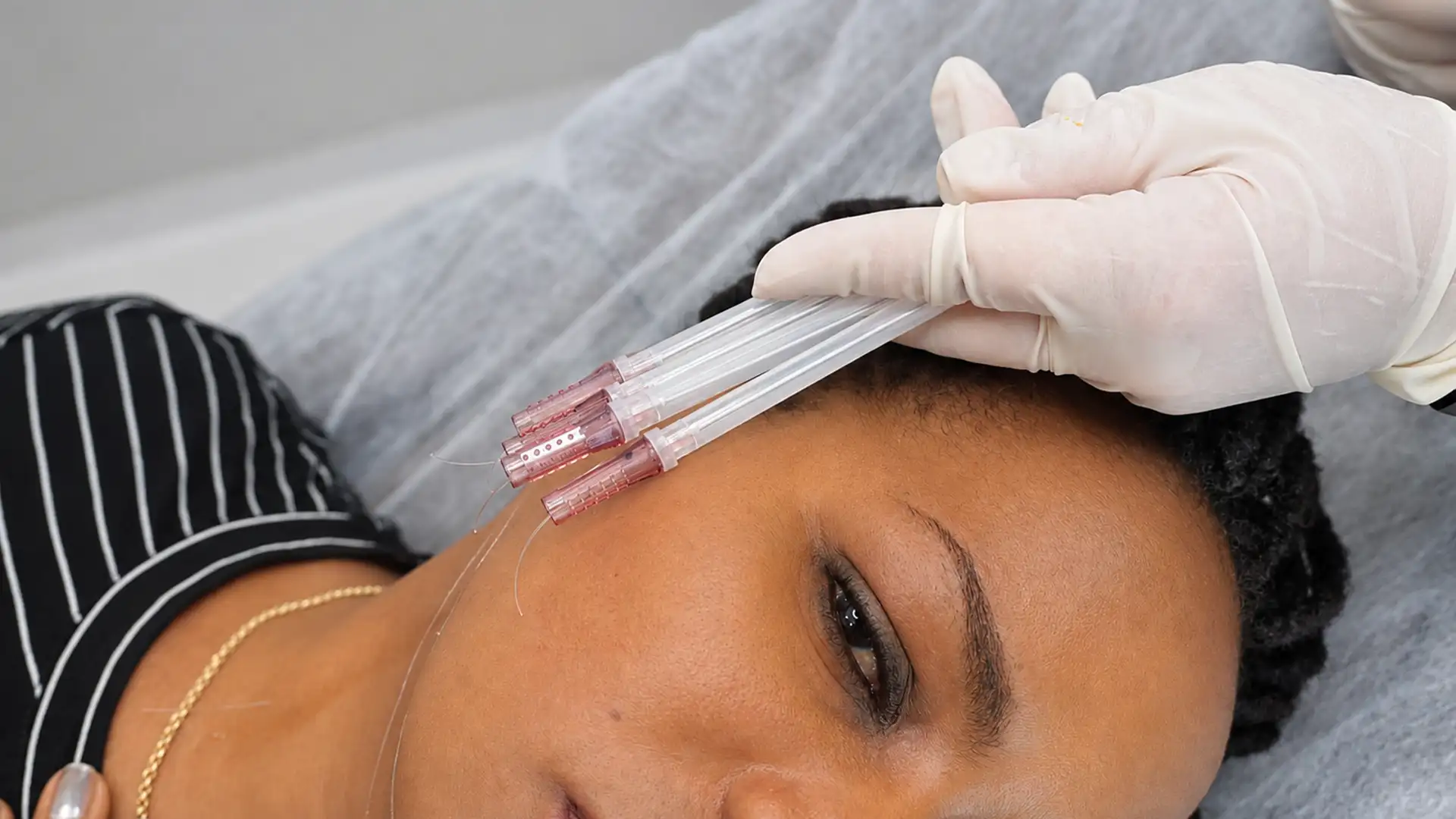
Thread lift is a non-surgical aesthetic procedure designed to reduce mild to moderate skin sagging in the face and neck and improve facial definition. During the procedure, special medical threads are placed beneath the skin to support the tissues and provide a subtle lifting effect in suitable patients.
Also known as a thread facelift, this technique aims to improve the appearance of loose tissues, particularly around the cheeks, jawline and facial contours, while preserving natural facial expressions. The results depend on the individual’s skin characteristics, degree of sagging and the properties of the threads used.
| Purpose | Reduce mild to moderate facial sagging |
| Procedure duration | Usually 30–60 minutes |
| Anesthesia | Usually local anesthesia |
| Treatment areas | Cheeks, jawline, facial contours and other areas in suitable patients |
| Hospital stay | Usually not required |
| Recovery | Swelling and bruising generally improve within a few days to several weeks |
| Results | Temporary lifting and tissue support |
For more information about the treatment process, available options in Istanbul and pricing, read our article on Thread Lift in Turkey.
What Is a Thread Lift?
A thread lift is a minimally invasive procedure that aims to support loose facial tissues using special threads placed beneath the skin. Unlike a surgical facelift, it does not involve extensive skin incisions or the removal of excess skin.
Some threads have small barbs that anchor to the tissues and create a mechanical lifting effect. Other types may stimulate a healing response in the surrounding tissues that supports collagen production.
However, this technique cannot fully correct advanced skin sagging. The degree of skin laxity and the patient’s expectations should therefore be assessed before treatment.
How Does a Thread Lift Work?
The effects of the procedure can vary depending on the structure of the threads and the tissue layer in which they are placed. There are two main mechanisms:
Mechanical Lifting Effect
Special threads that anchor to the tissues may help gently reposition loose facial tissues upward when placed in the appropriate direction. This effect can be particularly useful for mild sagging around the cheeks and jawline.
Supporting Collagen Production
Some absorbable threads may support collagen production by triggering a controlled healing response in the surrounding tissues. Over time, this process may contribute to changes in skin quality. However, the degree of collagen response varies from person to person.
Which Areas Can Be Treated with a Thread Lift?
The procedure can be planned to improve the appearance of mild tissue laxity in different areas of the face.
- Cheeks: Reduce the appearance of mild downward tissue displacement and support cheek contours.
- Jawline: Help create a more defined facial outline.
- Lower face: Improve the appearance of mild laxity around the corners of the mouth.
- Eyebrow area: Provide a subtle lifting effect in suitable patients.
- Neck: Support mild skin laxity in selected patients.
The same type of thread or technique is not used for every area. Because of the location of facial nerves, blood vessels and other anatomical structures, treatment should be planned by an experienced medical practitioner.
Who Is a Suitable Candidate for a Thread Lift?
This procedure is generally considered for people with mild to moderate facial laxity who prefer to avoid surgery and may benefit from a limited lifting effect.
Suitability may be assessed in the following situations:
- Mild sagging in the cheeks.
- Reduced jawline definition.
- Mild looseness along the facial contours.
- A preference for a modest lifting effect without surgery.
- Acceptance of temporary results and the limitations of the procedure.
People with advanced sagging, significant excess skin or particularly heavy facial tissues may not achieve the desired effect. Active skin infections, bleeding disorders, certain immune system conditions, medications and factors that affect wound healing must also be evaluated.
How Is a Thread Lift Performed?
The procedure is planned according to the patient’s facial anatomy and the intended lifting direction. The number of threads, insertion points and application technique vary between individuals.
1. Examination and Marking
First, both sides of the face, skin laxity and tissue position are assessed. The insertion points and lifting directions are then identified, and markings may be made on the skin.
2. Local Anesthesia
The treatment area is cleaned and prepared with an antiseptic. Local anesthesia is usually administered to reduce discomfort during the procedure.
3. Thread Placement
The threads are inserted into the planned tissue layer using a special needle or cannula. When anchoring threads are used, appropriate tension can be applied to create a subtle lifting effect.
4. Final Check and Completion
Facial contours and symmetry are assessed. After any necessary adjustments, the insertion points are cleaned and post-treatment care instructions are provided.
Before a Thread Lift
Before the procedure, the patient’s medical history, current medications and previous aesthetic treatments should be reviewed.
- Blood-thinning medications and supplements should be disclosed to the practitioner. Prescription medications should never be stopped without medical advice.
- Inform the practitioner about any previous dermal fillers, thread lifts or facial surgeries.
- The procedure may need to be postponed if there is an infection, open wound or active inflammation in the treatment area.
- Plan your daily schedule with the possibility of swelling or bruising for several days after treatment in mind.
- Discuss realistic expectations and potential complications with your practitioner.
After a Thread Lift
Mild swelling, tenderness, bruising and a feeling of tightness may occur after the procedure. These symptoms usually improve gradually. During the initial period, while the threads settle into the tissues, it is important to avoid unnecessary pressure on the treated areas.
- Avoid facial massage and firm pressure on the face during the first few days.
- Avoid sleeping face down for the period recommended by your practitioner.
- Follow the recommended waiting period before returning to strenuous exercise and heavy physical activities.
- Follow instructions regarding excessive mouth opening and chewing hard foods.
- Obtain medical approval before using saunas, steam baths or undergoing other facial aesthetic treatments.
- Seek medical assessment if unexpected symptoms occur, such as increasing pain, significant redness, fever or visible threads.
Thread Lift vs. Surgical Facelift
Although both a thread lift and a surgical facelift aim to reduce facial sagging, they differ in their techniques and potential results. A thread lift provides a more limited lifting effect, while a surgical facelift offers a more comprehensive approach to correcting significant tissue sagging.
| Feature | Thread Lift | Surgical Facelift |
|---|---|---|
| Technique | Placement of special threads beneath the skin | Surgical repositioning of facial tissues |
| Suitable degree of sagging | Mild to moderate | Moderate to advanced |
| Anesthesia | Usually local anesthesia | General anesthesia or sedation |
| Procedure duration | 30–60 minutes | Usually several hours |
| Recovery | Generally shorter | Generally longer |
| Results and longevity | More limited and temporary lifting effect | More noticeable and longer-lasting results |
The most appropriate option is not determined by age alone. Skin quality, the degree of tissue sagging, facial anatomy, overall health and individual expectations should all be considered.
Thread Lift Results
After the procedure, suitable patients may notice a subtle lifting effect along their facial contours. The appearance may change over time as initial swelling and temporary tissue tightness settle. The tissues should be given sufficient time to heal before the final result is assessed.
Possible results include:
- A reduction in the appearance of mild cheek sagging.
- Improved jawline definition.
- A modest tightening effect along the facial contours.
- Gradual support of skin tissue with suitable types of threads.
Results are not permanent. Their duration depends on the type of threads, application technique, skin characteristics and the individual’s aging process. Some patients may experience a more limited lifting effect than expected.
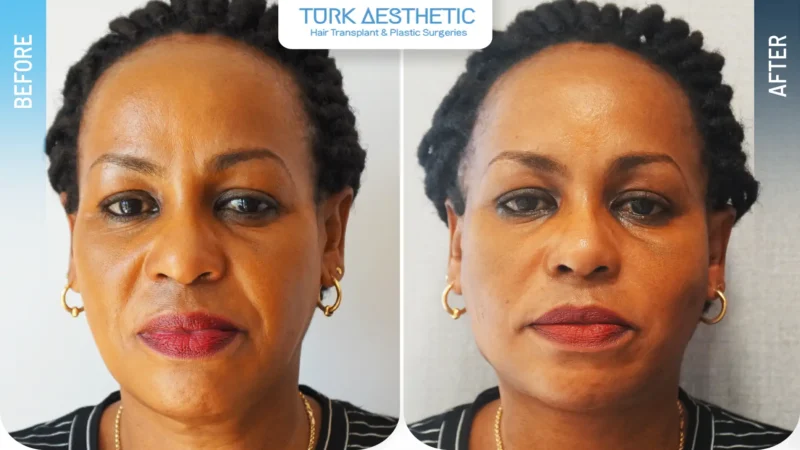
Thread Lift Before and After
Before-and-after photographs can help illustrate the potential effects of a thread lift on facial contours. However, the changes shown in photographs do not occur in the same way for every patient.
For a meaningful comparison, photographs should be taken from similar angles, with consistent lighting and comparable facial expressions. The amount of time that has passed since the procedure also affects how the results should be interpreted.
Side Effects and Risks
Although a thread lift is minimally invasive, it is not entirely risk-free. Temporary reactions may occur after treatment, and more serious complications are also possible.
- Swelling and bruising.
- Tenderness and mild pain.
- A feeling of tightness or pulling in the skin.
- Temporary facial asymmetry.
- Mild redness at the insertion points.
Frequently Asked Questions
Is a thread lift painful?
Local anesthesia is usually used. You may feel mild pressure or pulling during the procedure.
How long does the procedure take?
A thread lift usually takes 30–60 minutes, depending on the treatment area and number of threads.
How long do thread lift results last?
Results are temporary. Longevity depends on the thread type, skin characteristics and application technique.
Will my face swell after a thread lift?
Mild swelling and bruising may occur. These usually improve within a few days to several weeks.
Can the threads be felt beneath the skin?
Mild tightness may be felt initially. Persistent or significant discomfort should be medically assessed.
Can a thread lift replace facelift surgery?
No. A surgical facelift may provide more comprehensive correction for advanced sagging.
When can I return to daily activities?
Many people can resume light daily activities fairly soon. Swelling and bruising may take longer to settle.
What is the best age for a thread lift?
Suitability depends more on skin laxity, facial anatomy and overall health than on a specific age.
Can a thread lift be repeated?
Repeat treatment may be considered in suitable patients after assessing previous results and tissue condition.