


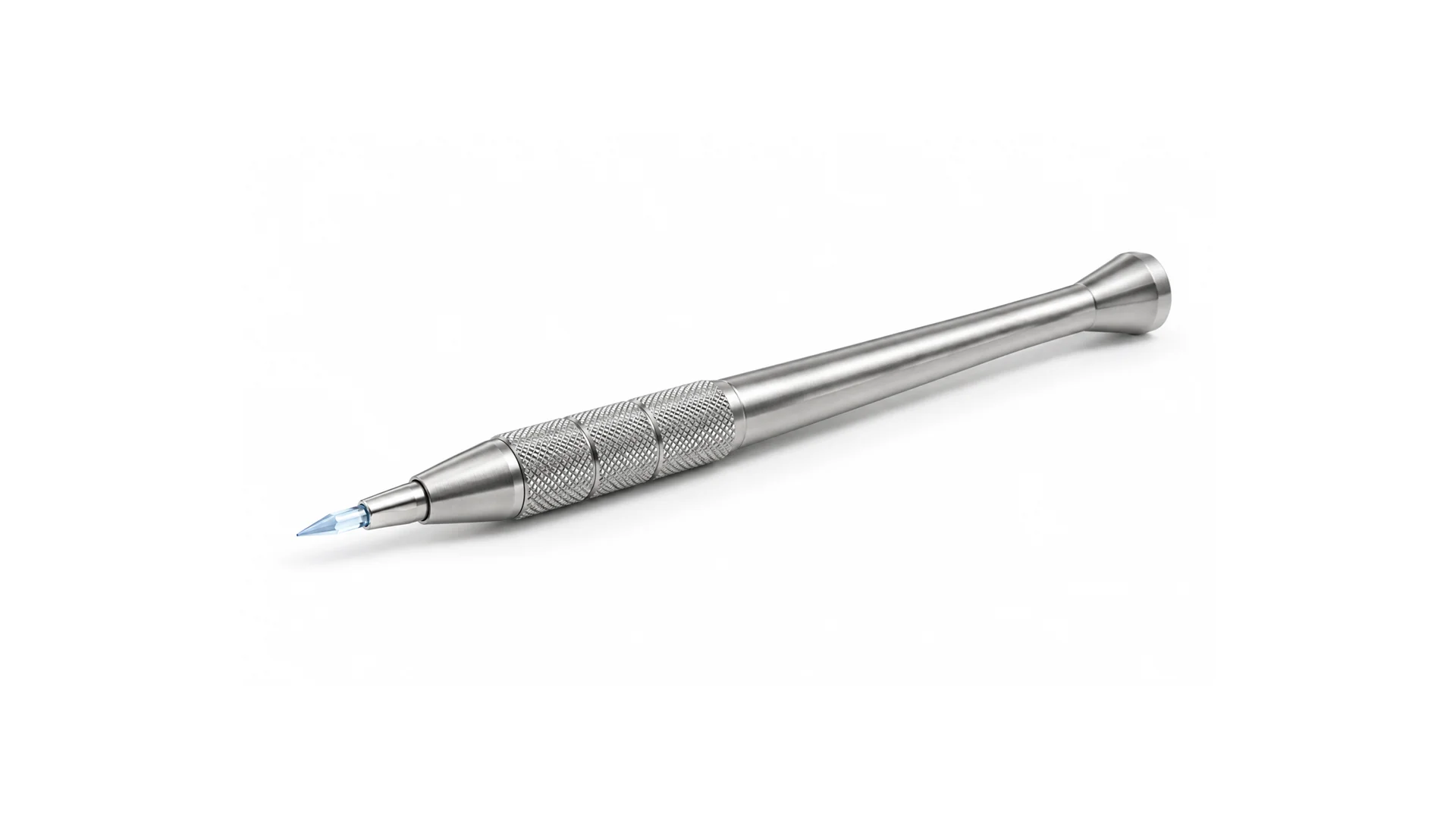
Sapphire hair transplant is a modern hair transplant method in which hair follicles are extracted from the donor area and transplanted into bald or thinning areas. In this technique, specially designed sapphire blades are used instead of steel blades to create the microchannels where the hair grafts will be placed.
The fine and precise structure of sapphire blades allows the channels to be created in a controlled manner while considering the natural direction and appropriate angle of hair growth. The procedure is generally performed under local anesthesia and planned individually according to the patient’s hair characteristics, donor area capacity, and pattern of hair loss.
| Feature | Information |
|---|---|
| Anesthesia | Local anesthesia |
| Procedure Duration | 6–8 hours |
| Technique Used | FUE + Sapphire blades |
| First Hair Wash | Usually after 1–2 days |
| Recovery Period | Approximately 7–10 days |
| Shock Loss | Usually within 1–3 months |
| New Hair Growth | Approximately after 3–4 months |
| Final Results | Usually within 12–18 months |
For more information about the procedure, travel planning, and current prices, you can visit our Sapphire Hair Transplant in Turkey page.
What Is a Sapphire Hair Transplant?
Sapphire hair transplant is a modern technique in which hair follicles are individually extracted from the donor area using the FUE method and then placed into microchannels created with sapphire blades in the recipient area. The name “Sapphire” refers to the specially designed sapphire blades used instead of metal blades during the channel-opening stage.
Available in different sizes, these blades allow small and controlled channels to be created according to the structure of the grafts. When creating the channels, the natural direction and angle of hair growth as well as the planned density are taken into consideration. This planning plays an important role in achieving a natural and well-balanced appearance.
Extraction of the follicles from the donor area is performed in a similar way to conventional FUE. The main difference lies in the channel-opening stage. Therefore, Sapphire is not a separate follicle extraction method; rather, it is an advanced approach in which grafts extracted with FUE are implanted into channels prepared with sapphire blades.
How Is the Sapphire Technique Different?
The basic stages, such as preparation, local anesthesia, and graft extraction from the donor area, are largely similar to other FUE procedures. What distinguishes the Sapphire technique is the way the microchannels in the recipient area are prepared. For detailed information about all stages of the procedure, you can visit our hair transplant page.
Extracting Hair Follicles with FUE
Hair follicles are generally extracted one by one using the FUE method from the donor area at the back of the head. Therefore, the term “Sapphire” does not refer to the graft extraction method, but to the type of blades used when creating the channels in the recipient area.
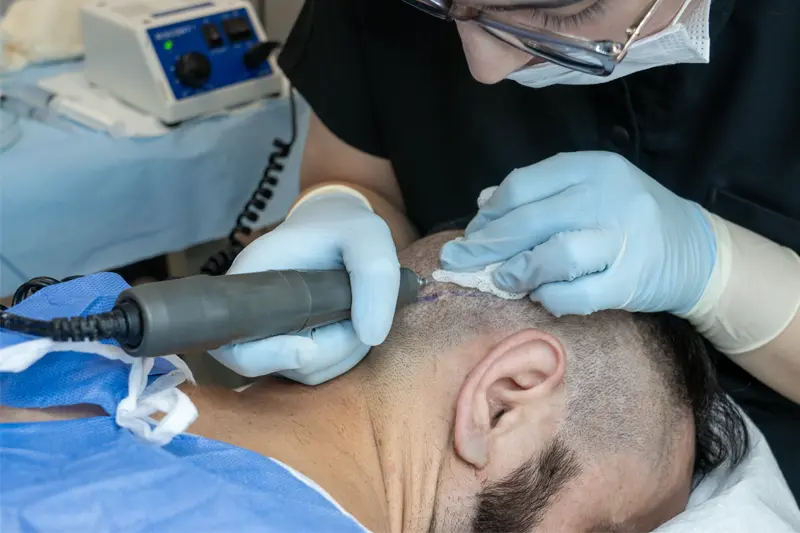
Creating Microchannels with Sapphire Blades
The channel-opening stage is the main feature that distinguishes the Sapphire technique from other FUE procedures. Small microchannels are created in the recipient area using sapphire blades selected according to the size of the grafts. The angle, direction, depth, and distribution of these channels are determined according to the existing hair structure and the previously designed hairline.
This planning is important for maintaining the natural growth direction of the transplanted hair and distributing the grafts appropriately throughout the recipient area.
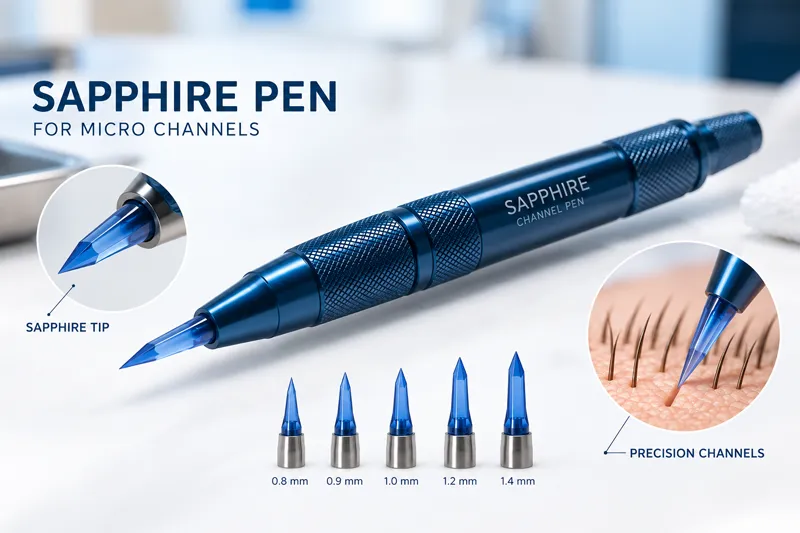
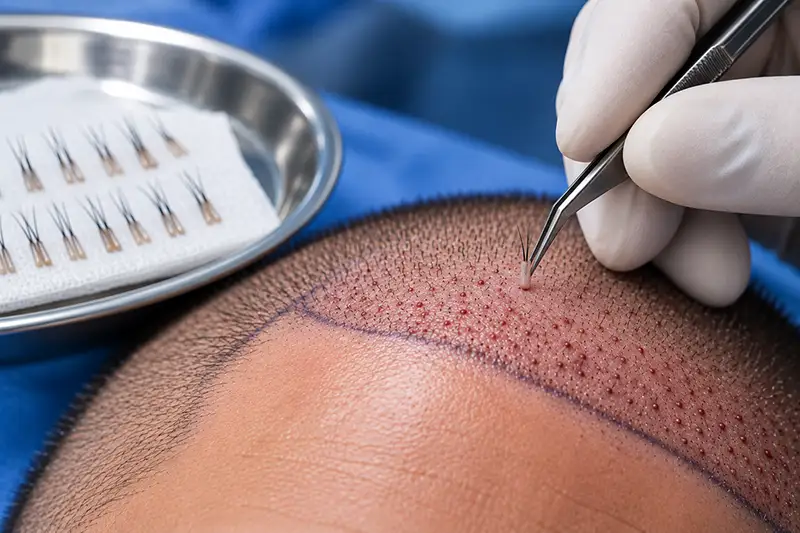
Placing the Grafts into the Opened Channels
The prepared hair grafts are placed one by one into the microchannels previously created with sapphire blades. During placement, the predetermined direction, angle, and distribution plan is followed. Proper positioning of single-hair grafts, particularly along the frontal hairline, plays an important role in achieving a more natural appearance.
Who Is Suitable for a Sapphire Hair Transplant?
Sapphire hair transplant may be suitable for men and women with established hair loss who have a sufficient number of healthy hair follicles in the donor area. Suitability for the technique is evaluated according to the type of hair loss, the size of the area to be transplanted, hair characteristics, and the capacity of the donor area.
The technique may be particularly suitable for:
- Men with male pattern hair loss,
- People with a receding or thinning frontal hairline,
- People experiencing hair loss in the crown area,
- Suitable candidates who want to increase hair density,
- People with a sufficient number of healthy hair follicles in the donor area.
However, not every type of hair loss is suitable for transplantation. In people with active or uncontrolled hair loss, certain scalp conditions, or insufficient donor capacity, the cause of hair loss and the condition of the existing hair should first be evaluated. The appropriate technique and number of grafts are determined after an individual hair analysis.
What Is the Difference Between Sapphire Hair Transplant and FUE?
The main difference between Sapphire hair transplant and FUE lies in the blades used to prepare the recipient channels rather than in the method used to extract the follicles. The grafts are individually extracted from the donor area using FUE and then placed into microchannels prepared with sapphire blades.
In traditional FUE procedures, metal blades may be used to create the channels, whereas Sapphire FUE uses sapphire blades available in different sizes. These blades allow the channels to be prepared in a controlled manner according to the structure of the grafts.
Therefore, this technique is not a completely separate follicle extraction method from FUE. The main difference is the use of sapphire blades during the channel-opening stage after the grafts have been extracted.
| Feature | Traditional FUE | Sapphire Hair Transplant |
|---|---|---|
| Graft Extraction | Using FUE | Using FUE |
| Channel Creation | With metal blades | With sapphire blades |
| Channel Size | Depends on the blade used | Sapphire blade size can be selected according to graft structure |
| Hair Direction and Angle | Determined according to the transplant plan | Determined according to the transplant plan |
| Main Difference | Standard channel-opening blades | Use of sapphire blades |
The most suitable method should not be determined solely by the type of blade used to create the channels. The pattern of hair loss, donor area capacity, required number of grafts, and size of the planned transplant area should also be considered.
What Is the Difference Between Sapphire Hair Transplant and DHI?
The main difference between Sapphire hair transplant and DHI lies in how the hair follicles are placed into the recipient area. In both methods, grafts are generally extracted one by one from the donor area using FUE, but the implantation stage is performed differently.
In Sapphire hair transplant, microchannels are first created with sapphire blades and the prepared grafts are then placed into these channels one by one. In DHI hair transplant, the grafts are loaded into a special implanter pen and inserted directly into the recipient area. This allows channel creation and graft placement to take place during the same step.
| Feature | Sapphire Hair Transplant | DHI Hair Transplant |
|---|---|---|
| Graft Extraction | Usually with FUE | Usually with FUE |
| Implantation Tool | Sapphire blades and implantation forceps | Implanter pen |
| Channel Creation | Performed before implantation using sapphire blades | No separate channel-opening stage |
| Graft Placement | Placed into previously opened channels | Inserted directly with an implanter pen |
| Planning | Channel direction, angle, and distribution are determined in advance | Angle, direction, and placement are controlled with the implanter |
Neither Sapphire nor DHI can be considered universally better for every patient. The choice depends on the size of the area to be transplanted, the density of the existing hair, the required number of grafts, donor area capacity, and the individual’s hair characteristics.
Frequently Asked Questions About Sapphire Hair Transplant
What are the advantages of this technique?
Fine sapphire blades available in different sizes help create controlled microchannels according to the structure of the grafts. Proper planning of the angle, direction, and distribution of the channels can help preserve the natural direction of hair growth and achieve balanced density.
Is the procedure painful?
The procedure is generally performed under local anesthesia, so significant pain is usually not felt during the transplant. A brief needle-prick sensation or mild discomfort may be experienced while the local anesthetic is being administered, and some tenderness may occur for a few days afterward.
How long does the procedure take?
The procedure usually takes around 6–8 hours. The duration may vary depending on the number of grafts to be transplanted, the size of the recipient area, the condition of the donor area, and the individual treatment plan.
How long is the recovery period?
Redness, mild swelling, and crusting may occur in the recipient and donor areas during the first few days. Most of the crusts usually decrease within 7–10 days. The time required for the scalp to return to its normal appearance may vary from person to person.
What should I pay attention to after the procedure?
During the first few days, the transplanted area should be protected from impact and friction. Hair washing and aftercare instructions should be followed, crusts should not be forcibly removed, and strenuous exercise, sauna, Turkish bath, and direct sun exposure should be avoided for the period recommended by the doctor.
Does shock loss occur after the transplant?
Yes. Temporary shock loss may occur in the transplanted hairs, usually within the first 1–3 months. This does not mean that the follicles have been lost; the roots remain beneath the skin and new hair growth begins gradually over the following months.
When are the results visible?
New hair growth usually starts to become noticeable from the third or fourth month, with density gradually increasing over time. A large portion of the result is generally visible within 6–12 months, while hair development may continue for up to 12–18 months in some people.
Is the transplanted hair permanent?
Healthy hair follicles taken from the donor area are generally more resistant to genetic hair loss and may continue growing for the long term in the transplanted area. However, natural hair loss can still continue over time in existing hairs that were not transplanted.
What are the possible side effects and risks?
Temporary redness, swelling, crusting, itching, and tenderness may occur after the procedure. Less commonly, infection, folliculitis, or temporary changes in sensation may develop. Proper planning, hygienic conditions, and following postoperative care instructions can help reduce the risk of complications.
How many grafts can be transplanted in one session?
The number of grafts that can be transplanted varies from person to person. Donor area capacity, hair characteristics, degree of hair loss, and the size of the recipient area are evaluated together. The goal is not to use the highest possible number of grafts, but to achieve a balanced and natural distribution while preserving the donor area.