



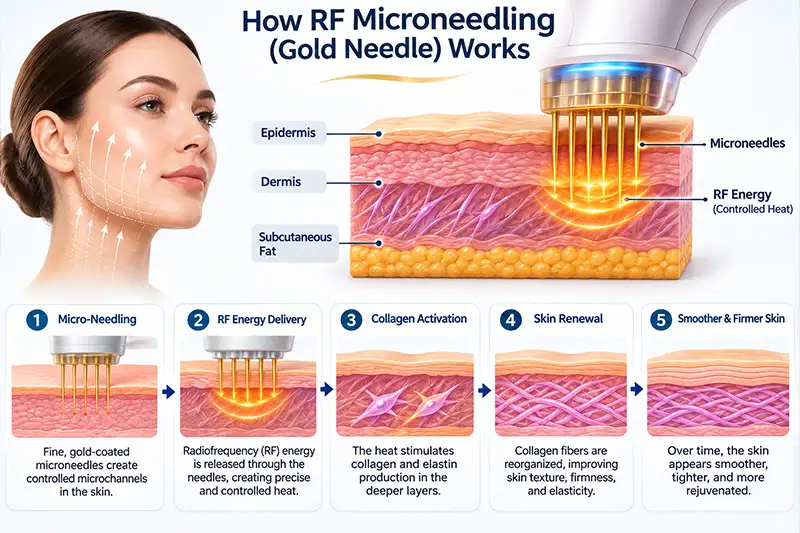
RF Microneedling is a device-based skin treatment designed to support skin renewal, reduce the appearance of acne scars and enlarged pores, and improve fine lines and mild skin laxity. Radiofrequency energy is delivered to specific depths of the skin through fine microneedles, creating controlled heat within the tissue.
This controlled effect may support the skin’s natural repair process and collagen remodeling. RF microneedling results can vary depending on skin type, the severity of existing concerns, treatment depth, and the number of sessions.
| Technique | Microneedling combined with radiofrequency energy |
| Procedure duration | Usually 30–60 minutes |
| Anesthesia | Usually a topical anesthetic cream |
| Number of sessions | Commonly 3–4 sessions; varies by individual |
| Session intervals | Usually 4–6 weeks |
| Recovery time | Mild redness generally subsides within a few days |
| Treatment areas | Face, neck, décolletage, and suitable body areas |
What Is RF Microneedling?
RF microneedling is a skin rejuvenation technique performed using a specialized device tip containing numerous fine microneedles. Once the needles reach the selected depth, radiofrequency energy is delivered to generate controlled heat in the targeted tissue.
The treatment aims to support repair mechanisms associated with collagen and elastin production beneath the skin’s surface. Needle depth and energy settings are adjusted according to the treatment area and individual skin characteristics.
RF microneedling differs from Dermapen, which uses mechanical microneedling without radiofrequency energy. It is also different from certain laser treatments that may cause more noticeable peeling of the skin’s surface. For this reason, it is considered one of the non-surgical aesthetic procedures used to address different skin concerns.
What Does RF Microneedling Treat?
RF microneedling may be considered for various skin concerns to improve skin quality and surface appearance. Its effectiveness depends on the type and depth of the condition being treated.
Acne Scars
RF microneedling may help reduce the appearance of certain depressed acne scars by supporting collagen remodeling. Deep or pronounced scars may require multiple sessions or additional treatments.
Enlarged Pores
As skin texture improves, pores may become less noticeable. However, pores cannot be expected to close completely or disappear permanently.
Fine Lines and Wrinkles
By supporting collagen production, the treatment may gradually improve the appearance of mild and superficial wrinkles. Deeper expression lines may require other treatment approaches.
Skin Tightening
RF microneedling may help create a firmer and more even appearance in cases of mild skin laxity. It does not replace surgical facelift procedures for significant skin sagging.
Skin Texture and Surface Irregularities
The treatment may be used to reduce mild surface irregularities, certain scars, and rough skin texture. Improvements generally develop gradually.
RF Microneedling vs. Dermapen
RF microneedling and Dermapen are both microneedling techniques used for skin rejuvenation, but they work differently. Dermapen creates controlled microchannels in the skin using fine needles, while RF microneedling combines this mechanical action with radiofrequency energy.
| Feature | RF Microneedling | Dermapen |
|---|---|---|
| Technology | Microneedling and radiofrequency | Mechanical microneedling |
| Mechanism | Microchannels and controlled heat | Controlled microchannels |
| Collagen stimulation | Mechanical and thermal stimulation | Mechanical stimulation |
| Acne scars | May be considered for certain deeper scars | May be used for mild to moderate scars |
| Skin tightening | May offer a more noticeable effect for mild laxity | Tightening effects are generally more limited |
| Recovery | Usually a few days | Usually a few days |
Which treatment is better? RF microneedling may be considered when skin tightening is also a treatment goal. Dermapen may be suitable for more superficial skin texture concerns. The effectiveness of either method depends on skin characteristics, the depth of the concern, and the treatment plan.
How Is RF Microneedling Performed?
An RF microneedling procedure begins with a skin assessment. Needle depth and energy levels are adjusted according to the area being treated.
1. Skin Assessment and Planning
Skin type, acne scars, pore appearance, and other concerns are evaluated. The treatment area, expected number of sessions, and appropriate device settings are then planned.
2. Skin Preparation
The treatment area is cleansed. A topical anesthetic cream is usually applied to reduce discomfort, and sufficient time is allowed for it to take effect.
3. RF Microneedling Treatment
The device’s microneedling tip is applied to the skin in a controlled manner. Once the needles reach the selected depth, radiofrequency energy is delivered to create a thermal effect in the targeted tissue.
4. Post-Treatment Care
After the procedure, the skin is assessed and aftercare instructions are provided to help manage redness and sensitivity. Sun protection and avoiding skin irritation are particularly important.
Who Is a Suitable Candidate for RF Microneedling?
RF microneedling may be considered for adults who wish to improve their skin quality and are assessed as suitable candidates for the procedure.
- People with certain depressed acne scars.
- Individuals concerned about enlarged pores.
- People with mild skin laxity or fine wrinkles.
- Individuals with minor skin surface irregularities.
- Suitable candidates seeking treatment for certain scars or stretch marks.
The procedure may not be appropriate for people with active skin infections, open wounds, certain electronic implants, impaired wound healing, or a tendency to develop keloid scars. Treatment is generally postponed during pregnancy. Suitability should be determined based on medical history and the specifications of the device being used.
Before RF Microneedling
- Inform the practitioner about any active skin infection, cold sore, or open wound.
- Disclose the use of retinoids, acid-based skincare products, and acne medications.
- Mention any recent laser treatments, chemical peels, or other aesthetic procedures.
- Report blood-thinning medications and regular treatments. Do not stop prescribed medications without medical advice.
- Avoid excessive sun exposure and treatments that may irritate the skin.
- Ensure that any pacemaker or other electronic implant is assessed before treatment.
RF Microneedling Recovery
After RF microneedling, the skin may develop redness, mild swelling, warmth, and small pinpoint marks. These effects usually improve within a few days. Recovery may take longer following more intensive treatments.
- Cleanse the skin gently during the first few days and use the recommended skincare products.
- Protect the skin from sunlight and use appropriate sunscreen.
- Avoid activities that generate excessive heat, such as saunas, steam baths, and strenuous exercise, for the period recommended by the practitioner.
- Ask the practitioner when it is appropriate to resume exfoliants, retinoids, and potentially irritating cosmetic products.
- Do not pick at any small scabs that may develop.
- Seek medical evaluation if pain increases or significant swelling, discharge, or clear signs of infection occur.
RF Microneedling Side Effects
The likelihood of side effects from RF microneedling depends on skin type, the device used, energy settings, needle depth, and treatment technique.
- Temporary redness and swelling
- Sensitivity, burning, or a sensation of warmth
- Minor pinpoint bleeding and scabbing
- Temporary acne flare-ups
- Infection or reactivation of cold sores
- Pigmentation changes, including darkening or lightening of the skin
- Rarely, burns, scarring, or unwanted tissue changes
RF Microneedling Before and After
RF microneedling before and after results vary according to the skin’s initial condition and treatment goals. Because collagen remodeling takes time, improvements generally develop gradually.
- Acne scars: Certain depressed scars may become shallower and less noticeable.
- Pores: The skin may appear firmer and more even.
- Fine lines: Mild wrinkles may gradually soften.
- Skin firmness: Mild laxity may improve.
- Skin texture: The skin surface may appear smoother and more uniform.
Frequently Asked Questions
What is RF microneedling?
It is a skin rejuvenation technique that delivers radiofrequency energy to specific skin depths through microneedles to support skin renewal.
What does RF microneedling do?
It may help reduce the appearance of acne scars, enlarged pores, fine wrinkles, and mild skin laxity.
Is RF microneedling painful?
A topical anesthetic cream is usually applied. Mild prickling, pressure, or warmth may be felt during treatment.
How many RF microneedling sessions are needed?
A plan of 3–4 sessions is common. The exact number depends on the skin concern and response to treatment.
How long does redness last after RF microneedling?
Redness usually subsides within a few days. Recovery may take longer after more intensive treatments.
Can RF microneedling completely remove acne scars?
It may reduce the appearance of certain acne scars, but complete removal of all scars cannot be guaranteed.
Is RF microneedling the same as Dermapen?
No. RF microneedling combines microneedles with radiofrequency energy, while Dermapen primarily uses mechanical microneedling.
When are RF microneedling results visible?
Initial changes may be noticed within a few weeks. Improvements associated with collagen remodeling may develop over the following months.
Is RF microneedling suitable for all skin types?
It may be considered for different skin types, but medical history, skin sensitivity, and pigmentation risks must be assessed.
How many RF microneedling sessions should I have?
A plan of 3–4 sessions with intervals of 4–6 weeks is often considered. The number may vary depending on the skin concern and treatment response.