


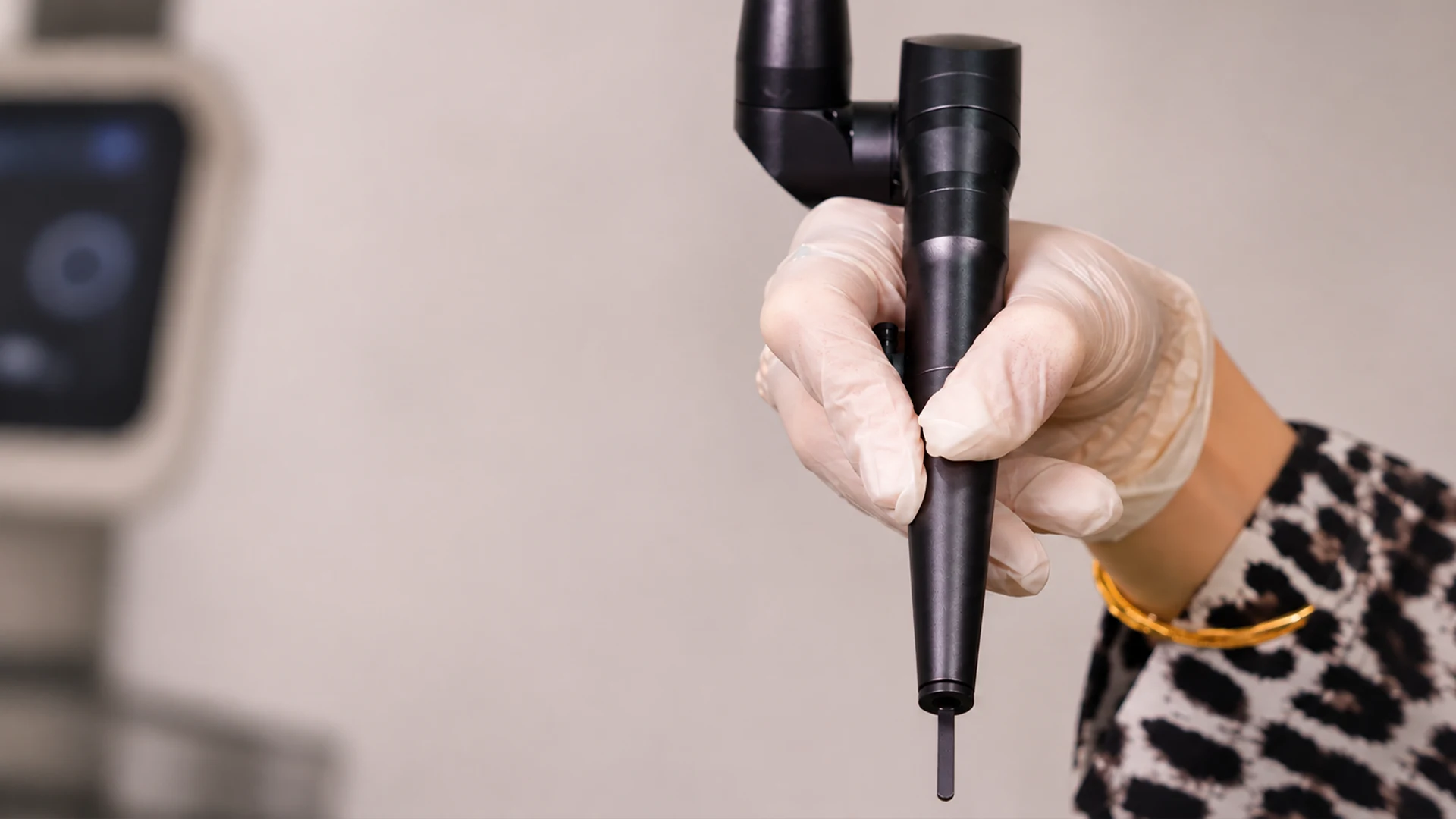
Mole removal is a procedure used to remove moles (nevi) from the skin using an appropriate technique. Moles may be removed for cosmetic reasons, because they repeatedly rub against clothing, or following a medical assessment. The method is selected according to the mole’s size, depth, location, and clinical characteristics.
| Procedure Duration | Usually 15–30 minutes, depending on the number of moles and the technique used |
| Anesthesia | Usually local anesthesia |
| Removal Methods | Surgical excision, shave removal, and other methods for suitable lesions |
| Stitches | May be required depending on the method and characteristics of the mole |
| Recovery | Initial wound healing usually takes 1–2 weeks |
| Risk of Scarring | Any removal method may leave a scar |
For more information about the procedure, treatment options in Istanbul, and prices, read our guide to Mole Removal in Turkey.
What Is Mole Removal?
Mole removal involves removing pigmented or non-pigmented moles from the skin following a medical assessment. Moles may be present from birth or develop later in life. Most are benign, but some may show changes in shape, color, size, or structure.
It is important to have a mole examined by a dermatologist before removal. Dermoscopy may be performed when necessary. If a lesion appears suspicious, the removed tissue may need to be sent for histopathological examination. In suitable cases, mole removal may also be considered among medical aesthetic procedures.
Mole Removal Methods
There is no single method suitable for removing every mole. The most appropriate technique depends on the mole’s characteristics and the findings of the medical examination.
| Method | How Is It Performed? | When Is It Used? |
|---|---|---|
| Surgical Excision | The mole is surgically removed. Stitches may be placed if necessary. | For deeper moles or lesions requiring histopathological examination. |
| Shave Excision | The raised portion of the mole is removed superficially. | For certain benign, raised moles when this approach is considered appropriate. |
| Laser | Laser energy is applied to suitable superficial skin lesions. | For certain superficial skin lesions confirmed to be benign. |
Important: Not every mole can be removed with a laser. For suspicious pigmented moles in particular, biopsy or surgical excision should be considered to allow the tissue to undergo histopathological examination.
Which Moles Can Be Removed?
Moles may be removed for cosmetic or medical reasons. However, not every mole needs to be removed. The decision depends on the examination findings and the individual’s needs.
- Moles that cause cosmetic concerns.
- Moles repeatedly irritated by clothing, jewelry, or shaving.
- Raised moles that cause discomfort during daily activities because of their location.
- Moles recommended for removal following a dermatological assessment.
- Lesions requiring biopsy or excision because of suspicious changes.
Which Moles Should Be Checked?
Certain changes in the appearance of a mole may require a dermatological examination. The ABCDE criteria are an important guide used to assess pigmented skin lesions.
- A – Asymmetry: One half of the mole looks different from the other.
- B – Border: The edges are irregular, uneven, or poorly defined.
- C – Color: Different shades or colors are present within the same mole.
- D – Diameter: The mole is larger than 6 mm, although smaller lesions can also be suspicious.
- E – Evolution: The mole changes in size, shape, color, or associated symptoms over time.
Spontaneous bleeding, a sore that does not heal, new itching, or rapid changes may also require assessment. These signs do not necessarily indicate cancer, but they should be evaluated by a dermatologist without delay.
How Is Mole Removal Performed?
Mole removal is performed using the method selected after a dermatological assessment. The procedure generally involves three main steps.
Total Time:
1. Local Anesthesia and Preparation
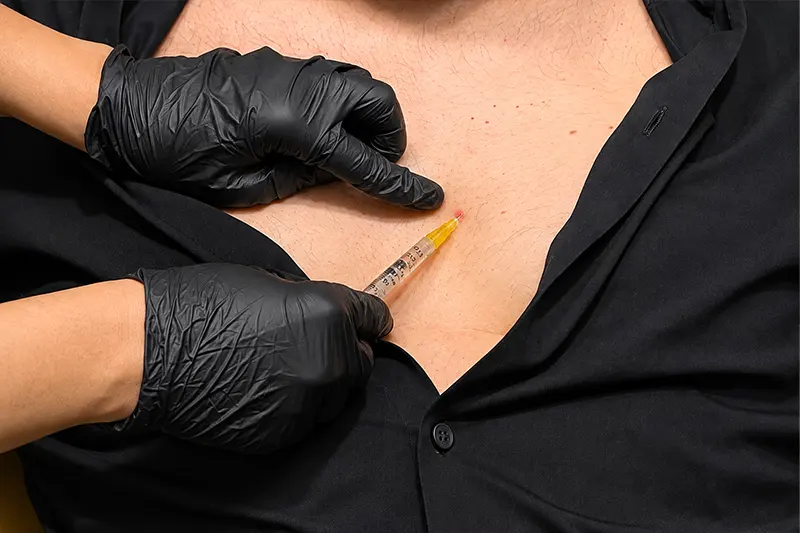
Before the procedure, the area around the mole is cleaned, and local anesthesia is usually administered to minimize discomfort during removal.
2. Removing the Mole
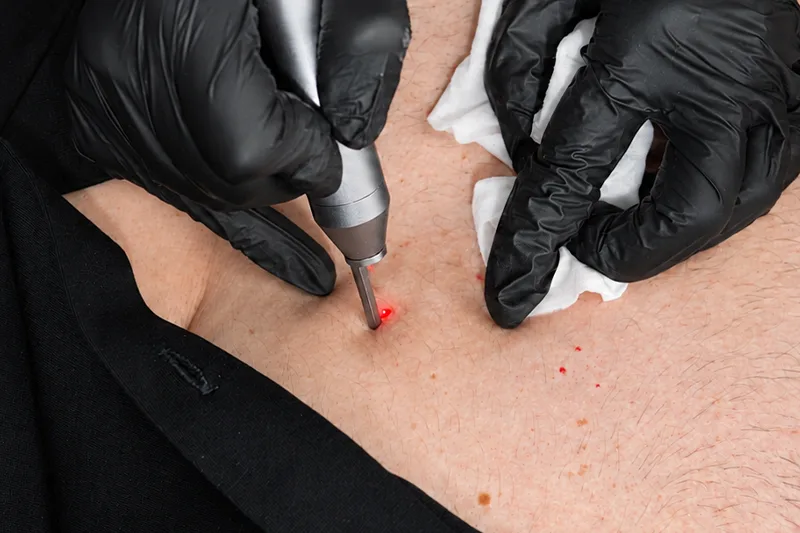
The mole is carefully removed using the technique selected beforehand. If surgical excision is performed, stitches may be placed when necessary. Tissue requiring histopathological examination is sent to a laboratory.
3. Cream Application and Aftercare
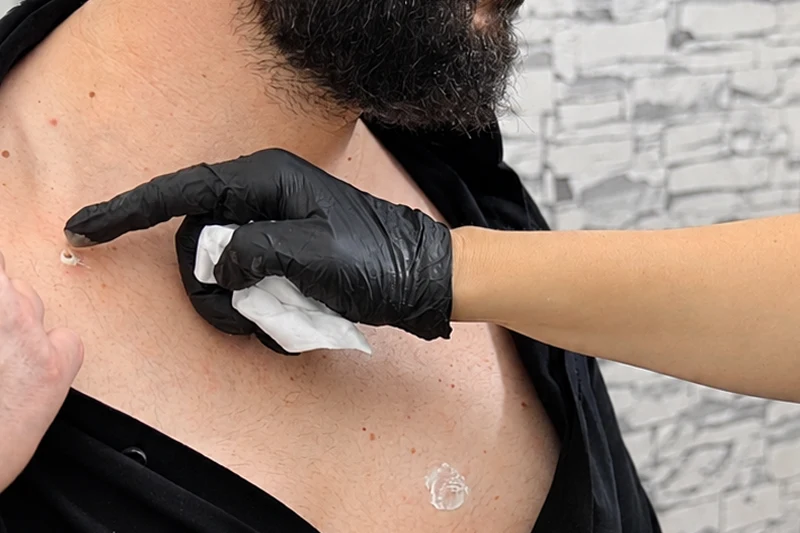
After the procedure, the area is cleaned, and a recommended cream and dressing may be applied if appropriate. The patient receives instructions on wound care and precautions during healing.
Before Mole Removal
Before the procedure, the mole’s characteristics and the patient’s general health should be assessed. A history of skin conditions or problems with wound healing is particularly important.
- Tell your doctor how long the mole has been present and whether it has changed.
- Inform your doctor about blood thinners and any medications you take regularly. Do not stop prescribed medication without medical advice.
- Report any bleeding disorders, allergies, or previous wound-healing problems.
- Share any history of prominent scars or keloid formation.
- Any active infection or irritation in the treatment area should be evaluated.
Recovery After Mole Removal
Recovery after mole removal depends on the technique used and the amount of tissue removed. Superficial wounds may close more quickly, while surgical excision may require stitches and additional wound care.
- Clean and protect the treated area as instructed by your doctor.
- Follow the instructions for dressing changes and stitch care, if applicable.
- Do not pick at scabs or irritate the healing area.
- Protect the healing skin from sun exposure.
- Seek medical assessment if you develop increasing pain, spreading redness, pus, or fever.
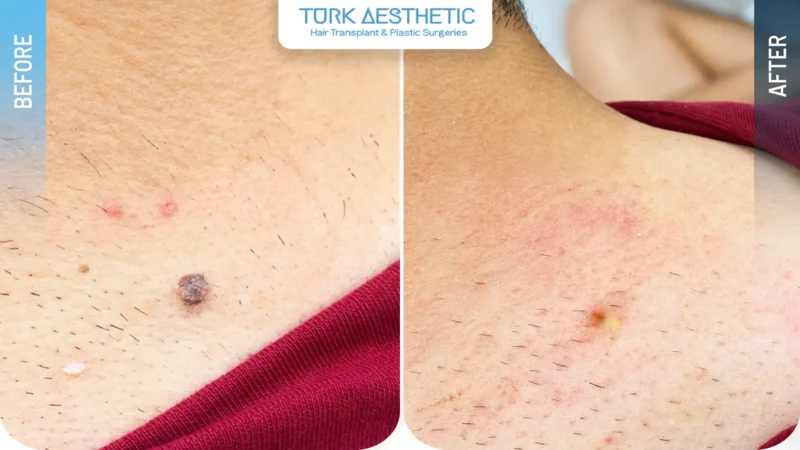
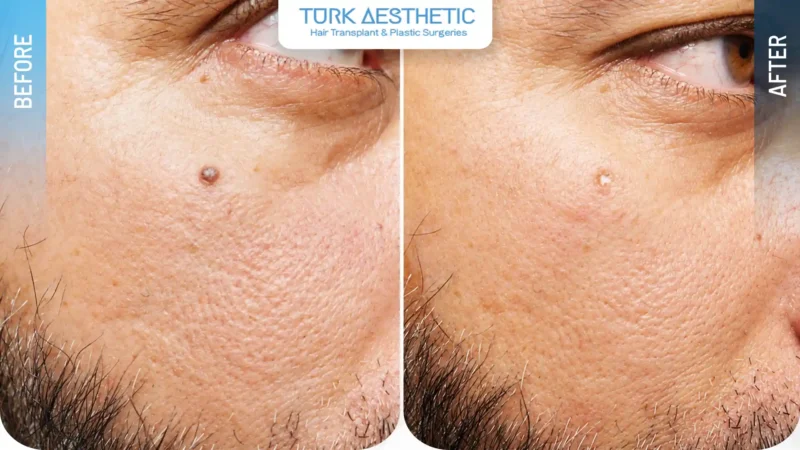
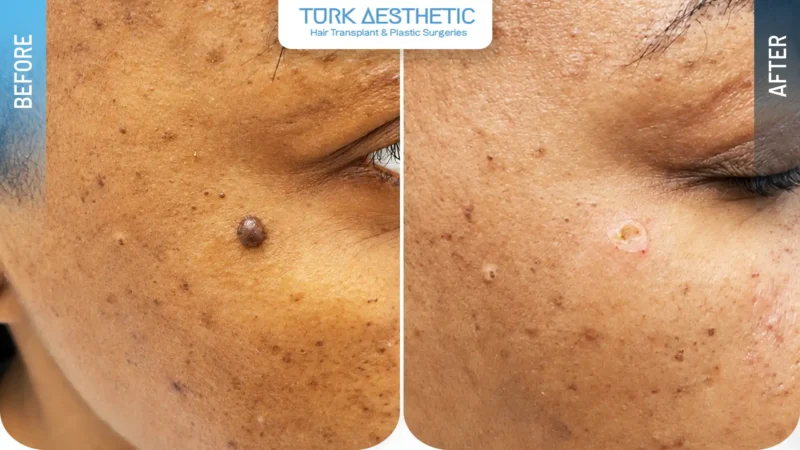
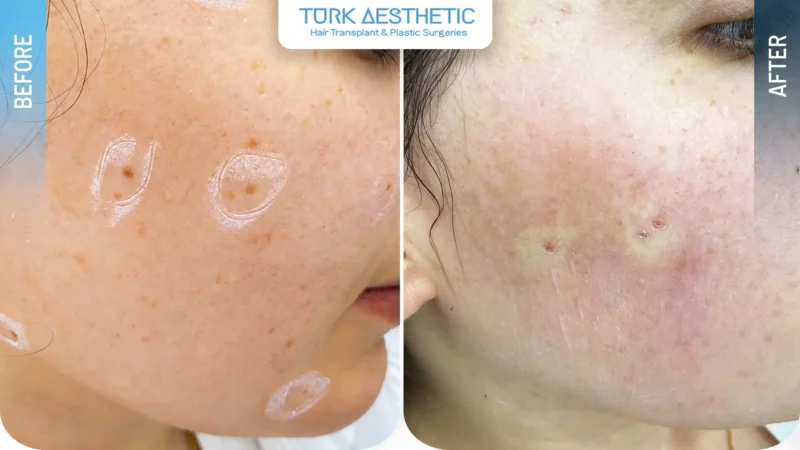
Mole Removal Before and After
Before-and-after mole removal photos help illustrate changes in the appearance of the treated area. Results vary depending on the type and size of the mole, the technique used, and the healing process.
When comparing photos, it is also important to consider how much time has passed since the procedure. Redness or visible marks during the early healing stage may change as recovery progresses.
Mole Removal Risks and Side Effects
Although mole removal is generally a minor procedure, it carries certain risks, as with any medical intervention. Possible side effects vary depending on the method used and the individual’s skin characteristics.
- Temporary redness, tenderness, or mild swelling.
- Bleeding or infection.
- Lightening or darkening of the skin.
- Scarring, skin indentation, or raised scar formation.
- Residual mole tissue or recurrence of the visible mole.
- Delayed wound healing in rare cases.
Frequently Asked Questions
Does mole removal hurt?
The procedure is usually performed under local anesthesia. You may feel a brief sting when the anesthetic is administered.
Does mole removal leave a scar?
Scarring is possible. Its appearance depends on the mole’s size, the removal technique, and individual healing characteristics.
How long does mole removal take?
Removing a single mole usually takes 15–30 minutes. The duration varies depending on the method and the mole’s characteristics.
Can all moles be removed with a laser?
No. Suspicious pigmented moles generally require a removal method that allows histopathological examination.
Is mole removal dangerous?
It is generally safe with appropriate assessment and technique, but risks include bleeding, infection, and scarring.
Can a mole grow back after removal?
A mole may become visible again if some mole tissue remains after certain removal methods. Recurrent lesions should be evaluated.
How long does healing take after surgical mole removal?
Initial wound healing usually takes 1–2 weeks. Scar maturation may take considerably longer.
Can a suspicious mole be removed with a laser?
For suspicious moles, biopsy or surgical excision that allows diagnostic examination should be considered instead of laser treatment.