


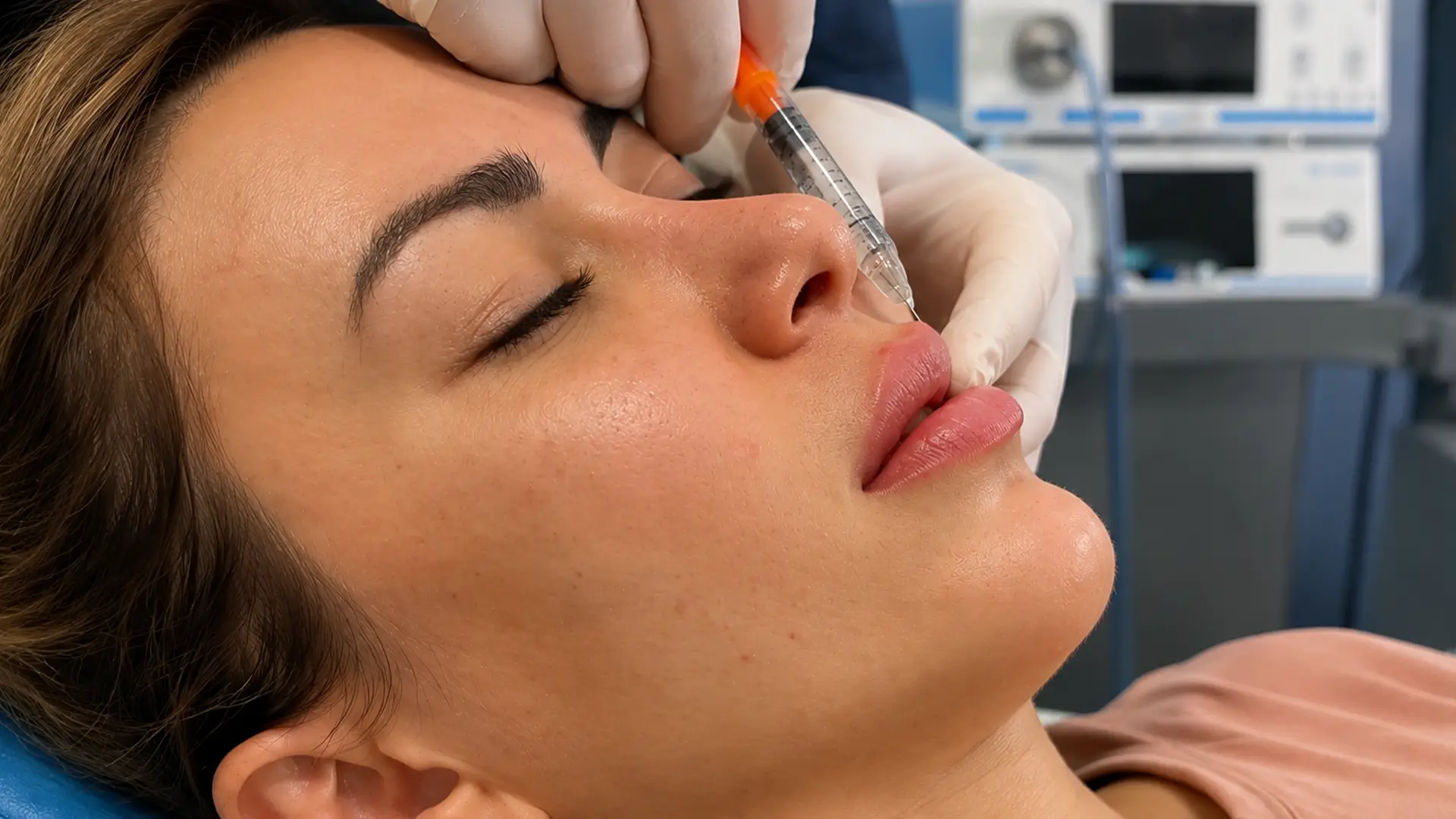
Lip filler is a non-surgical cosmetic treatment designed to add volume to the lips, enhance their definition, and improve their proportions. Hyaluronic acid-based fillers are most commonly used. The treatment is planned according to each person’s facial features and natural lip shape.
| Treatment | Lip Filler |
| Method | Hyaluronic acid injections |
| Procedure Time | Approximately 15–30 minutes |
| Anesthesia | Topical numbing cream |
| Duration of Results | Usually 6–12 months |
| Recovery | Swelling and bruising usually improve within a few days |
| Return to Daily Activities | Usually the same day |
| Result Assessment | Usually after 1–2 weeks |
For more information about the procedure, filler products, and current prices, read our guide to lip filler in Turkey.
What Is Lip Filler?
This non-surgical cosmetic treatment is used to add volume, enhance lip shape, and improve definition. It most commonly involves hyaluronic acid-based fillers, which contain a substance naturally found in the body.
Hyaluronic acid attracts and retains water, helping the lips appear fuller and more defined. The type and amount of filler are selected based on lip anatomy, facial proportions, and the desired outcome. The goal is to achieve balanced volume and shape while preserving a natural appearance.
What Does Lip Filler Do?
Beyond adding volume, this treatment can enhance lip contours, balance the proportions of the upper and lower lips, and reduce minor asymmetries. It may also help restore fullness that gradually decreases with age.
The aim is to create a balanced appearance that complements facial features without significantly changing the lips’ natural shape. Results vary depending on individual anatomy and the amount of filler used.
How Is Lip Filler Performed?
Before treatment, the practitioner assesses lip shape, volume, symmetry, and proportions in relation to the rest of the face. The appropriate filler amount and injection sites are then planned.
- Assessment: Lip anatomy, medical history, and aesthetic expectations are reviewed.
- Preparation: The treatment area is cleaned, and a topical numbing cream or another suitable anesthetic method may be used.
- Injection: The filler is carefully injected into selected areas using a fine needle or an appropriate cannula.
- Final Check: Lip shape and symmetry are assessed, and aftercare instructions are provided.
The injections themselves are usually quick. However, the total appointment time may vary depending on preparation, anesthesia, and assessment.
Lip Filler Techniques
Different injection techniques can be used to achieve specific aesthetic goals. The choice depends not only on the desired appearance but also on lip anatomy and safe injection practices.
Natural Lip Filler
This approach focuses on subtle volume enhancement and contour definition while largely preserving the lips’ existing shape. It may be suitable for people who prefer a modest change rather than noticeably fuller lips.
Russian Lips Technique
Russian Lips is an injection approach that aims to emphasize the central shape of the lips and define the upper lip contour. It is not suitable for every lip shape, and a particular appearance cannot be guaranteed.
Lip Contour Filler
This technique aims to enhance the definition of the outer lip borders. It may be considered for people who have experienced a loss of lip definition with age. Avoiding excessive filler is important for maintaining a natural appearance.
Lip Asymmetry Correction
Minor volume differences between the upper and lower lips or between the left and right sides may be improved with filler. However, not all structural asymmetries can be corrected through injections alone.
Who Is a Good Candidate for Lip Filler?
This treatment may be considered for medically suitable adults who want to improve lip volume, shape, or symmetry. It may be particularly helpful for:
- Thin lips: People who want to add fullness and volume.
- Asymmetrical lips: Those seeking better balance between the upper and lower lips.
- Poorly defined lip borders: People who want more noticeable lip contours.
- Age-related volume loss: Those looking to restore fullness that has gradually diminished.
- Natural-looking enhancement: People who prefer subtle volume while maintaining their original lip shape.
Treatment should be postponed if there is an active cold sore or infection. It is also generally not recommended during pregnancy or breastfeeding. Final suitability is determined by a qualified medical professional after reviewing medical history and potential risks.
Before the Procedure
Before treatment, lip anatomy, medical history, and aesthetic expectations are assessed to support safe planning and natural-looking results. The following precautions are important:
- Medications: Inform your practitioner about any medications, especially blood thinners. Never stop prescribed medication without medical advice.
- Allergies and previous fillers: Disclose previous filler treatments, allergic reactions, and any history of cold sores.
- Alcohol: Avoiding alcohol for 24 hours before treatment may be recommended to help reduce bruising and swelling.
- Lip health: Active cold sores, infections, or significant irritation may require postponing the procedure.
- Expectations: Discuss your preferred lip volume and shape with the practitioner, taking facial proportions into account.
After the Procedure
Mild swelling, tenderness, redness, or bruising may occur after treatment. These effects are usually temporary. During the first few days, the lips may look different from the final result because of swelling.
- Avoid unnecessary pressure or massage on the lips during the initial recovery period.
- Follow your practitioner’s advice about avoiding strenuous exercise and excessive heat.
- Keep the lip area clean.
- Avoid judging the final result while swelling is still present.
- Seek emergency medical attention immediately if you experience severe or increasing pain, whitening of the lips, significant discoloration, or changes in vision.
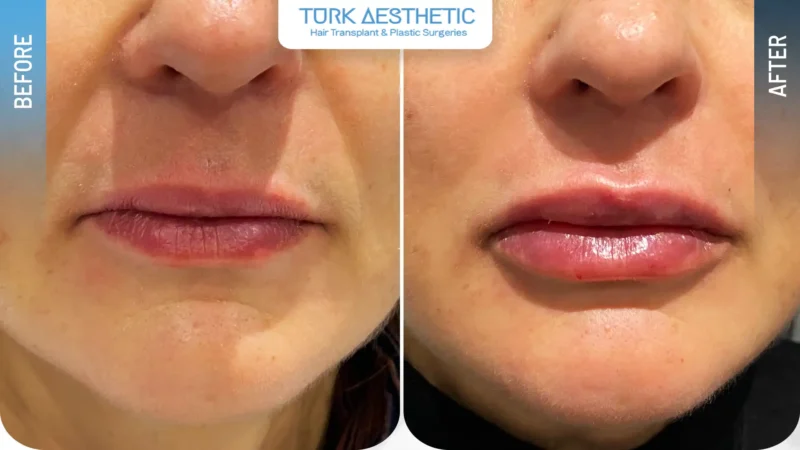
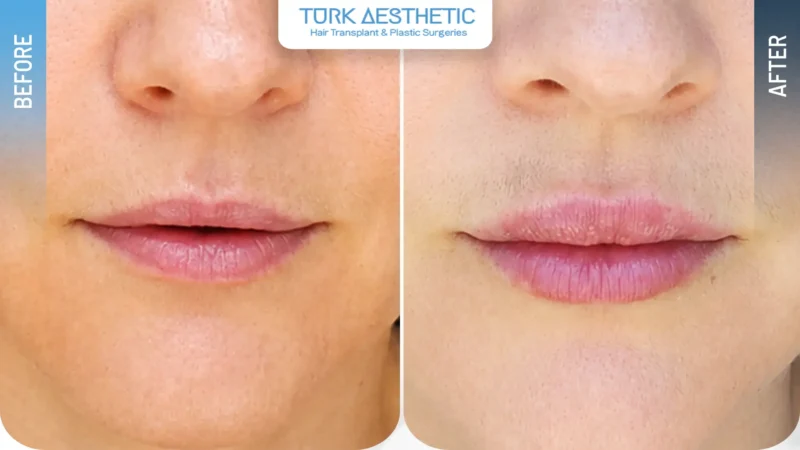
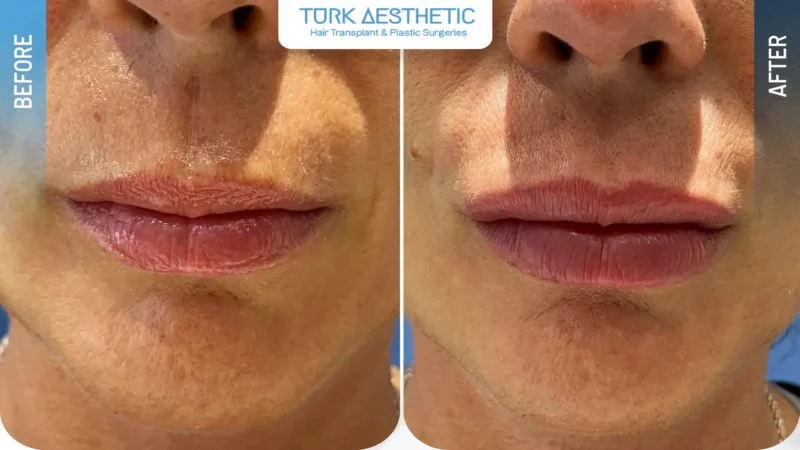
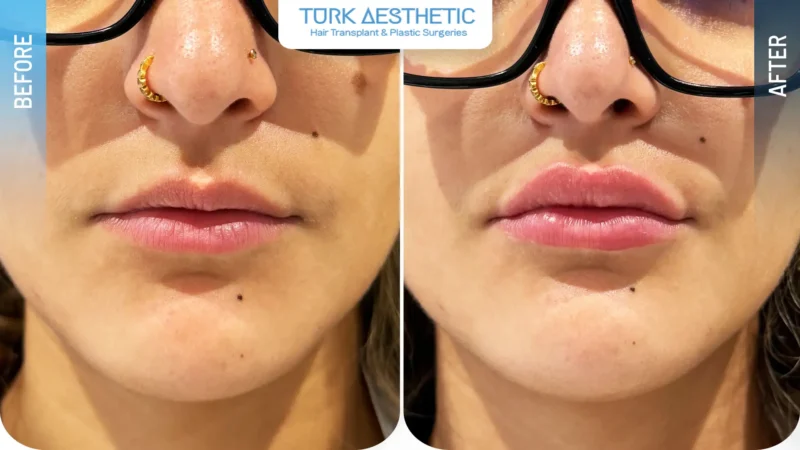
Lip Filler Before and After
Before and after lip filler photos help illustrate changes in lip volume, shape, and definition following treatment. Some people experience a subtle increase in fullness, while others may notice more visible changes in lip borders or the proportions of the upper and lower lips.
When comparing photos, it is important to consider camera angles, lighting, and any swelling present after treatment. Since lip anatomy varies from person to person, previous patients’ results do not guarantee the same outcome for everyone.
Risks and Side Effects
Lip filler injections may cause mild and temporary side effects. However, as with any medical procedure involving injections, more serious complications are also possible.
- Swelling and redness: Common after treatment and usually improve within a few days.
- Bruising and tenderness: May occur temporarily around the injection sites.
- Asymmetry and irregularities: Uneven lip appearance or small lumps may develop.
- Infection and nodules: Less common complications that may require medical evaluation.
- Filler migration: The injected material may gradually spread beyond the intended treatment area.
Vascular occlusion is a rare but serious complication. Severe or increasing pain, whitening of the lips, purplish discoloration, or visual disturbances require immediate emergency medical attention. A blocked blood vessel can cause tissue damage and, in very rare cases, vision loss.
Hyaluronic acid fillers can sometimes be dissolved using an enzyme called hyaluronidase, but this does not completely reverse every complication. For this reason, injections should be performed by a qualified healthcare professional with a thorough understanding of facial anatomy and complication management.
Frequently Asked Questions
Does lip filler hurt?
You may feel mild stinging or pressure during the injections. Topical anesthetics can reduce discomfort, although pain levels vary from person to person.
How long does it take for lips to settle after treatment?
The lips may initially appear fuller due to swelling. Their appearance usually becomes more settled within 1–2 weeks.
How much filler should be used for the first treatment?
There is no single amount suitable for everyone. The quantity depends on lip anatomy, existing volume, and the desired result.
Will the results look natural?
Natural-looking results can be achieved with an appropriate product, amount, and injection technique. Outcomes depend on individual lip anatomy.
Will my lips sag when the filler wears off?
Filler gradually wearing off does not necessarily cause sagging. However, aging, tissue elasticity, and repeated high-volume treatments may affect lip appearance.
Can lip filler be completely dissolved?
Hyaluronic acid fillers can be dissolved using hyaluronidase, but complete removal is not guaranteed. Other filler types may not respond to this enzyme.
Can the treatment be repeated?
Yes, repeat treatment may be possible for suitable patients. Existing filler and lip tissue should be assessed before further injections.
What is the difference between lip filler and a lip flip?
Filler adds volume to the lips, while a lip flip uses botulinum toxin to temporarily change muscle movement around the upper lip, making it appear more visible. The treatments work differently.
How long does lip filler last?
Hyaluronic acid fillers generally last 6–12 months. Longevity varies depending on the product, amount used, and individual metabolism.