


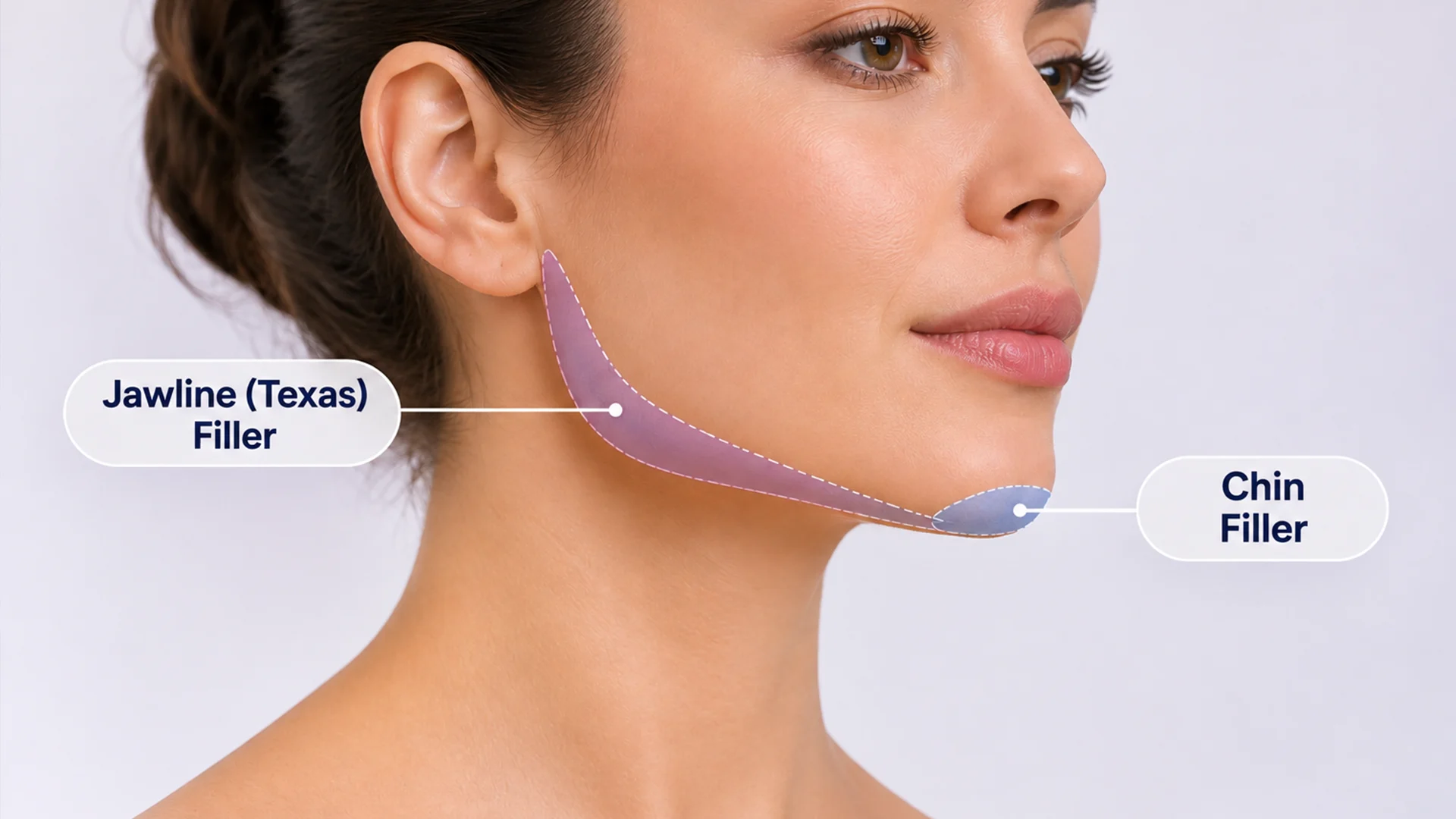
Jawline filler is a non-surgical aesthetic treatment used to define the jawline, reshape the chin, and improve the proportions of the lower face. Hyaluronic acid-based fillers are commonly used to enhance these areas according to each person’s facial anatomy.
Depending on the area being treated, the procedure may involve jawline contouring or chin filler. When a sharper, more angular lower-face appearance is desired, techniques commonly known as Texas filler may also be considered.
| Treatment Areas | Chin tip, jawline, and jaw angles |
| Method | Injectable dermal fillers |
| Anesthesia | Usually a topical anesthetic cream |
| Procedure Duration | Approximately 15–30 minutes |
| Longevity | Usually 12–18 months, depending on the individual |
| Recovery | Most people can return to their daily activities shortly afterward |
| Results | Initial changes are visible immediately; the final appearance becomes clearer as swelling subsides |
For more information about treatment planning, the procedure, and associated costs, read our article on jawline filler in Turkey.
What Is Jawline Filler?
This injectable treatment is used to restore volume in the lower face and reshape its contours. Without surgical incisions, it may help improve chin projection, create a more defined jawline, or reduce mild asymmetry in the lower facial area.
The procedure is not limited to a single area. The chin tip, lower jawline, and jaw angles are anatomically distinct regions, so the amount of filler, injection points, and technique are determined individually.
Types of Jawline Filler
Injectable fillers can be used in different parts of the lower face depending on aesthetic needs. Some people want a more defined jawline, while others wish to improve the shape or projection of their chin. These treatments are generally divided into two main categories.
Jawline (Texas) Filler
Jawline filler aims to define the lower jawline and jaw angles, creating a clearer contour along the lower face. Depending on facial anatomy, filler may be injected along the lower jawbone and around the jaw angles.
Also known as Texas filler, this approach may be used to create a sharper, more angular jawline. However, not every jawline treatment aims for the same appearance. The result is planned according to individual facial proportions and aesthetic expectations.
Jawline contouring with fillers may improve definition, but it does not directly eliminate sagging skin or fat deposits beneath the chin.
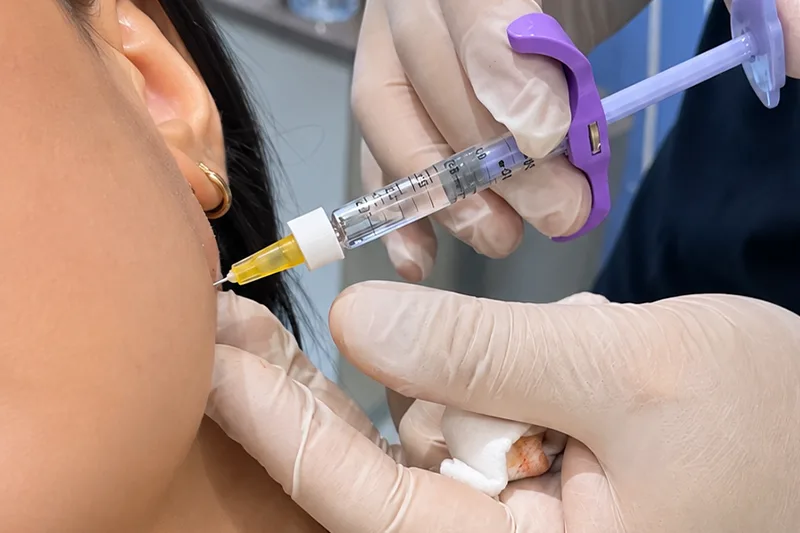
Chin Filler
Chin filler is used to reshape the front of the chin, enhance the projection of a recessed chin, and improve facial proportions when viewed from the side.
Before treatment, the balance between the forehead, nose, lips, and chin is assessed. Filler may be used to increase forward chin projection, refine its shape, or reduce mild asymmetry.
Chin filler does not change the underlying bone structure or dental bite. Significant skeletal concerns, such as a severely recessed chin, may require other treatment options.
Who Is a Suitable Candidate for Jawline Filler?
This treatment may be considered for adults in suitable general health who wish to improve volume or contour in the lower face.
- People who feel their chin appears small or recessed.
- Those who want a more defined jawline.
- Individuals concerned about mild asymmetry in the lower face.
- People seeking better balance between their facial profile and chin proportions.
- Those who prefer temporary facial contour enhancement without surgery.
The procedure may be postponed or considered unsuitable during pregnancy or breastfeeding, when there is an active infection in the treatment area, or in cases of known allergy to filler ingredients. Suitability is determined through a review of medical history and facial anatomy.
How Is Jawline Filler Performed?
Before treatment, the face is assessed from the front and side. Chin position, jawline definition, facial symmetry, and skin characteristics are examined to develop an individualized treatment plan.
1. Facial Assessment and Planning
Areas requiring additional volume support are identified. The filler type and amount are selected according to the desired appearance and individual anatomical features.
2. Preparing the Treatment Area
The skin is cleansed and prepared with a suitable antiseptic. A topical anesthetic cream may be applied when needed to reduce discomfort during the procedure.
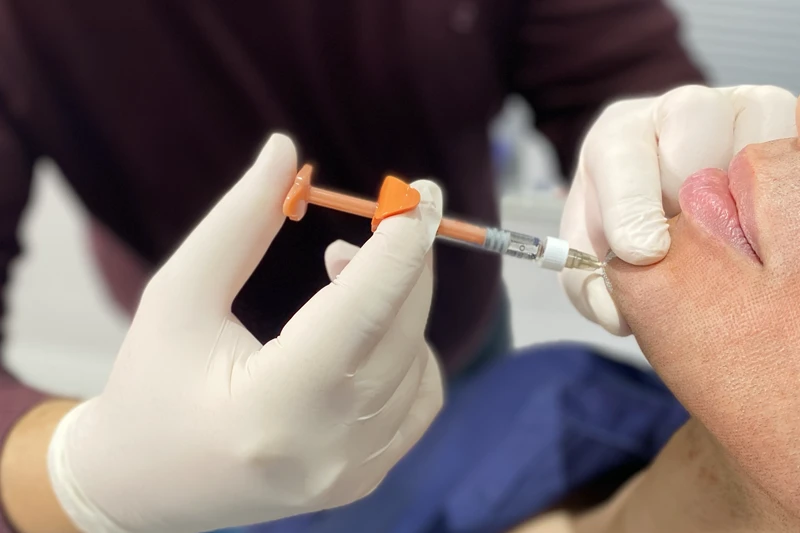
3. Filler Injection
The filler is injected into selected anatomical points using an appropriate needle or cannula. Injection technique and depth vary depending on the treatment area. Jawline contours and facial symmetry are assessed throughout the procedure.
4. Final Assessment
After the procedure, the appearance of the jawline and chin is evaluated. Post-treatment care instructions are explained, and a follow-up appointment may be arranged if necessary.
What to Consider Before Treatment
- Inform your practitioner about any medications, supplements, and existing medical conditions.
- Disclose any previous filler treatments and complications you may have experienced.
- Any cold sores, infections, or active skin conditions in the treatment area should be assessed before the procedure.
- Tell your doctor about medications that may increase the risk of bruising. Do not stop taking prescribed medication without medical advice.
- Discuss your desired results and the limitations of filler treatment in detail beforehand.
Aftercare Instructions
Mild swelling, tenderness, or redness may occur after jawline filler injections. These effects usually subside within a few days.
- Avoid unnecessary pressure on the treated area during the first 24 hours.
- Do not massage the jaw area unless instructed by your doctor.
- You may be advised to avoid intense exercise, saunas, and excessive heat for the first 24–48 hours.
- During the first few days, avoid positions that place prolonged pressure on the jaw.
- Attend any recommended follow-up appointment at the scheduled time.
Side Effects and Risks
Jawline filler is a medical procedure performed through injections. In addition to temporary side effects, rare but serious complications may occur.
- Redness and tenderness at the injection sites.
- Temporary swelling or bruising.
- A feeling of firmness or unevenness in the treated area.
- Asymmetry or unwanted changes in facial contours.
- Infection, nodules, or delayed inflammatory reactions.
- In rare cases, tissue damage caused by vascular occlusion.
Important: Severe or increasing pain, skin blanching, a purplish net-like skin pattern, unusual coldness, or changes in vision during or after the procedure require urgent medical evaluation. Do not wait to see whether these symptoms resolve on their own.
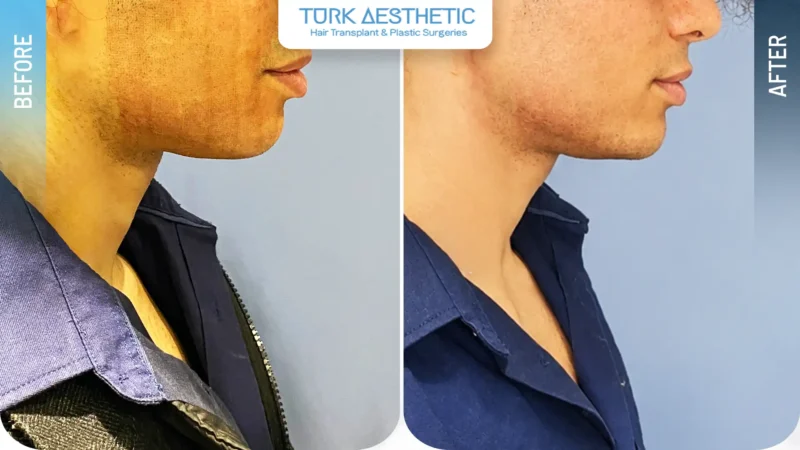
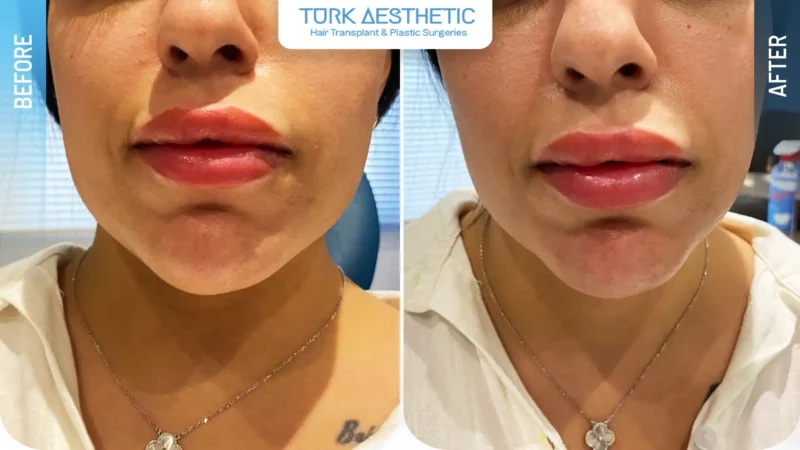
Jawline Filler Before and After
Jawline filler before and after results vary depending on the area treated. Chin filler may help balance the facial profile, while jawline contouring can create a more defined lower jawline.
Initial changes may be noticeable immediately after treatment. However, it usually takes around two weeks for swelling to subside and the tissues to settle before the final appearance can be assessed. Results vary according to facial anatomy and the amount of filler used.
Frequently Asked Questions
Is jawline filler painful?
You may feel mild stinging or pressure during the injections. Local anesthetics can help reduce discomfort.
Are jawline filler and chin filler the same?
No. Jawline filler focuses on defining the jawline, while chin filler reshapes the front of the chin.
What is Texas filler?
Texas filler is a jawline contouring approach designed to create sharper, more defined jaw angles and a stronger lower jawline.
Can this treatment make the face look slimmer?
It may create a slimmer appearance by improving lower-face proportions, but it does not reduce facial fat.
Can jawline filler remove a double chin?
No. It may improve jawline definition, but it does not directly remove fat beneath the chin or tighten sagging skin.
How long does filler take to settle?
Initial changes are visible immediately. Results become clearer as swelling subsides and are usually assessed after about two weeks.
Can jawline filler be dissolved?
Hyaluronic acid fillers can be dissolved with hyaluronidase when appropriate. Not all filler types can be dissolved this way.
How many ml of filler are needed?
The amount depends on jaw anatomy, the treatment area, and the desired result. There is no fixed volume suitable for everyone.