

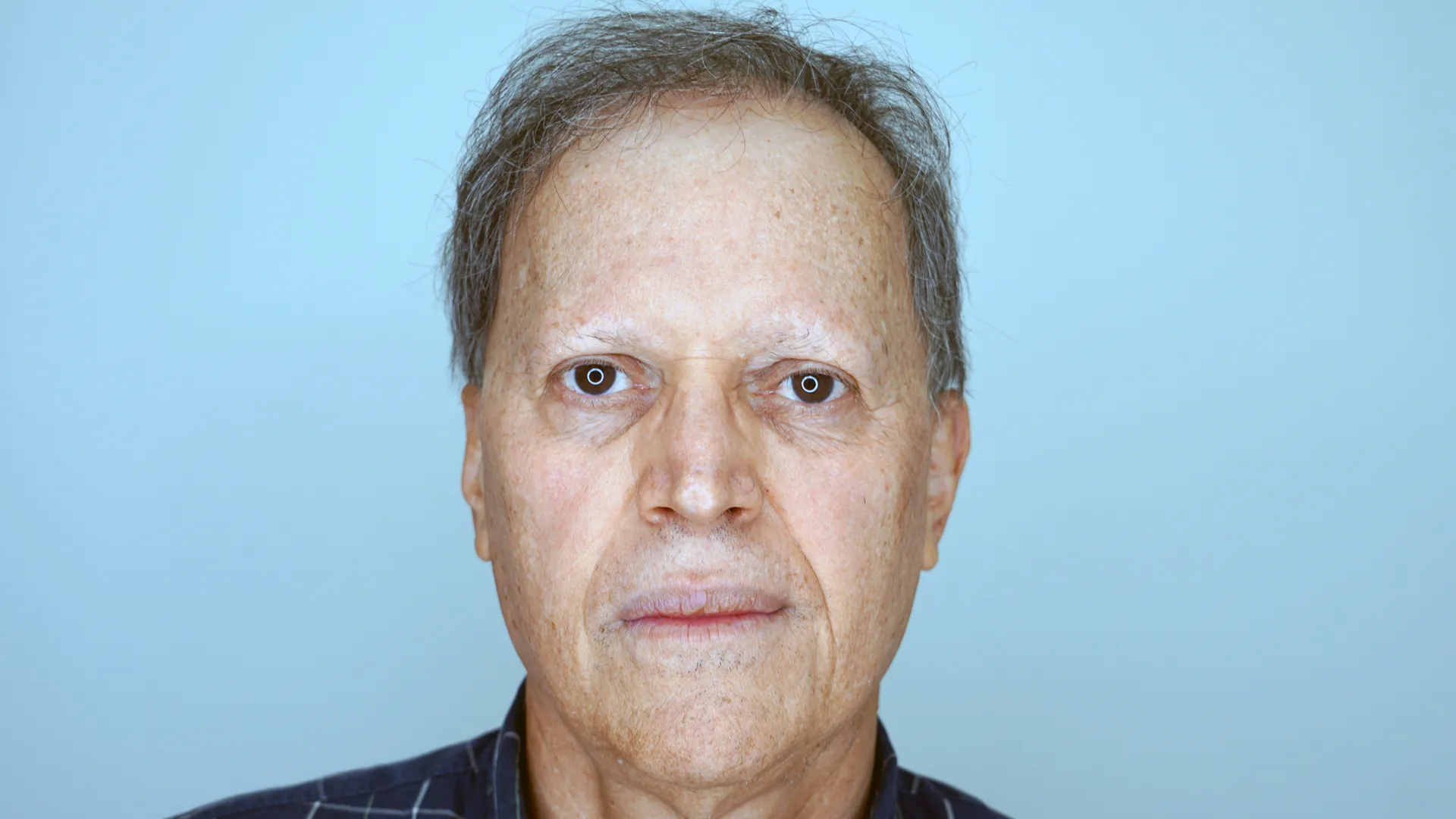
A male eyebrow transplant is a hair follicle transplantation procedure performed to reshape and increase the density of sparse eyebrows or restore areas where eyebrow hair has been lost. Suitable hair follicles are taken from the donor area and implanted into the eyebrows according to the natural growth direction of the existing hairs and the patient’s facial features.
For a natural-looking result in men, eyebrow density is not the only consideration. The thickness of the eyebrows, their starting and ending points, and the direction of hair growth are also important. For more comprehensive information about the general features of the procedure, you can visit our Eyebrow Transplant page.
| Feature | Information |
|---|---|
| Anesthesia | Local anesthesia |
| Procedure Duration | Approximately 2–4 hours |
| Hospital Stay | Not required |
| Initial Recovery | Approximately 7–10 days |
| New Hair Growth | Usually begins around the 3rd–4th month |
| Results Become Noticeable | Approximately 8–12 months |
Why Is a Male Eyebrow Transplant Performed?
Eyebrow hair loss in men may occur due to genetic factors, aging, trauma, burns, scarring, or certain health conditions. Some men may also naturally have sparse or asymmetrical eyebrows.
A male eyebrow transplant may be considered particularly in the following cases:
- Naturally sparse or thin eyebrows
- Partial eyebrow hair loss
- Gaps caused by scars or trauma
- Eyebrow hair loss following burns
- Noticeable thinning in the outer areas of the eyebrows
- A noticeable difference in density between the two eyebrows
If eyebrow hair loss is still actively progressing, it is important to evaluate the underlying cause before the procedure.
How Is a Male Eyebrow Transplant Planned?
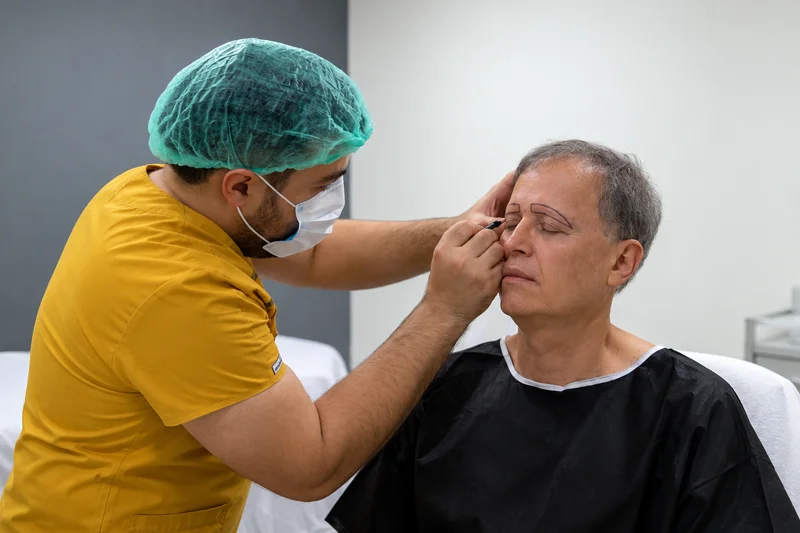
Eyebrow design is one of the most important stages of a male eyebrow transplant. The shape of the eyebrows is planned according to the patient’s facial features, existing eyebrows, and natural hair growth directions.
For male eyebrows, the goal is generally to preserve the natural character of the existing eyebrows and avoid an overly shaped appearance. Since the direction of the hairs may differ between the inner, middle, and outer sections of the eyebrow, the implantation angles of the grafts are planned accordingly.
The aim is for the transplanted follicles to blend with the existing eyebrow hairs and create a natural, balanced appearance.
How Is a Male Eyebrow Transplant Performed?
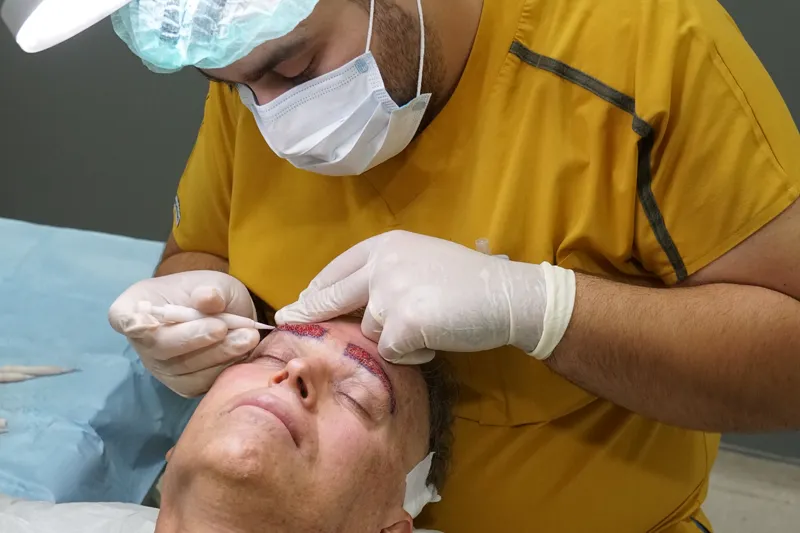
Before the procedure, the eyebrow shape and the areas requiring transplantation are determined. Hair follicles with suitable characteristics for the eyebrow area are then extracted from the donor area.
To achieve a natural appearance, particular attention is given to selecting suitable single-hair grafts. The prepared hair follicles are then implanted individually into the eyebrow area, following the direction and angle of the existing eyebrow hairs.
The procedure is performed under local anesthesia and usually takes a few hours, depending on the number of grafts required.
After a Male Eyebrow Transplant
During the first few days after the procedure, mild redness, sensitivity, and small scabs may appear around the eyebrows. During this period, it is important to protect the transplanted follicles and avoid rubbing the eyebrow area.
Scabbing usually decreases within the first 7–10 days. During the first weeks or months, some of the transplanted hairs may temporarily shed.
New eyebrow hairs usually begin to grow around the third or fourth month. Growth continues over the following months, and the appearance of the eyebrows generally becomes more defined within approximately 8–12 months.
Male Eyebrow Transplant Results
Hair growing from successfully established follicles has the potential for long-term growth. However, the density that can be achieved may vary depending on the condition of the existing eyebrows, the characteristics of the donor hair, and the number of grafts transplanted.
Because follicles taken from the scalp may retain their original growth characteristics, transplanted eyebrow hairs can grow longer than natural eyebrow hairs. For this reason, they may need to be trimmed at regular intervals.
For a natural appearance, eyebrow design, hair direction, and implantation angles are more important than focusing solely on the number of grafts.
Risks of a Male Eyebrow Transplant
Temporary redness, mild swelling, scabbing, itching, or sensitivity may occur after an eyebrow transplant. Less commonly, complications such as infection, folliculitis, or hairs growing in an undesired direction may occur.
Proper planning, appropriate graft selection, and post-procedure care are important for reducing the risk of complications.
Frequently Asked Questions About Male Eyebrow Transplant
Is a male eyebrow transplant permanent?
Successfully established hair follicles have the potential for long-term growth. However, the patient’s existing natural eyebrow hairs may continue to thin over time.
Does a male eyebrow transplant look natural?
A natural appearance can be achieved when the eyebrow design is planned according to the patient’s facial features and the grafts are implanted according to the direction and angle of the existing hairs.
How many grafts are needed for a male eyebrow transplant?
There is no fixed number of grafts. The number required is determined according to the size of the area with missing hair, the existing eyebrow density, and the desired appearance.
Is a male eyebrow transplant painful?
The procedure is performed under local anesthesia. Brief discomfort may be felt during the administration of anesthesia, but the aim is to minimize pain during the procedure.
Do transplanted eyebrow hairs grow?
Yes. Because follicles taken from the scalp may retain the growth characteristics of natural scalp hair, the transplanted hairs may need to be trimmed from time to time.
When can you see the results of a male eyebrow transplant?
New eyebrow hairs in men usually begin to grow around the third or fourth month. Eyebrow development continues over the following months, and the results can generally be evaluated more clearly within approximately 8–12 months.
When can you see the results of a male eyebrow transplant?
New hairs usually begin to grow around the third or fourth month. Eyebrow development continues over the following months, and the results can generally be evaluated more clearly within approximately 8–12 months.