


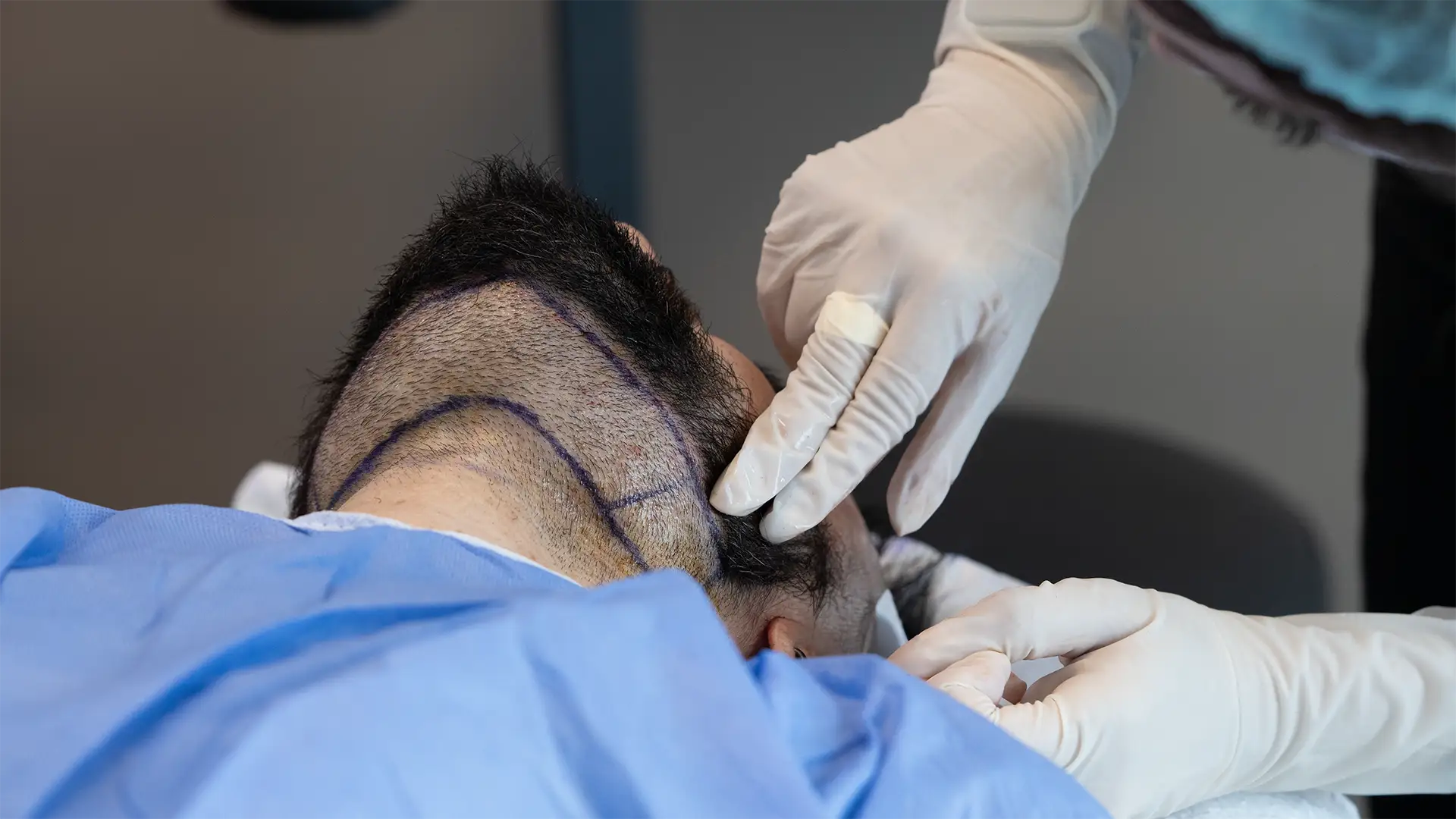
Insufficient donor hair at the back of the scalp does not necessarily mean that achieving a successful hair transplant result is impossible. A BHT hair transplant is an advanced procedure in which follicles are extracted from suitable areas, such as the beard and chest, and transplanted into areas of the scalp that require coverage. It can provide an additional source of grafts, particularly for people with advanced hair loss, limited donor capacity, or previous hair transplant procedures.
| Feature | Information |
|---|---|
| Procedure | BHT hair transplant |
| Technique used | Usually FUE |
| Primary donor area | Beard |
| Secondary donor option | Chest |
| Type of anesthesia | Local anesthesia |
| Suitable candidates | People with insufficient scalp donor hair or previous hair transplant procedures |
| Purpose | To increase the available number of grafts and support visual density |
| Recipient areas | Usually the mid-scalp and crown |
| Planning | Customized according to the thickness, density, and characteristics of the donor hair |
What Is a BHT Hair Transplant?
A BHT hair transplant involves transferring hair follicles from suitable donor areas, such as the beard and chest, to bald or thinning areas of the scalp. In this procedure, also known as Body Hair Transplantation (BHT), suitable follicles are usually extracted individually using the FUE technique and implanted into the planned areas while respecting the natural direction of hair growth. BHT may provide an additional graft source when there is insufficient donor hair at the back of the scalp for a conventional hair transplant.
This procedure may be considered particularly for people with advanced hair loss or those who have undergone a previous hair transplant. The beard is generally the first alternative donor area because of its thick and robust follicles, while suitable chest hair is considered the second option. Because body hair differs from scalp hair in thickness, growth duration, and follicle structure, careful donor-area evaluation and appropriate graft distribution are essential for achieving a natural appearance.
Who Is Suitable for a BHT Hair Transplant?
A BHT hair transplant may be considered for people who do not have enough healthy grafts in the scalp donor area but have suitable follicles in the beard, chest, or other parts of the body. When a large area of hair loss needs to be covered, body hair may serve as an additional graft source to support the limited donor capacity at the back of the scalp.
A BHT hair transplant may be suitable for:
- People experiencing advanced hair loss
- People with insufficient donor hair at the back of the scalp
- People who have undergone one or more hair transplant procedures
- People whose donor area has become thinner following previous procedures
- People with sufficient density and suitable follicles in the beard or chest
- People who need to conceal scars from previous hair transplant procedures
- People seeking to enhance density across a larger area
However, having sufficient body hair does not automatically make someone a suitable candidate. The thickness, growth cycle, color, and compatibility of the donor hair with the scalp hair must be evaluated. General health, the cause of hair loss, and the person’s expectations are also considered during treatment planning. Suitability is determined after a specialist carefully examines the scalp and potential body donor areas.
Which Donor Areas Are Used in a BHT Hair Transplant?
The donor area for a BHT hair transplant is selected after evaluating follicle density, hair thickness, growth duration, and compatibility with the scalp hair. Not all body hair is suitable for transplantation. Potential donor areas are therefore examined carefully before the procedure, and only follicles with appropriate characteristics are selected.
Beard-to-Scalp Hair Transplant
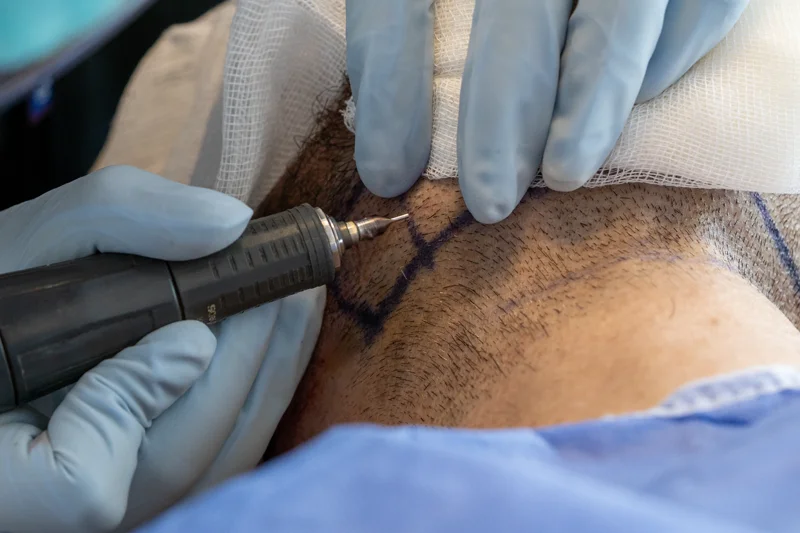
The beard is one of the most commonly considered donor areas for BHT because of its thick and robust follicles. Grafts are generally extracted from beneath the chin and less visible areas of the neck. Due to its greater thickness, beard hair can help enhance density, particularly in the mid-scalp and crown. Its use in the frontal hairline is carefully limited to maintain a soft and natural transition.
Chest-to-Scalp Hair Transplant
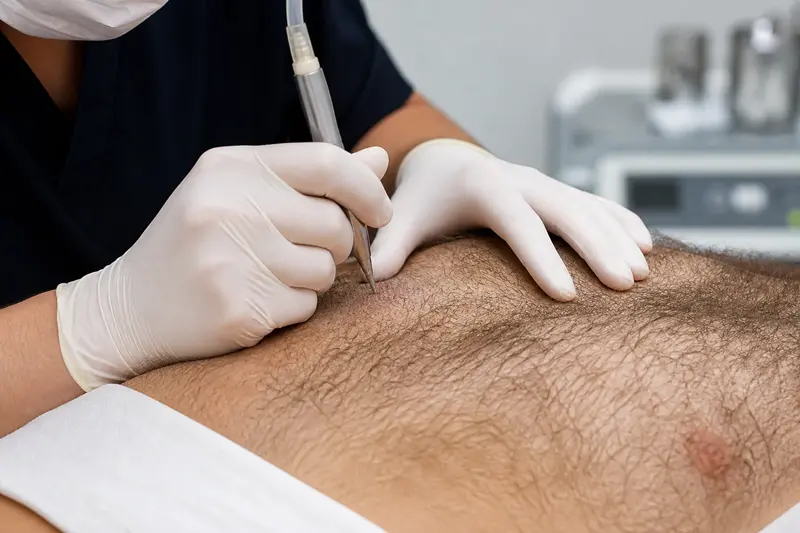
Beard hair is generally the first alternative donor option for BHT because of its thick and robust follicle structure. Chest hair is considered the second option and is used less frequently than beard hair. This is because chest hair is usually finer, grows to a shorter length, and has growth characteristics that vary from person to person. In suitable candidates with adequate chest-hair density and quality, these follicles may be used alongside scalp hair to support coverage in selected areas.
Hair Transplantation from Other Body Areas
Hair from the abdomen, back, arms, and legs is used very rarely in BHT hair transplantation. Compared with beard and chest hair, hair from these areas is generally finer, shorter, and may have characteristics that make it less suitable for transplantation. Its growth duration and development after transplantation can also vary between individuals, making the expected outcome less predictable.
Furthermore, the irregular distribution of hair across large areas of the body can make it difficult to collect a sufficient number of suitable grafts and may extend the procedure time. For these reasons, the beard is generally considered first, followed by chest hair with suitable characteristics. Other body areas are used only in selected cases.
How Is a BHT Hair Transplant Performed?
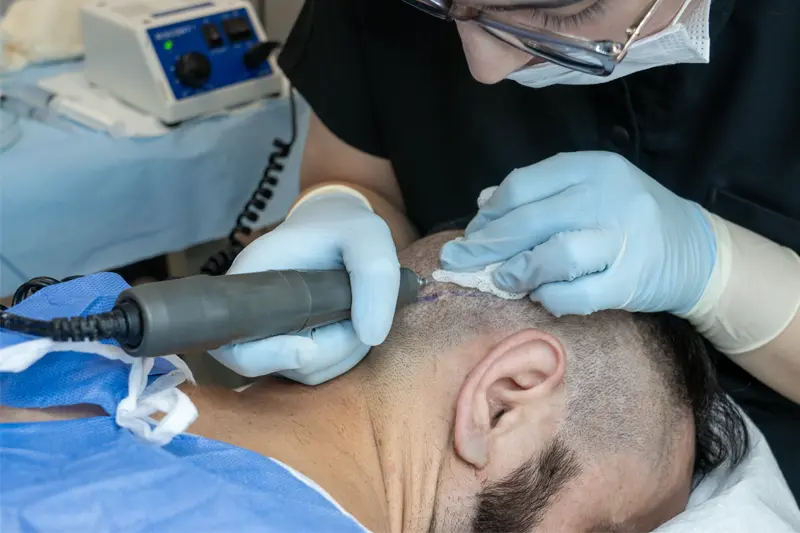
A BHT hair transplant begins with an assessment of suitable donor areas, primarily the beard and chest. The density, thickness, growth characteristics, and compatibility of the body hair with the scalp hair are examined to determine how many grafts can be safely extracted.
Under local anesthesia, suitable follicles are extracted individually using the FUE technique. After being examined, the grafts are implanted into bald or thinning areas while respecting the natural direction and angle of hair growth. Thick beard hair is generally used in the mid-scalp and crown to support visual density.
Careful donor selection, atraumatic graft extraction, and appropriate distribution across the scalp are essential for achieving a natural and balanced appearance.
How Is a BHT Hair Transplant Planned?
Planning a BHT hair transplant begins with evaluating the density and thickness of the beard and chest hair and its compatibility with the scalp hair. Once suitable follicles have been identified, a personalized extraction plan is prepared, taking their different emergence angles and follicular structures into account. The extracted grafts are then classified according to their characteristics. Thick beard grafts are distributed across areas requiring greater density, while finer follicles may be used in transitional areas. This approach aims to blend body hair with the existing scalp hair for a balanced and natural appearance.
Benefits of a BHT Hair Transplant
A BHT hair transplant provides an alternative source of grafts when donor capacity at the back of the scalp is insufficient. The thickness of beard hair, in particular, may help improve visual density when the grafts are used in appropriate areas.
The main potential benefits of a BHT hair transplant include:
- It may increase the total number of grafts available for transplantation.
- It allows the limited scalp donor area to be used more efficiently.
- It provides an additional option for people with advanced hair loss.
- It may help improve density in people who have undergone previous hair transplants.
- Thick beard hair may provide a fuller appearance in the mid-scalp and crown.
- It may be used to help conceal scars from previous procedures.
- It makes it possible to use suitable follicles from different areas of the body.
The benefits that can be achieved depend on the characteristics of the donor hair and the personalized transplant plan. Suitable grafts must therefore be identified and a realistic density goal established before the procedure.
Differences Between Body Hair and Scalp Hair
Body hair differs from scalp hair in terms of thickness, growth duration, and growth cycle. These differences directly affect donor selection and the areas in which the grafts can be placed during a BHT hair transplant.
| Feature | Body hair | Scalp hair |
|---|---|---|
| Thickness | Varies by area; beard hair is generally thicker | Usually has a more consistent thickness |
| Growth duration | Generally shorter and more limited | Can continue growing for longer |
| Growth cycle | The resting phase may be longer | The growth phase is generally longer |
| Follicle structure | Emergence angle and follicle depth can vary by area | Generally has a more consistent structure |
| Follicular units | Usually consists of single-hair follicular units | A single graft may contain multiple hairs |
| Visual compatibility | Must be distributed carefully across the scalp | Naturally matches the characteristics of scalp hair |
Transplanted body hair largely retains its original characteristics after the procedure. Beard and chest hair should therefore be regarded as supplementary donor sources rather than direct equivalents of scalp hair.
People considering BHT in Turkey can learn more about treatment planning, the clinical process, and the services available on our BHT hair transplant in Turkey page.
Frequently Asked Questions About BHT Hair Transplants
What is a BHT hair transplant?
A BHT hair transplant involves transferring follicles from suitable areas of the body, particularly the beard and chest, to bald or thinning areas of the scalp.
What is the best donor area for a BHT hair transplant?
The beard is generally the first choice because of its thick and robust follicles. Chest hair is considered the second option, while hair from the abdomen, back, arms, and legs is used much less frequently.
Does transplanted body hair grow like scalp hair?
Transplanted body hair continues to grow but may largely retain its original growth duration, thickness, and structural characteristics. It may therefore not reach the same length or appearance as scalp hair.
Is a BHT hair transplant suitable for everyone?
No. Donor hair density, thickness, growth characteristics, and compatibility with scalp hair must be evaluated. Suitability is determined after examining the scalp and potential body donor areas.
Are BHT hair transplant results permanent?
Healthy transplanted follicles may continue growing for a long time. However, results can vary according to the donor area, follicle structure, technique used, and individual healing process.
How many grafts can be extracted for a BHT hair transplant?
The number varies from person to person. A suitable graft count is determined by evaluating beard and chest hair density, the safe extraction area, and follicle quality.
Does a BHT hair transplant leave scars?
Because follicles are extracted individually using FUE, small dot-like marks may develop in the donor area. Their visibility depends on skin characteristics, the number of grafts extracted, the equipment used, and the healing process.
When are the results of a BHT hair transplant visible?
Some transplanted hairs may shed during the first few weeks. New growth generally begins over the following months, and the appearance develops gradually. The timing may vary because body hair has a different growth cycle.
Can body hair be used in the frontal hairline?
Because beard hair is thick, it may not always be suitable for creating a soft and natural frontal hairline. It is generally used to support density in the mid-scalp and crown; its use in the frontal area depends on hair characteristics and the transplant plan.