


What Are All-on-8 Dental Implants?
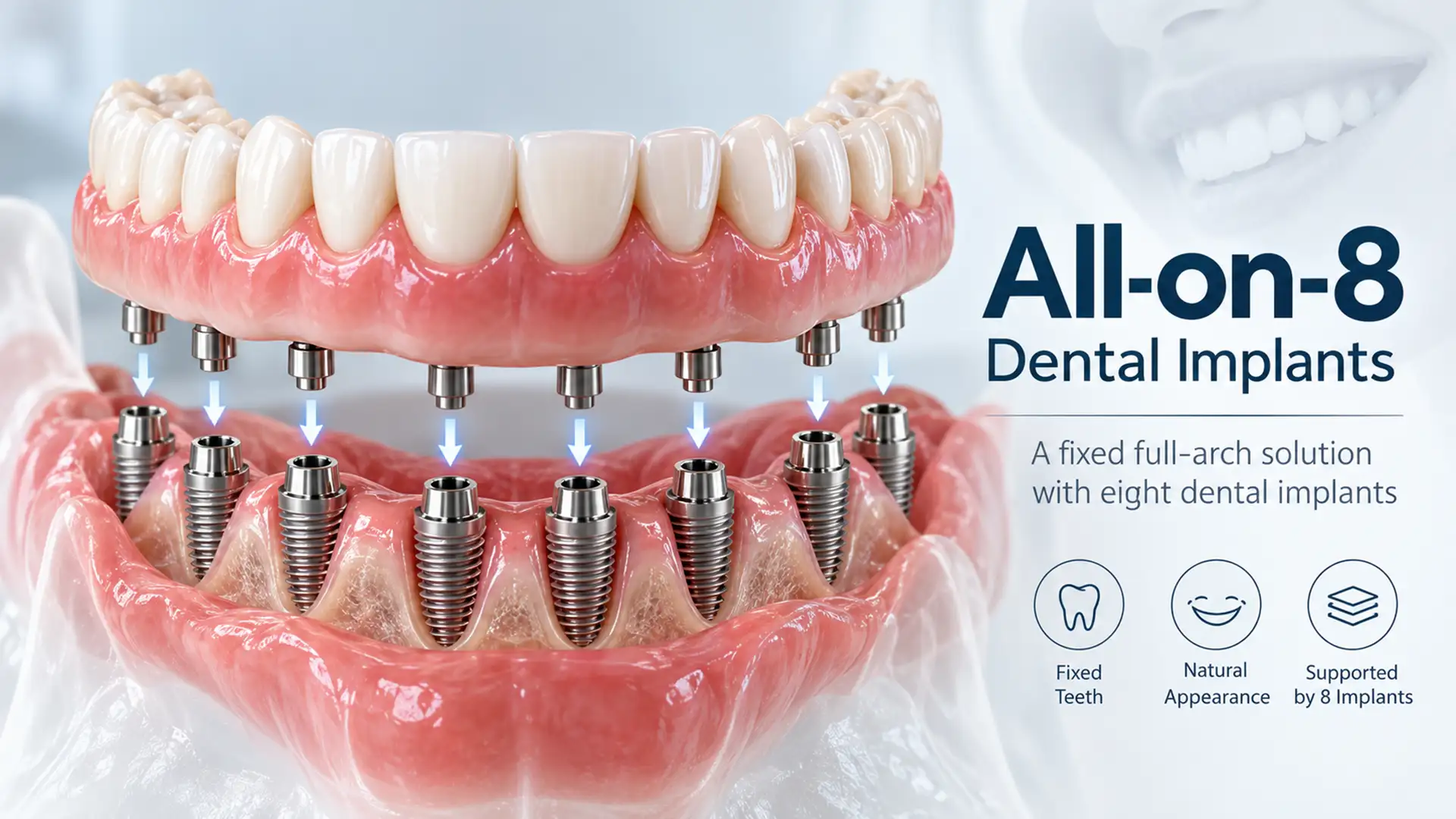
All-on-8 dental implants are a full-arch tooth replacement option that uses eight dental implants placed in one jaw to support a fixed dental prosthesis. This treatment may be considered for patients who have lost all their teeth or whose remaining teeth cannot be preserved. It aims to replace missing teeth, restore chewing function, and create a smile that looks natural.
With All-on-8 treatment, the number and positioning of implants are evaluated according to the jawbone structure and the planned prosthesis. In suitable patients with sufficient initial implant stability, temporary fixed teeth can usually be fitted within 3–4 days. Once the implants have integrated with the jawbone, the final fixed prosthesis is typically prepared after 4–6 months. However, not every patient needs eight implants. The most appropriate treatment plan is determined after a clinical examination and three-dimensional dental tomography (CBCT).
| Anesthesia | Usually local anesthesia |
| Number of implants | 8 implants per jaw |
| Procedure duration | Usually 2–3 hours per jaw; may vary depending on additional procedures |
| Temporary fixed teeth | Usually within 3–4 days in suitable patients |
| Initial recovery | Approximately 1–2 weeks |
| Final prosthesis | Usually after 4–6 months |
All-on-8 is one of the implant-supported fixed prosthesis options for patients with complete tooth loss. To learn more about the structure of dental implants and how they are placed, visit our dental implants page.
Patients planning their treatment in Istanbul can explore our guide to All-on-8 dental implants in Turkey for information about the treatment process, travel arrangements, and prices.
Who Is a Suitable Candidate for All-on-8 Dental Implants?
All-on-8 dental implants are one of the fixed tooth replacement options that may be considered for patients who have lost all the teeth in one jaw or whose remaining teeth cannot be preserved. However, the jawbone must have sufficient volume, quality, and suitable anatomical conditions to accommodate eight implants.
This treatment may be considered particularly in the following situations:
- Complete tooth loss: Patients who have lost all the teeth in their upper or lower jaw.
- Teeth that cannot be preserved: Patients whose remaining teeth cannot be saved due to severe damage or advanced periodontal problems.
- Preference for fixed teeth: Patients who prefer an implant-supported fixed prosthesis rather than removable dentures.
- Sufficient bone support: Patients with adequate jawbone volume and quality to allow eight implants to be placed in suitable positions.
- Commitment to long-term care: Patients who can maintain daily oral hygiene and attend regular dental checkups.
Who May Not Be Suitable for All-on-8 Dental Implants?
All-on-8 is not necessary or suitable for every patient. Severe bone loss, certain uncontrolled systemic diseases, active oral infections, and risk factors that may interfere with healing can affect the treatment plan.
When sufficient bone support is unavailable, additional procedures may be required, or alternative prosthetic options supported by fewer implants may be considered. Final eligibility is determined after an oral examination and three-dimensional dental tomography (CBCT).
How Are All-on-8 Dental Implants Placed?
All-on-8 dental implant treatment involves evaluating the jawbone, placing eight implants in carefully planned positions, and preparing an implant-supported fixed prosthesis. Each stage is tailored to the patient’s bone structure, oral health, and any additional procedures required.
1. Examination and Treatment Planning
During the initial stage, an oral examination is performed, and three-dimensional dental tomography (CBCT) is used to assess the volume, density, and anatomical structure of the jawbone. The planned implant positions, prosthesis design, and distribution of chewing forces are evaluated together.
If there are teeth that cannot be preserved, gum problems, or active infections, the necessary treatments are planned. In some cases where bone support is insufficient, additional procedures such as bone grafting may be required.
2. Implant Placement and Temporary Teeth
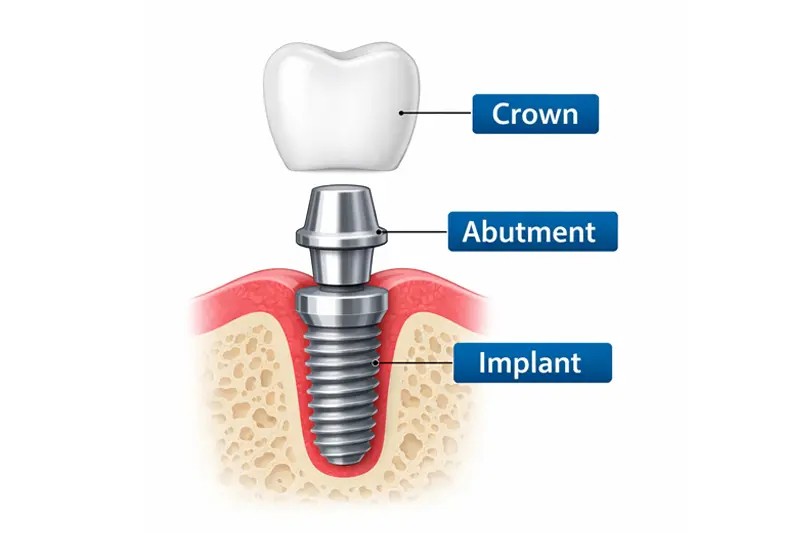
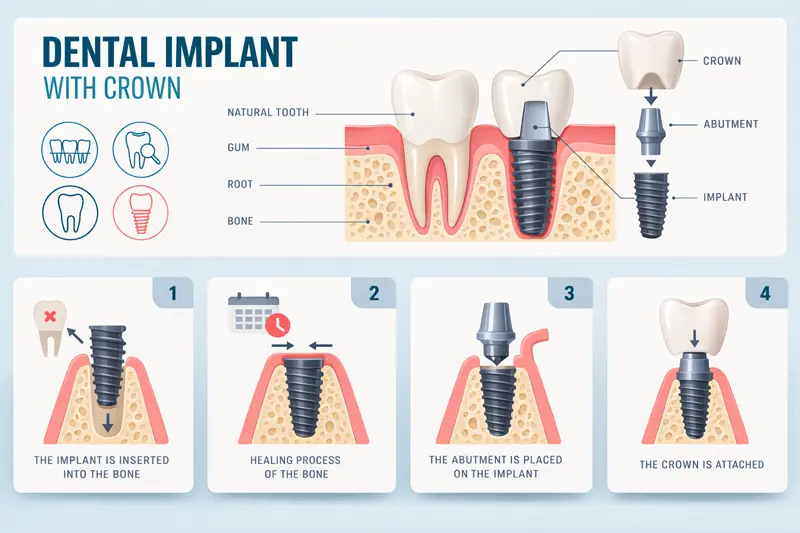
The surgical procedure is usually performed under local anesthesia. Eight dental implants are placed in predetermined positions in one jaw to support a fixed dental prosthesis. The duration of the procedure may vary depending on the bone structure, tooth extractions, and any additional treatments required.
In patients with sufficient initial implant stability who meet the conditions for early loading, temporary fixed teeth can usually be fitted within 3–4 days. However, this approach is not suitable for everyone. In some cases, a different temporary prosthesis plan may be preferred while the implants are allowed to heal.
3. Healing and Final Fixed Prosthesis
The process of implant integration with the jawbone, known as osseointegration, usually takes 4–6 months. During this period, it is important for patients, especially those wearing temporary fixed teeth, to avoid hard foods, maintain good oral hygiene, and attend recommended follow-up appointments.
Once sufficient bone integration has been achieved, dental impressions are taken, and the final fixed prosthesis is prepared. The shape, color, alignment, and bite relationship of the teeth are adjusted according to the patient’s facial features and chewing needs. In the final stage, the prosthesis is fitted, the bite is checked, and the patient receives instructions for long-term care.
Before and After All-on-8 Dental Implants
Proper treatment planning and healthy implant healing are essential before and after All-on-8 dental implants. Before the procedure, oral and general health are evaluated. After treatment, attention shifts to nutrition, oral hygiene, and regular follow-up appointments.
Before All-on-8 Dental Implant Treatment
- Medical history: Inform your dentist about chronic conditions, medications, and allergies. Do not stop taking prescribed medication without medical advice.
- Smoking: Smoking can negatively affect implant healing. Avoiding smoking before and after the procedure is recommended.
- Gum health: Active infections and periodontal problems should be evaluated, and any necessary treatment should be planned.
- Bone assessment: Three-dimensional dental tomography (CBCT) is used to examine bone volume and anatomical structures in the planned implant areas.
- Oral hygiene: Maintain good oral hygiene before the procedure and follow your dentist’s preparation instructions.
- Procedure day: Follow instructions regarding food, drinks, and medications according to the type of anesthesia planned.
After All-on-8 Dental Implant Treatment
During the first few days after the procedure, mild to moderate pain, swelling, tenderness, and slight bleeding may occur. These symptoms usually decrease gradually. The following recommendations should be followed during recovery:
- Avoid vigorous mouth rinsing, forceful spitting, and applying pressure to the surgical area during the first 24 hours.
- Choose soft, lukewarm foods during the first few days and avoid very hot or hard foods.
- Take medications prescribed by your dentist at the recommended dosage and for the specified duration.
- Avoid smoking and alcohol consumption.
- Limit strenuous exercise and intense physical activity during the first few days.
- Maintain oral hygiene according to your dentist’s instructions without irritating the implant areas.
- Even if temporary fixed teeth have been fitted, avoid chewing hard foods and placing excessive pressure on the prosthesis.
All-on-8 Dental Implant Recovery Timeline
Recovery time may vary depending on the patient’s bone structure, overall health, and any additional procedures performed. In general, the healing process follows this timeline:
- Days 1–3: Swelling, tenderness, and minor bleeding may occur.
- Days 3–7: Pain and swelling usually begin to decrease. Suitable patients may already be using temporary fixed teeth.
- Weeks 1–2: Initial healing of the soft tissues is largely complete. Sutures may be checked or removed if necessary.
- Months 1–3: The implants continue integrating with the jawbone. Excessive chewing pressure should not be placed on the temporary prosthesis.
- Months 4–6: Once sufficient bone integration has been achieved, the final fixed prosthesis can be prepared and fitted.
Having temporary fixed teeth fitted does not mean the implants have fully healed. If you experience increasing pain, persistent bleeding, fever, or worsening swelling, you should contact your dentist.
Advantages and Disadvantages of All-on-8 Dental Implants
All-on-8 dental implants are one of the treatment options for replacing a full arch of missing teeth with a fixed prosthesis supported by eight implants. In patients with suitable bone structure, this approach may allow the prosthesis to be supported at multiple points. However, alongside its benefits, there are certain limitations to consider.
Advantages of All-on-8 Dental Implants
- Fixed teeth: Provides a fixed dental prosthesis that remains in place during daily activities, offering an alternative to removable dentures.
- Chewing function: A properly planned prosthesis can help restore the ability to chew.
- Load distribution: Eight implants may allow chewing forces to be distributed among the implants supporting the prosthesis.
- Natural appearance: The shape, color, and alignment of the teeth can be planned according to the patient’s facial features and smile characteristics.
- Speech comfort: Replacing missing teeth may help improve speech and pronunciation in some patients.
- Prosthesis support: Under suitable anatomical conditions, placing eight implants in different areas may provide additional options for supporting a fixed prosthesis.
- Personalized planning: Implant positions and prosthesis design are determined according to the jawbone structure and the patient’s individual needs.
Disadvantages of All-on-8 Dental Implants
- Bone requirements: Sufficient jawbone volume and quality are necessary to place eight implants in suitable positions.
- Surgical procedure: Implant placement requires surgery, followed by a healing period.
- Additional procedures: Some patients may require tooth extractions, bone grafting, or other preparatory treatments.
- Treatment duration: The implants must integrate sufficiently with the jawbone before the final prosthesis is prepared. This process usually takes 4–6 months.
- Maintenance requirements: The underside of the fixed prosthesis and the areas around the implants require regular cleaning, along with professional dental checkups.
- Cost: Using eight implants may increase the overall treatment cost compared with some plans involving fewer implants.
- Not necessary for every patient: In some cases, four or six implants can provide sufficient support for a fixed prosthesis. More implants do not always mean better results.
The advantages and disadvantages of All-on-8 treatment vary from patient to patient. When determining the most appropriate number of implants, the condition of the jawbone, implant positioning, prosthesis design, and long-term maintenance requirements should all be considered.
Differences Between All-on-4, All-on-6, and All-on-8
All-on-4, All-on-6, and All-on-8 are treatment options used to replace a full arch of missing teeth with an implant-supported fixed prosthesis. The main difference is the number of implants used to support the prosthesis in each jaw. However, increasing the number of implants does not necessarily lead to better or longer-lasting results for every patient.
| Feature | All-on-4 | All-on-6 | All-on-8 |
|---|---|---|---|
| Number of implants | 4 per jaw | 6 per jaw | 8 per jaw |
| Prosthesis type | Fixed full-arch prosthesis | Fixed full-arch prosthesis | Fixed full-arch prosthesis |
| Bone requirements | May be suitable in some cases of bone loss | Requires suitable bone areas for six implants | Requires sufficient bone volume and suitable areas for eight implants |
| Implant positioning | Posterior implants may be placed at an angle | Six implants are distributed according to bone structure | Eight implants are distributed according to bone structure and prosthesis planning |
| Load distribution | Prosthesis supported by 4 implants | Prosthesis supported by 6 implants | Prosthesis supported by 8 implants |
| Temporary fixed teeth | Early placement may be possible in suitable patients | Early placement may be possible in suitable patients | Early placement may be possible in suitable patients |
| Final prosthesis | Usually after 4–6 months | Usually after 4–6 months | Usually after 4–6 months |
| Cost | Generally involves fewer implants | Additional implants may increase the cost | More implants may increase the total cost |
Which Is Better: All-on-4, All-on-6, or All-on-8?
There is no single option that is best for everyone. All-on-4 may be suitable for some patients with limited bone volume, while All-on-6 or All-on-8 may be considered when sufficient bone support is available. However, using eight implants is not always more beneficial than using four or six.
When selecting a treatment, the volume and quality of the jawbone, implant positioning, chewing forces, prosthesis design, and the patient’s overall health are evaluated together. Therefore, the most suitable approach should be determined after a clinical examination and three-dimensional dental tomography (CBCT).
Side Effects and Risks of All-on-8 Dental Implants
Since All-on-8 dental implant treatment involves surgery, some temporary side effects may occur after the procedure. As with any dental implant treatment, complications such as infection, failure of an implant to integrate with the jawbone, or problems with the prosthesis may also develop. The level of risk varies depending on the patient’s overall health, bone structure, oral hygiene, and treatment plan.
Side Effects of All-on-8 Dental Implants
Most side effects that occur after the procedure are temporary and gradually decrease as healing progresses.
- Swelling: May occur around the gums and cheeks. It is usually more noticeable during the first few days.
- Pain and tenderness: Mild to moderate discomfort may occur in the areas where the implants were placed.
- Minor bleeding: Slight bleeding or blood-tinged saliva may occur, particularly during the first few hours after surgery.
- Bruising: Some patients may experience temporary bruising around the cheeks and jaw.
- Chewing sensitivity: Chewing may feel uncomfortable during the first few days, and a soft-food diet may be necessary.
Risks of All-on-8 Dental Implants
Less common complications that may affect the treatment outcome include:
- Infection: An infection may develop at the surgical site or in the tissues surrounding the implants.
- Failure of osseointegration: One or more implants may fail to establish sufficient integration with the jawbone, potentially requiring removal or a revised treatment plan.
- Peri-implant inflammation: Poor oral hygiene and certain risk factors may contribute to inflammation and bone loss around the implants.
- Nerve or sinus complications: Depending on implant placement, complications such as nerve injury, numbness, or sinus-related problems in the upper jaw may occur.
- Prosthesis problems: Temporary or permanent prostheses may experience fractures, loose screws, wear, or bite-related issues.
- Long-term bone loss: A reduction in bone support around the implants may affect their long-term stability.
How Can the Risks Be Reduced?
Before the procedure, careful planning through a detailed examination and three-dimensional dental tomography is essential. Existing infections should be treated, and the patient’s overall health should be evaluated. After treatment, avoiding smoking, regularly cleaning the prosthesis and surrounding implant areas, following dietary recommendations, and attending scheduled dental checkups can help reduce the risk of complications.
If symptoms such as worsening pain, persistent bleeding, fever, pus discharge, increasing swelling, or prolonged numbness occur, the patient should contact their dentist without delay.
All-on-8 Dental Implant Results
The goal of All-on-8 dental implant treatment is to provide patients with complete tooth loss with a fixed, natural-looking, and functional set of teeth. Once treatment is complete, patients may find it easier to chew and speak without relying on removable dentures. However, results vary from person to person depending on the condition of the jawbone, implant positioning, and prosthesis design.
When preparing the final prosthesis, the color, shape, size, and alignment of the teeth are planned according to the patient’s facial features. The aim is not only to replace missing teeth but also to create a more balanced and natural-looking smile.
The long-term success of All-on-8 dental implants does not depend solely on the number of implants used. Consistent oral hygiene, healthy tissues surrounding the implants, proper use of the prosthesis, and regular dental checkups all play an important role in maintaining the results. Over time, certain prosthetic components may require maintenance, repair, or replacement.
Not every patient needs eight implants. For successful and sustainable treatment, the priority is selecting the appropriate number of implants and prosthesis design based on the patient’s individual anatomical conditions.
Frequently Asked Questions (FAQ)
What are All-on-8 dental implants?
All-on-8 dental implants are a treatment option that uses eight dental implants placed in one jaw to support a fixed full-arch prosthesis. This approach may be considered for patients who have lost all their teeth or whose remaining teeth cannot be preserved.
Are All-on-8 dental implants painful?
Implant placement is usually performed under local anesthesia, so pain is not expected during the procedure. After the anesthesia wears off, some pain, swelling, and tenderness may occur for a few days.
How long does All-on-8 dental implant surgery take?
The surgical procedure usually takes around 2–3 hours per jaw. However, the duration may vary if tooth extractions, bone grafting, or additional surgical procedures are required.
When are teeth fitted after All-on-8 implant surgery?
In suitable patients with sufficient initial implant stability, temporary fixed teeth can usually be fitted within 3–4 days. The final fixed prosthesis is typically prepared after the implants have integrated with the jawbone, usually after 4–6 months.
How long do All-on-8 dental implants last?
Dental implants can last for many years with proper care and regular checkups. However, a specific lifespan cannot be guaranteed. Implant longevity depends on oral hygiene, overall health, smoking habits, and chewing forces. Prosthetic components may require maintenance or replacement over time.
Is All-on-8 suitable for everyone?
No. Placing eight implants requires sufficient jawbone volume and suitable anatomical conditions. Overall health, gum health, and other risk factors must also be evaluated. Not every patient needs eight implants.
What is the difference between All-on-6 and All-on-8?
The main difference is the number of implants supporting the fixed prosthesis in one jaw. All-on-6 uses six implants, while All-on-8 uses eight. More implants do not always mean better results; the choice depends on bone structure and prosthesis planning.
Is bone grafting necessary for All-on-8 dental implants?
Bone grafting is not necessary for every patient. However, if there is insufficient bone in the planned implant areas, bone augmentation procedures may be considered. The need for grafting is determined after an examination and three-dimensional dental tomography.
When can I eat normally after All-on-8 dental implants?
Soft foods should be preferred during the first few days. Even with a temporary fixed prosthesis, hard foods should be avoided while the implants are healing. The return to a normal diet is planned according to healing progress and the dentist’s assessment.
How do you clean All-on-8 dental implants?
The areas around implant-supported fixed prostheses should be cleaned daily. A toothbrush, interdental cleaning tools, and methods for cleaning beneath the prosthesis may be used as recommended by the dentist. Regular professional checkups are important for maintaining healthy tissues around the implants.