


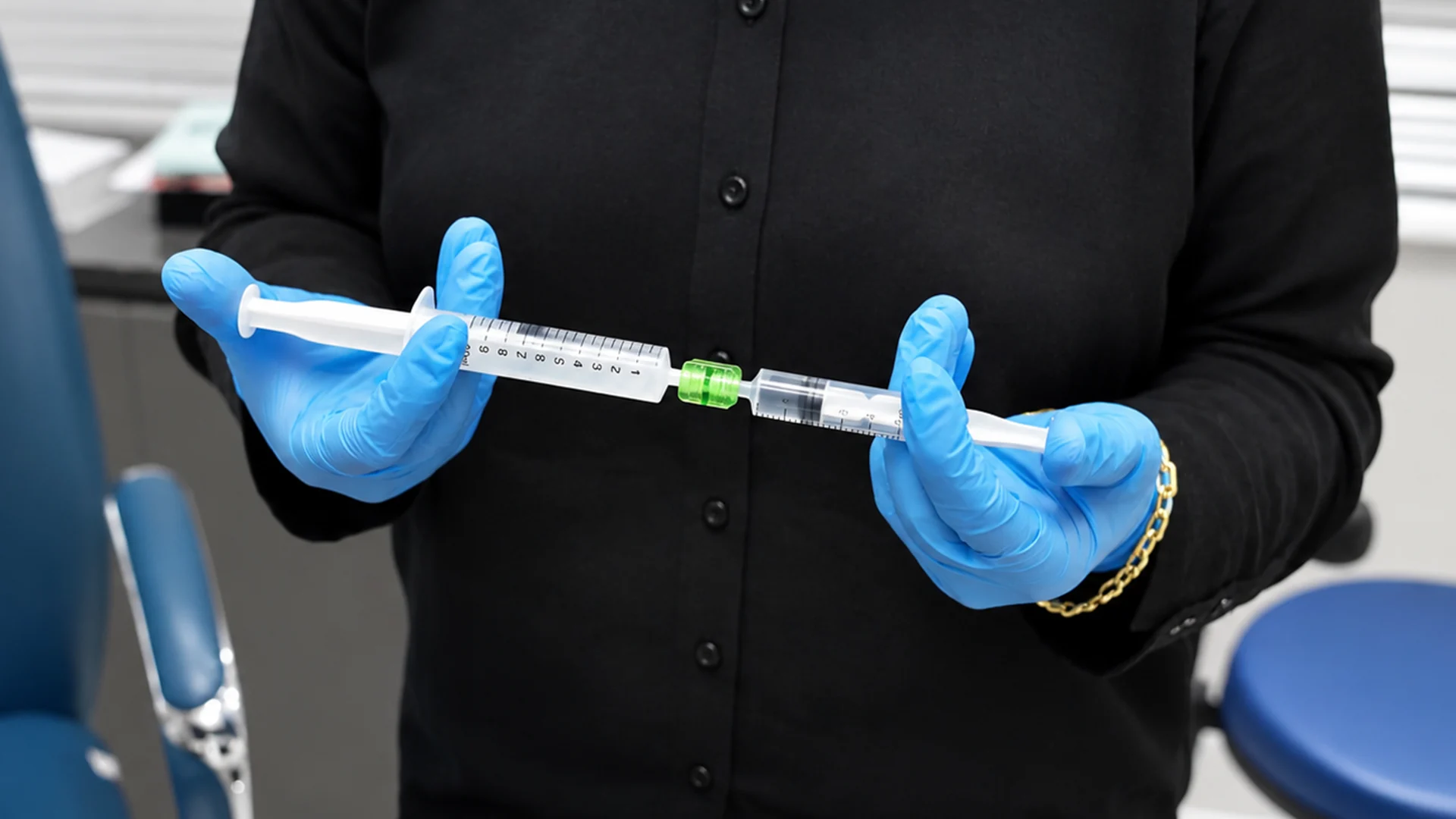
Liquid Facelift is a non-surgical facial rejuvenation procedure that uses injections to enhance facial contours, restore lost volume, and create a more refreshed appearance. Depending on the individual’s facial needs, dermal fillers and, when appropriate, botulinum toxin may be used together. The aim is to achieve a more balanced, youthful appearance while preserving natural facial expressions.
| Procedure duration | Usually 30–60 minutes |
| Anesthesia | Topical anesthetic cream |
| Return to daily activities | Usually the same day |
| Visible results | Filler effects may be noticeable immediately; the final appearance is assessed as swelling subsides |
| Duration of results | Varies depending on the product and treatment area |
| Main purpose | Restoring volume and balancing facial contours |
For more information about treatment options, the procedure in Istanbul, and current prices, visit our Liquid Facelift in Turkey page.
What Is a Liquid Facelift?
A liquid facelift is one of the non-surgical aesthetic procedures designed to improve age-related volume loss, reduced facial definition, and the appearance of certain wrinkles. Unlike traditional facelift surgery, it does not involve surgical incisions or physically lifting facial tissues.
Hyaluronic acid-based fillers can restore volume in the cheeks, cheekbones, jawline, and other areas where additional support is needed. Botox may also be included in the treatment plan when dynamic facial wrinkles are prominent. The products and injection sites are selected according to each person’s facial anatomy.
Which Areas Can Be Treated With a Liquid Facelift?
A liquid facelift is not limited to a single area of the face. The doctor evaluates overall facial proportions to identify areas that may benefit from volume restoration or improvement in the appearance of lines and wrinkles.
- Cheekbones: Restore volume in the midface and enhance facial definition.
- Cheeks: Reduce the hollow appearance caused by volume loss.
- Jawline: Improve the balance and definition of the lower facial contour.
- Chin: Provide projection and shape that complement overall facial proportions.
- Lines around the nose and mouth: Soften the appearance of pronounced folds in suitable patients.
- Temples: Restore fullness in areas affected by volume loss.
Benefits of a Liquid Facelift
A liquid facelift addresses volume loss and changes in facial contours through a personalized treatment approach. Its main advantages include avoiding surgery and generally requiring only a short recovery period.
- Does not require surgery or incisions.
- Helps create more balanced facial contours.
- Can target areas affected by facial volume loss.
- The procedure is usually relatively quick.
- Most people can return to their daily activities on the same day.
- The treatment plan can be tailored to individual facial anatomy.
How Is a Liquid Facelift Performed?
Before treatment, the doctor assesses facial anatomy, skin quality, volume loss, and the patient’s expectations. Once the treatment plan is established, the procedure is performed in the following steps.
1. Local Anesthesia
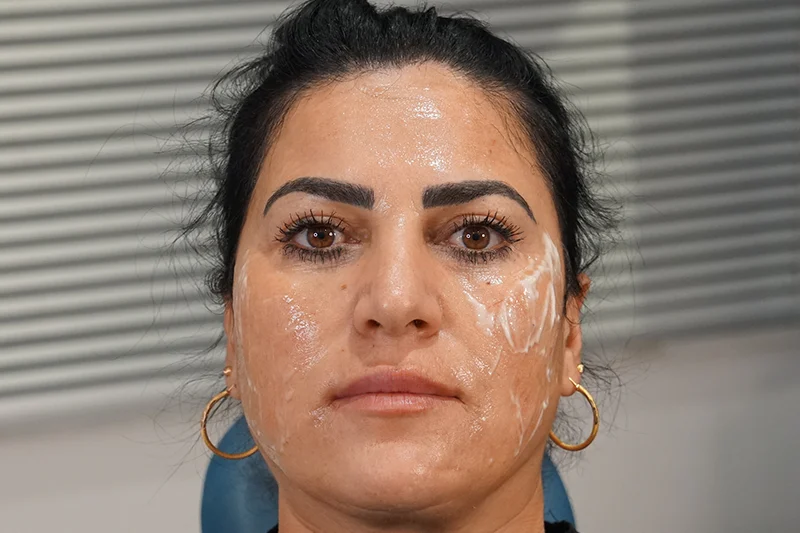
The skin is cleansed before treatment, and a topical anesthetic cream may be applied to the required areas. Some dermal fillers also contain a local anesthetic, which can help reduce discomfort during injections.
2. Facial Assessment and Marking
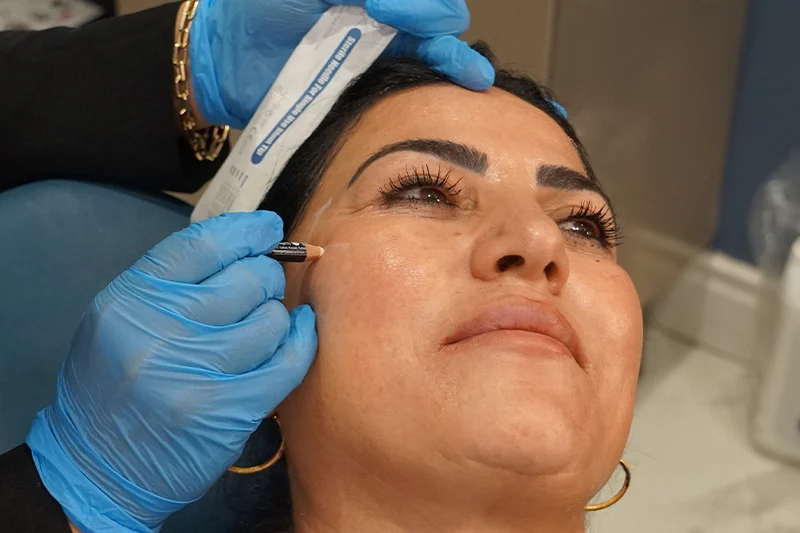
The doctor evaluates both sides of the face, areas of volume loss, and natural facial proportions. Injection points may be marked on the skin when necessary. This step helps create an individualized treatment plan.
3. Filler and Injection Treatment
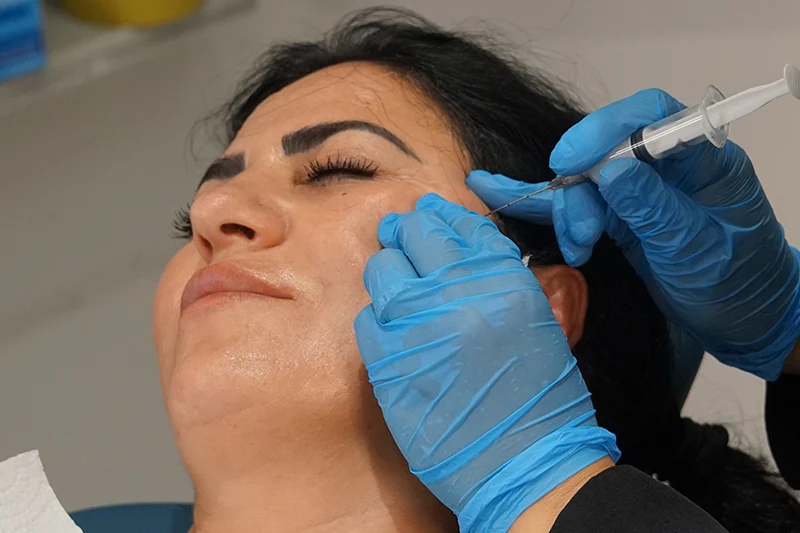
Suitable dermal fillers are injected into the selected areas using a fine needle or cannula. Different consistencies of hyaluronic acid fillers may be chosen according to facial needs. If dynamic wrinkles also require treatment, botulinum toxin may be administered at separate injection points.
Throughout the procedure, attention is given to overall facial balance and maintaining a natural appearance. Not every patient requires the same amount of filler.
4. Post-Treatment Assessment
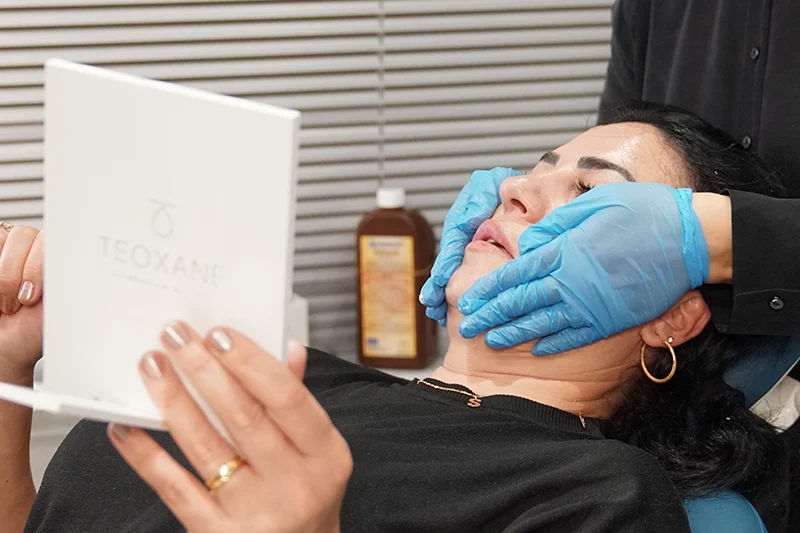
After the injections, the doctor evaluates the facial contours and treated areas. Mild redness, tenderness, or swelling may occur. Aftercare instructions are provided, and a follow-up appointment may be scheduled if needed.
Who Is a Good Candidate for a Liquid Facelift?
This procedure may be considered for individuals with mild to moderate facial volume loss who want to enhance their facial contours and are looking for a non-surgical facial rejuvenation option.
- People experiencing volume loss in the cheeks and cheekbone areas.
- Those who want more balanced facial contours.
- Individuals who wish to reduce the appearance of certain age-related lines.
- People considering non-surgical facial rejuvenation treatments.
For individuals with significant skin sagging, injectable treatments cannot achieve the same results as surgical facelift procedures. Pregnancy, breastfeeding, active infections, certain allergies, and medical conditions must also be considered when planning treatment.
What to Consider Before Treatment
Before treatment, patients should inform their doctor about any medications they take, previous aesthetic procedures, and existing medical conditions.
- Inform the doctor about blood-thinning medications and supplements.
- Disclose any previous dermal filler or Botox treatments.
- Report any infection or active skin condition in the treatment area.
- Follow the doctor’s recommendations regarding alcohol consumption and skincare products before the procedure.
- Do not stop taking prescribed medications without medical advice.
What to Consider After Treatment
Most people can return to their daily activities shortly after treatment. However, temporary tenderness and swelling may occur around the injection sites, so certain precautions are recommended during the first few days.
- Avoid unnecessary pressure on the treated areas during the first few hours.
- Do not massage your face unless instructed by your doctor.
- Avoid strenuous exercise and excessive heat during the first 24 hours.
- Keep the injection sites clean.
- Attend any recommended follow-up appointments.
Liquid Facelift Results and How Long They Last
The volume-enhancing effects of dermal fillers are usually noticeable immediately after treatment. However, the final appearance can be assessed more accurately once injection-related swelling has subsided. If botulinum toxin is used, its effects typically begin to appear within a few days.
The longevity of hyaluronic acid fillers depends on the product used, the treatment area, and the individual’s metabolism. In many filler treatments, results may last approximately 12–18 months. Botox effects generally last around 4–6 months.
Additional treatment may be planned after a follow-up examination if needed. The aim is to achieve a balanced result while preserving the face’s natural appearance.
Side Effects and Risks
Mild and temporary side effects are common after injectable treatments. However, as with any medical procedure, more serious complications are also possible.
- Redness and swelling at the injection sites.
- Tenderness or mild pain.
- Temporary bruising.
- Asymmetry or an uneven filler appearance.
- Infection or filler-related nodule formation.
- Rare but serious complications, such as vascular occlusion, tissue damage, or vision loss.
If severe or progressively worsening pain, skin blanching, purplish discoloration, or vision problems develop after an injection, emergency medical evaluation is necessary. The procedure should be performed by a qualified doctor with detailed knowledge of facial anatomy.
Liquid Facelift vs. Surgical Facelift: Key Differences
| Feature | Liquid Facelift | Surgical Facelift |
|---|---|---|
| Method | Calcium Hydroxylapatite (CaHA) Fillers | Surgical lifting and repositioning of facial tissues |
| Incisions | None | Required |
| Anesthesia | Usually topical anesthetic cream | General anesthesia or sedation, depending on the surgical plan |
| Recovery | Generally short | Longer recovery period |
| Effect | Volume restoration and contour enhancement | Correction of significant tissue sagging |
| Longevity | Temporary | Longer-lasting |
These two procedures address different needs. While dermal fillers can restore facial volume, a surgical facelift may be more effective for correcting significant tissue sagging. The most suitable approach depends on the individual’s facial anatomy.
Frequently Asked Questions
What is a liquid facelift?
It is a non-surgical procedure that uses dermal fillers and, when needed, Botox to restore facial volume and enhance contours.
How long does a liquid facelift take?
The procedure usually takes 30–60 minutes, depending on the areas being treated.
Is a liquid facelift painful?
Topical anesthetic cream and appropriate injection techniques can help minimize discomfort.
How long does a liquid facelift last?
Depending on the product used, filler results often last approximately 12–18 months.
Will my face swell after treatment?
Mild swelling or bruising may occur around the injection sites. These effects are usually temporary.
Is a liquid facelift the same as facelift surgery?
No. A liquid facelift restores volume through injections, while surgical facelift procedures reposition sagging facial tissues.
Can I return to work after a liquid facelift?
Most people can return to daily activities the same day, although temporary swelling or bruising may occur.
At what age can you have a liquid facelift?
Suitability depends more on facial needs, overall health, and medical assessment than on a specific age.