


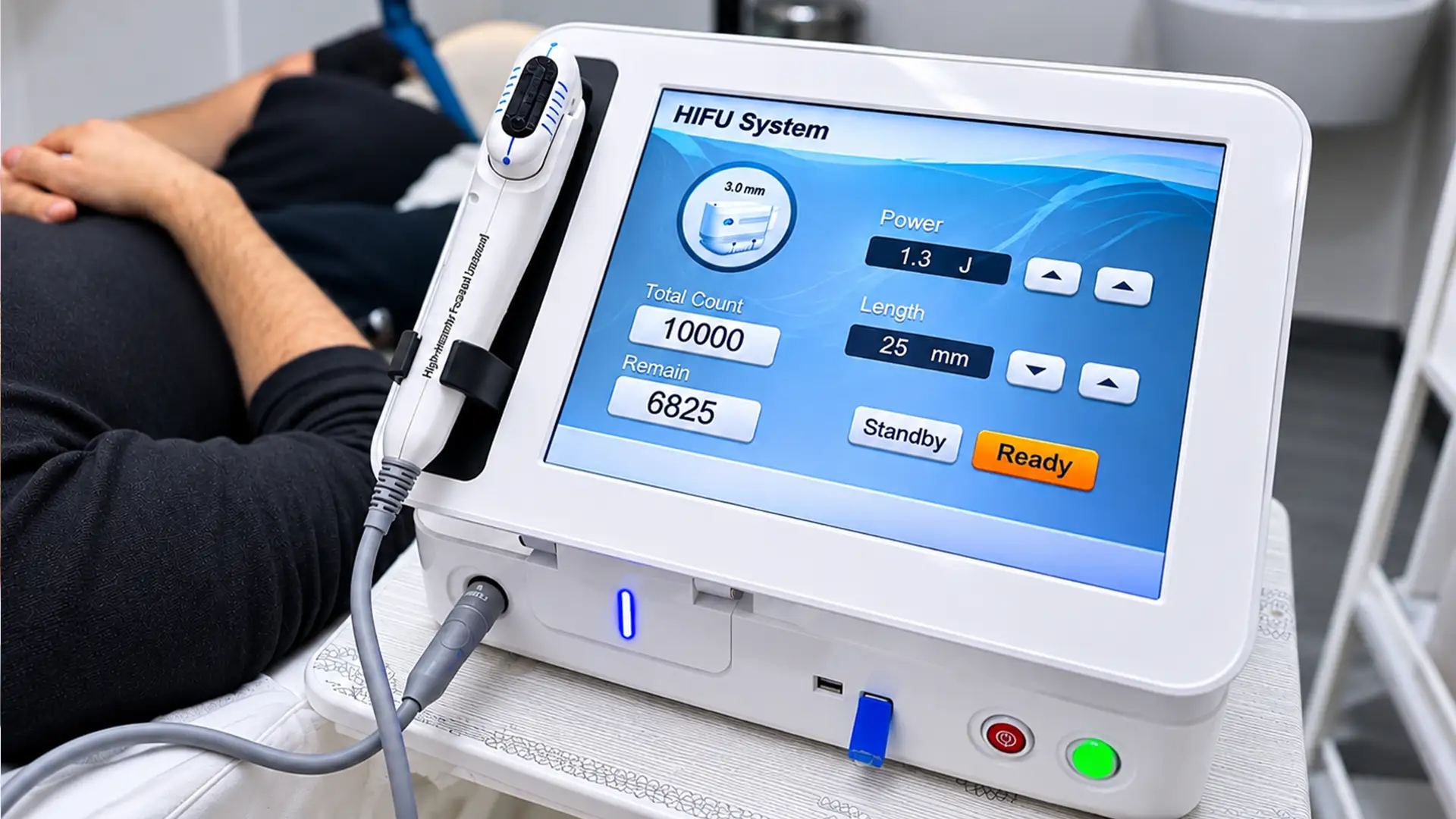
HIFU treatment is a non-surgical skin tightening procedure that uses high-intensity focused ultrasound energy to create controlled thermal effects at specific depths beneath the skin. It may help improve the appearance of mild to moderate skin laxity, particularly around the facial contours, jawline, and neck.
This non-surgical facelift approach aims to support collagen remodeling, helping the skin appear firmer over time. Results vary depending on skin characteristics and the degree of laxity. HIFU is not a direct replacement for surgical facelift procedures.
| Treatment Areas | Face, under the chin, and neck |
| Procedure Duration | Approximately 30–90 minutes |
| Number of Sessions | Determined by individual needs |
| Recovery | Usually a quick return to daily activities |
| Visible Results | Generally within 2–3 months |
| Duration of Results | Varies from person to person |
For information about treatment options, prices, and the process for international patients, read our article on HIFU Treatment in Turkey.
What Is HIFU Treatment?
This technology works by concentrating ultrasound energy at specific tissue depths without directly targeting the skin surface. The controlled thermal effect aims to stimulate the tissue’s natural repair response and support collagen production.
Devices designed for aesthetic use may help improve the appearance of skin laxity, particularly in the face and neck. Treatment effectiveness depends on the device’s specifications, the selected depth, and the individual’s anatomy.
How Does HIFU Work?
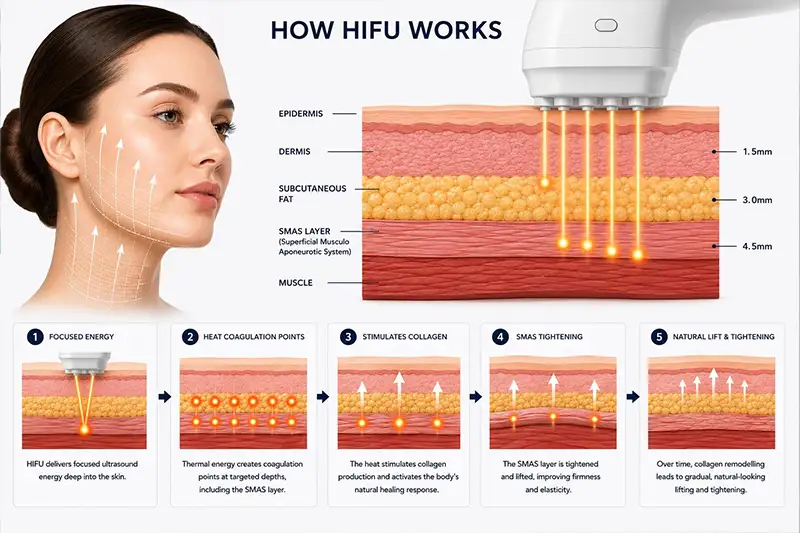
A HIFU device delivers focused ultrasound waves to specific tissue layers. The controlled heat generated at the targeted points may cause changes in existing collagen fibers and trigger a healing response that supports new collagen formation over time.
- Focused energy: Ultrasound waves are directed to a selected tissue depth.
- Controlled thermal effect: Small areas of thermal stimulation are created within the targeted tissues.
- Collagen response: Tissue remodeling may develop gradually over time.
- Gradual tightening: Changes in skin appearance may become more noticeable over the following weeks and months.
HIFU devices may offer different treatment depths. However, not all devices have the same features, and not every depth is suitable for every patient. Treatment settings should be selected following a professional assessment.
Which Areas Can Be Treated With HIFU?
This skin tightening method may be considered for different areas depending on the device’s capabilities and individual needs. The face, area under the chin, and neck are among the most commonly treated regions.
Face
Treatment may help reduce the appearance of mild skin laxity, particularly around the lower cheeks and facial contours. The aim is to support a firmer, more balanced appearance while preserving natural facial features.
Jawline and Under the Chin
It may be considered for people experiencing mild loss of jawline definition. However, treatment alone may not be sufficient when there is significant fat accumulation or advanced excess skin.
Neck
The procedure aims to improve the appearance of mild to moderate skin laxity in the neck. Skin thickness, elasticity, and anatomical characteristics should be considered when planning treatment.
Other Body Areas
Some systems can also be used on selected body areas with appropriate applicators. However, not every device is designed for body treatments. Suitability depends on the device’s intended uses and the individual’s tissue characteristics.
Who Is a Suitable Candidate for HIFU?
This procedure may be considered for individuals who want to improve skin firmness without surgery, particularly those with mild to moderate skin laxity.
- People with mild loss of facial contour definition.
- Those experiencing slight skin laxity along the jawline or neck.
- Individuals seeking firmer-looking skin due to reduced elasticity.
- People with realistic expectations of non-surgical treatments.
This procedure may not meet expectations in cases of severe skin sagging, significant facial volume loss, or major changes in facial contours. The most appropriate treatment should be determined through a clinical assessment.
Who Should Not Have HIFU Treatment?
This method is not suitable for every patient. Certain health conditions may require postponing the procedure or considering an alternative treatment.
- Active infection or open wounds in the treatment area.
- Pregnancy or breastfeeding, due to insufficient safety data during these periods.
- Certain implants or electronic medical devices located in the treatment area.
- Specific nerve or tissue disorders affecting the intended treatment region.
- Other contraindications specified in the device’s instructions for use.
Previous dermal fillers, thread lifts, surgical procedures, or other aesthetic treatments should always be disclosed. Although these do not necessarily prevent treatment, they may affect the treatment plan.
How Is HIFU Treatment Performed?
The procedure is planned according to the individual’s skin characteristics and the area being treated. Energy levels and treatment depths may vary depending on the device used.
1. Skin Assessment
Skin laxity, facial anatomy, and the patient’s expectations are assessed first. The treatment areas and appropriate device settings are then determined.
2. Skin Preparation
The treatment area is cleaned, and a suitable gel is applied to facilitate ultrasound energy transmission. Additional comfort measures may be used when necessary.
3. Ultrasound Application
The device applicator is placed over the selected areas to deliver focused ultrasound energy. Temporary warmth, tingling, or tenderness may be experienced during the procedure.
4. Post-Treatment Assessment
After the procedure, the skin is examined and aftercare instructions are provided. Most people can return to their normal daily activities shortly afterward.
Before HIFU Treatment
- Inform the practitioner about any medications you take and existing health conditions.
- Disclose any previous dermal fillers, Botox injections, thread lifts, or surgical procedures.
- Any active infection or skin irritation in the treatment area should be assessed beforehand.
- Keep your skin clean and avoid heavy makeup on the day of treatment.
- Discuss the expected results and potential side effects before the procedure.
After HIFU Treatment
Most people can resume their daily activities after HIFU treatment. However, temporary skin sensitivity may occur, so it is important to follow the practitioner’s aftercare instructions.
- Avoid harsh treatments or activities that may irritate the skin during the first few days.
- Protect your skin from the sun and maintain a regular skincare routine.
- Avoid vigorous massage or pressure on the treated area if sensitivity occurs.
- Consult your specialist about the appropriate timing for other aesthetic procedures.
- Seek medical evaluation if you experience severe pain, signs of burns, noticeable muscle weakness, or persistent numbness.
HIFU Treatment Before and After
The changes seen in HIFU before and after results depend on the degree of skin laxity and the individual’s response to treatment. People with mild to moderate laxity may notice a firmer appearance around the facial contours, jawline, and neck.
Results generally develop gradually, and the degree of improvement may vary between patients. When comparing before and after photographs, lighting, facial angles, and expressions should be as consistent as possible.
Side Effects and Risks
Although HIFU is a non-surgical procedure, it is not entirely risk-free. The frequency and severity of side effects may vary depending on the device used and the treatment technique.
- Temporary redness and swelling.
- Tenderness or pain in the treated area.
- Temporary tingling or numbness.
- Rarely, burns, blisters, or changes to the skin surface.
- Rarely, temporary muscle weakness caused by nerve involvement.
- Unwanted tissue or fat loss if the procedure is performed incorrectly.
To reduce these risks, the suitability of the device, treatment depth, and the individual’s anatomical characteristics should be carefully evaluated. Medical attention should be sought if unexpected or persistent symptoms occur.
HIFU vs. Surgical Facelift: Key Differences
HIFU and a surgical facelift are different procedures. HIFU is a non-surgical approach designed to improve the appearance of mild to moderate skin laxity. A surgical facelift, on the other hand, may offer a more comprehensive solution for significant tissue sagging.
| Feature | HIFU | Surgical Facelift |
|---|---|---|
| Method | Focused ultrasound | Surgical intervention |
| Incisions | None | Required |
| Target | Mild to moderate skin laxity | More significant tissue sagging |
| Recovery | Generally short | Longer recovery period |
| Results | Gradual and more limited | Generally more noticeable |
The most suitable approach should be determined according to the degree of skin laxity, the individual’s health condition, and their expectations.
Frequently Asked Questions
Does HIFU treatment really work?
It may help improve the appearance of mild to moderate skin laxity in suitable candidates. Results vary from person to person.
Is the procedure painful?
You may feel warmth, tingling, or tenderness during treatment. Discomfort varies depending on individual sensitivity and device settings.
How long does the procedure take?
Treatment generally takes 30–90 minutes, depending on the area being treated.
When are HIFU results visible?
Results develop gradually and usually become more noticeable within 2–3 months.
How many sessions are needed?
One session may be sufficient for some people. Additional sessions depend on skin characteristics and the response to treatment.
How long do the results last?
The duration varies between individuals. Some people may notice results for a year or longer.
Can I return to work after treatment?
Most people can return to daily activities shortly afterward. Temporary redness or tenderness may occur.
Can HIFU replace a surgical facelift?
No. It may provide more limited tightening and cannot achieve the same results as surgery in cases of severe skin sagging.
When can I expect to see HIFU results?
Results generally become noticeable within 2–3 months. Timing may vary depending on age, skin elasticity, and individual response.
How long does the HIFU effect last?
The duration varies. Some people may notice results for a year or longer. The need for repeat treatment depends on skin condition.