

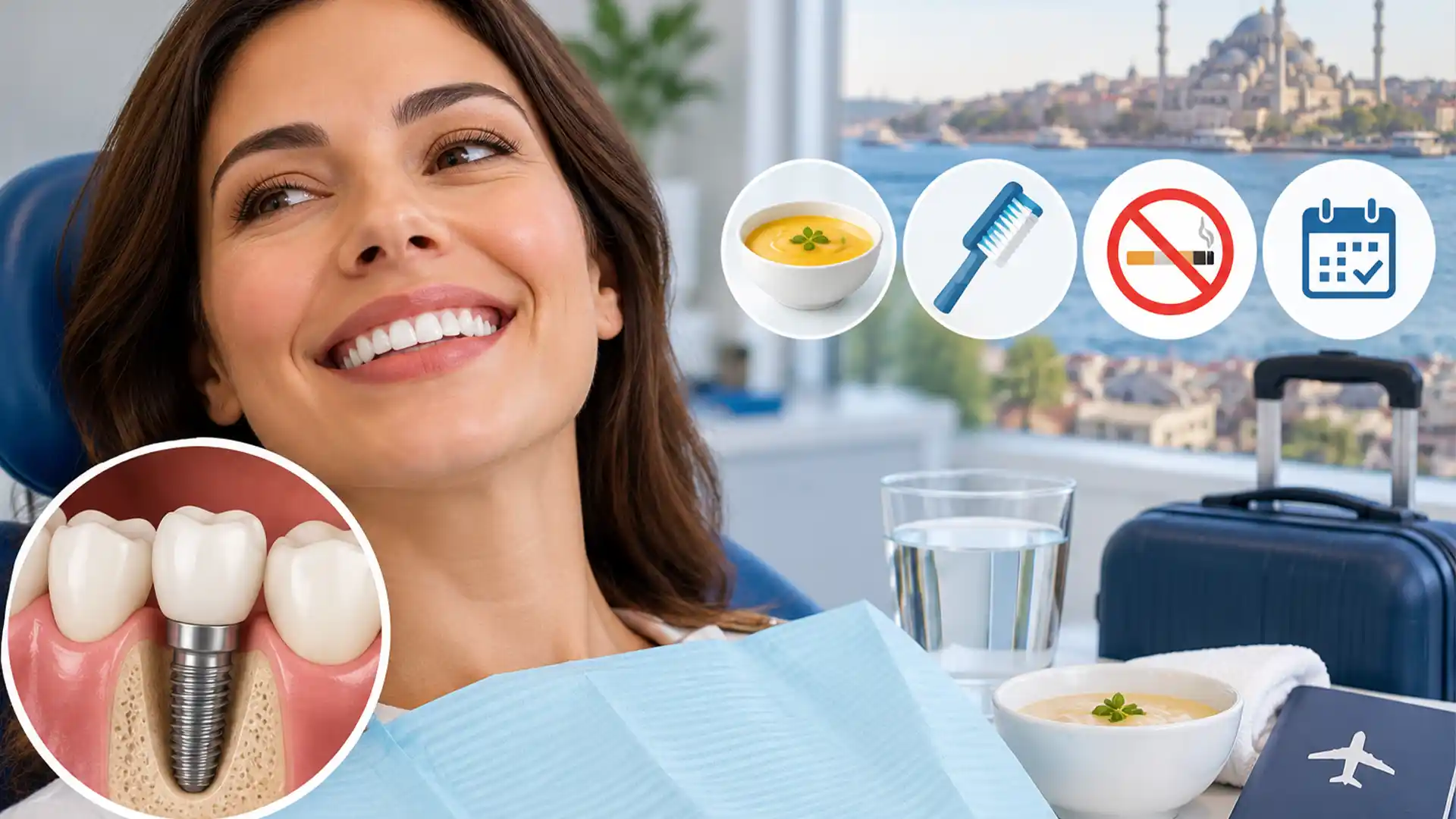
After getting dental implants, it is important to pay close attention to oral care, nutrition, and your dentist’s recommendations, especially during the first few days, to support a healthy recovery.
The recovery process after dental implant treatment can vary from person to person. The number of implants placed, the structure of the jawbone, and whether additional procedures such as bone grafting were performed during the same session can all affect recovery.
The First 24 Hours After Dental Implant Surgery
The first 24 hours after dental implant surgery are important for protecting the surgical area. During this period, you should:
- Avoid touching the surgical area with your tongue or fingers.
- Avoid forcefully rinsing your mouth or spitting during the first few hours.
- Avoid very hot foods and drinks.
- Do not eat hard foods.
- Avoid smoking and alcohol.
- Take any medication prescribed by your dentist exactly as directed.
- Avoid strenuous physical activity on the first day.
Minor bleeding or oozing may occur during the first few hours. However, you should contact your dentist if the bleeding continues or becomes heavier.
Swelling and Pain After Dental Implant Surgery
Mild to moderate pain, tenderness, and swelling may occur after dental implant surgery. Swelling may be more noticeable when several implants have been placed or additional surgical procedures have been performed.
Swelling usually becomes more noticeable during the first few days and then begins to subside. The intensity of the pain may vary depending on the extent of the procedure and the individual’s healing process.
Taking the pain medication recommended by your dentist and protecting the surgical area during the initial recovery period can help make the process more comfortable.
What Can You Eat After Dental Implant Surgery?
Choosing soft, easy-to-chew foods, especially during the first few days after implant surgery, can help protect the surgical area.
The following foods may be suitable during the initial recovery period:
- Yogurt
- Warm soup
- Mashed foods
- Soft vegetables
- Eggs
- Other soft-textured foods
Avoid foods that are very hot, hard, crusty, or likely to put pressure on the surgical area. Whenever possible, chew on the side opposite the implant site.
The time required to return to your normal diet may vary depending on the extent of the procedure and how well the area is healing.
Oral Care After Dental Implant Surgery
You should not stop maintaining oral hygiene after dental implant surgery. However, because the surgical area may be sensitive during the first few days, it should be cleaned carefully.
Your other teeth can be cleaned as usual, while the implant area should be cared for according to your dentist’s instructions. As healing progresses, the area surrounding the surgical site can be cleaned more regularly.
Controlling plaque buildup around the implant is important in the long term. Regular brushing, appropriate interdental cleaning, and routine dental checkups help protect the gums and tissues surrounding the implant.
Follow-Up After Dental Implant Surgery in Turkey
For patients who undergo dental implant treatment in Turkey, the follow-up plan is determined according to the extent of the procedure and the progress of recovery.
During the first follow-up appointment, the implant site, gum tissue, and overall healing progress are evaluated. If sutures were used, the appropriate time for checking or removing them is determined.
Once the healing period required for the implant to integrate with the jawbone is complete, the preparation of the crown or other prosthetic components can begin. The length of this period may vary from one patient to another.
The follow-up and treatment schedule may be planned differently when several implants are placed or additional procedures such as a dental bone graft or sinus lift are performed. For international patients travelling for dental treatment in Turkey, follow-up dates, treatment stages, and travel plans can be coordinated together.
Online Follow-Up After Leaving Turkey
For international patients, part of the follow-up process may continue online after they leave Turkey.
When necessary, photographs of the implant site or recent X-rays can be shared. This allows an initial assessment of the healing process and helps determine the timing of the next stage of treatment.
However, online follow-up cannot fully replace a clinical examination. If unexpected pain, swelling, bleeding, or any unusual change develops around the implant site, an in-person evaluation by a dentist may be required.
Frequently Asked Questions
How long does pain last after dental implant surgery?
Pain and tenderness may occur during the first few days and are generally expected to decrease over time. If the pain becomes progressively worse or continues for an extended period, you should consult your dentist.
When can you eat after dental implant surgery?
You can begin eating according to your dentist’s instructions once the local anaesthetic has worn off. Soft foods that are not very hot should be preferred during the initial recovery period.
When does swelling subside after dental implant surgery?
Swelling may become more noticeable during the first few days and should then begin to decrease gradually. Recovery time can vary depending on the extent of the procedure.
Can you smoke after dental implant surgery?
Smoking is not recommended after dental implant treatment because it can negatively affect the healing of oral tissues. Avoiding smoking is particularly important during the early healing period.
When can you brush your teeth after dental implant surgery?
You can continue maintaining oral hygiene in areas away from the implant. During the first few days, the surgical site should be cleaned gently and according to your dentist’s instructions.
When should you contact a dentist after dental implant surgery?
You should contact your dentist if you experience worsening or persistent pain, heavy or continuous bleeding, significant swelling, fever, an unpleasant taste or discharge, or a feeling of movement around the implant site.