

Dental implants are considered one of the most advanced solutions for replacing missing teeth and restoring a natural smile permanently. This technique relies on placing a metal implant inside the jawbone to act as an artificial root on which the new tooth is fixed, giving the patient strong stability and an appearance very close to natural teeth.
Many patients choose this treatment because it provides a permanent solution for missing teeth and helps improve chewing and speech. It also helps maintain the shape of the jaw and prevents bone loss. With the major advancements in dental technologies, this procedure has become a common and safe treatment when performed in specialized clinics by experienced dentists. Many patients also search for treatment options abroad, and more information about dental implants in Turkey can be found to learn about the treatment process and the services available for international patients.
| Anesthesia | Local |
| Procedure Duration | 10 – 30 minutes per implant |
| Longevity of Results | Lifetime |
| Time Needed to Place the Crown | 3 – 6 months |
| Recovery Time | 3 days |
What Are Dental Implants?
Dental implants are a medical procedure used to replace missing teeth in a permanent and natural way. The process involves placing a small implant, usually made of titanium, inside the jawbone to act as an artificial root for the tooth. After a healing period during which the implant fuses with the bone, an abutment is placed followed by a dental crown that resembles natural teeth in both shape and function.
This method is considered one of the most effective solutions for replacing missing teeth because it provides excellent stability and a natural appearance. It also helps preserve the jawbone and prevent bone loss over time. Implants can be used to replace a single missing tooth, several teeth, or even restore a full set of teeth in some cases using advanced techniques.
Parts of a Dental Implant
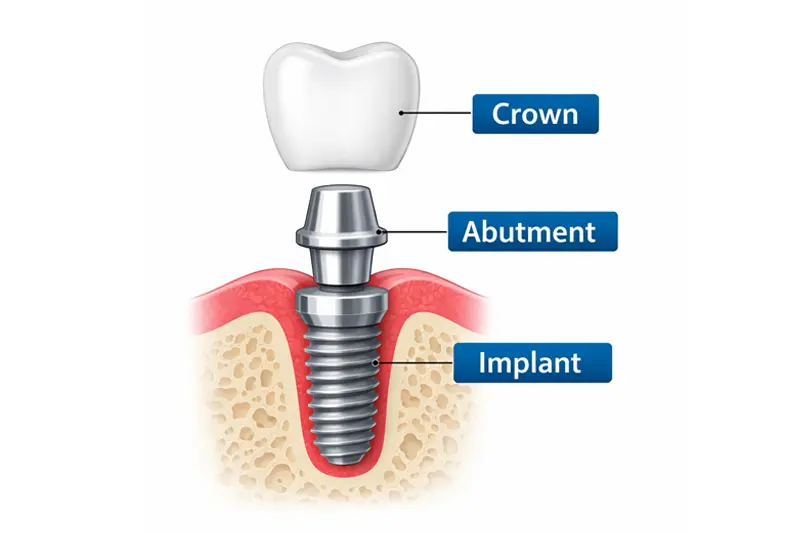
A dental implant consists of several parts that work together to replace the missing tooth naturally in both appearance and function. These components are placed in an integrated manner to mimic the structure of a natural tooth, providing strong stability and a very natural look.
Implant
The implant is the main component of the dental implant procedure. It is a small screw-like structure usually made of titanium that is placed inside the jawbone. This piece functions as an artificial root for the tooth and integrates with the bone during the healing period to provide a stable base for the new tooth.
Abutment
The abutment is the component that connects the implant to the dental crown. It is attached above the implant after the healing stage is complete and acts as a support that holds the artificial tooth securely in place.
Dental Crown
The crown is the visible part of the tooth and resembles a natural tooth in both shape and color. It is custom-designed to match the surrounding teeth, giving the patient a natural appearance and restoring normal chewing function.
How Is a Dental Implant Performed?
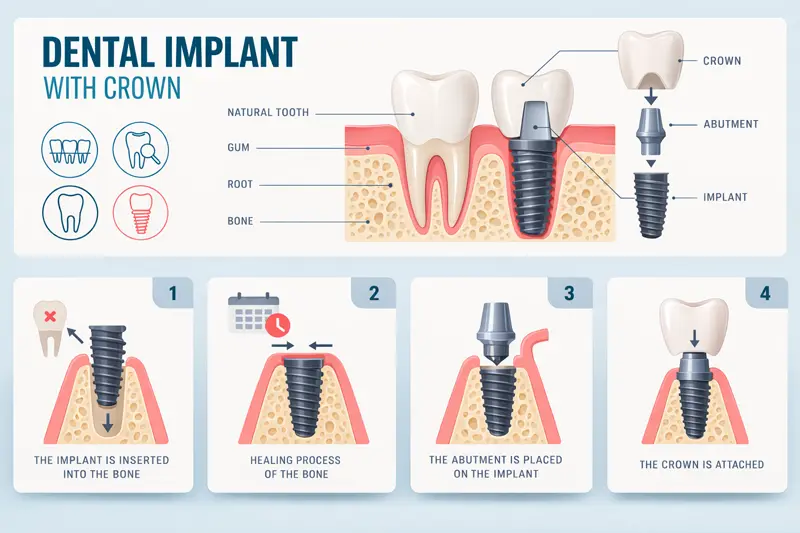
Dental implants are performed through several carefully planned medical stages aimed at replacing a missing tooth in a safe and permanent way. The procedure relies on placing a metal implant inside the jawbone to act as an artificial root, followed by the placement of the final crown after the healing stage is complete.
Total Time: 15 minutes
Examination and Planning
At the beginning, the dentist examines the mouth and teeth and performs the necessary X-rays to evaluate the condition of the jawbone and determine the appropriate site for placing the implant. This stage helps create an accurate treatment plan that ensures the success of the procedure.
Implant Placement
At this stage, the metal implant is placed inside the jawbone through a simple surgical procedure that is usually performed under local anesthesia. This implant acts as an artificial tooth root and provides a stable base for placing the new tooth.
Healing Stage
After placing the implant, the bone needs time to heal and integrate with it, a process known as osseointegration. This stage may take several weeks or months depending on the patient’s condition.
Crown Placement
After the healing stage is complete, the abutment is fixed over the implant, and then the dental crown is placed. The crown resembles natural teeth in shape and color, allowing the patient to restore both the smile and normal chewing function.
Estimated Cost: 360 EUR
Modern Dental Implant Techniques
Implant techniques have developed significantly in recent years, allowing dentists to replace missing teeth with different methods that suit each patient’s condition. The most appropriate technique depends on the number of missing teeth and the condition of the jawbone, as it is possible to replace one tooth, several teeth, or even a full set of teeth using advanced techniques.
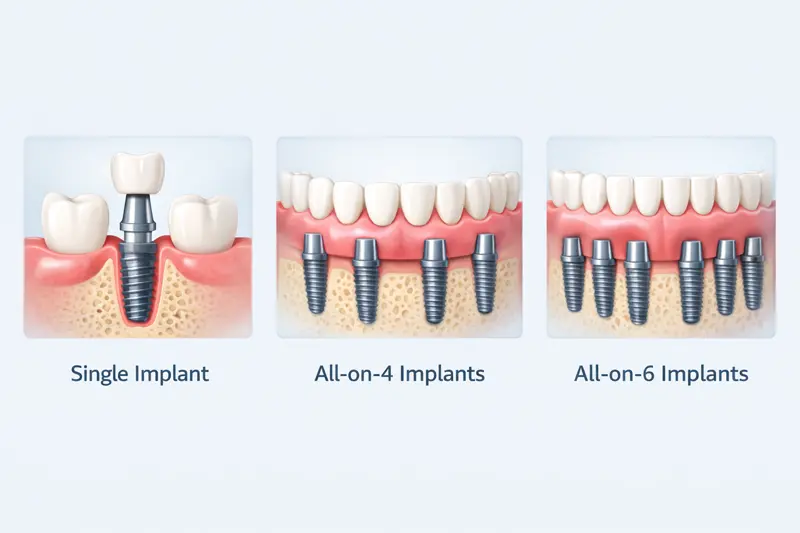
Modern dental implant techniques: single implant, All-on-4 and All-on-6
Single Tooth Implant
This technique is used when the patient has lost only one tooth. A metal implant is placed inside the jawbone in the area of the missing tooth, and then a dental crown is fixed on top of it to mimic the shape and function of the natural tooth without affecting the adjacent teeth.
All-on-4 Technique
The All-on-4 technique is used to replace all teeth in the jaw using only four implants placed in the bone at carefully planned angles. This method helps support a full bridge of teeth and is suitable for patients who have lost most of their teeth or suffer from jawbone loss.
All-on-6 Technique
The All-on-6 technique is based on placing six implants inside the jawbone to support a full set of fixed teeth. This technique provides greater stability and better distribution of chewing forces, making it a suitable option for many patients who want to restore their teeth in a permanent and natural way.
Full Jaw Dental Implants
Full jaw dental implants are used in cases where the patient has lost all teeth in one or both jaws. In this case, several metal implants are placed inside the jawbone, usually ranging from six to eight implants in each jaw, to provide strong support for a full set of fixed teeth.
After the implants are placed and integrated with the bone, a full dental bridge is fitted and specially designed to match the shape of the mouth and gums. This method helps restore chewing function naturally, significantly improves the appearance of the smile, and provides better stability compared to removable dentures.
Who Can Get Dental Implants?
Dental implants can be performed for most people who have lost one or more teeth and want to replace them with a permanent solution. However, the success of the procedure depends on several factors related to oral and bone health.
In general, a person is considered a good candidate for implants if they are in good overall health and have sufficient jawbone to support the implant. The gums should also be healthy and free from infection to ensure long-term success.
In some cases where the patient suffers from bone loss in the jaw, the dentist may perform additional procedures such as bone grafting before placing the implants to ensure proper stability.
Suitable Candidates for Dental Implants
- People who have lost one or several teeth
- Patients looking for a permanent alternative to removable dentures
- Individuals with healthy gums
- People with sufficient jawbone to support the implant
Cases That May Require Additional Evaluation
- Patients with jawbone loss
- Heavy smokers
- People suffering from advanced gum disease
- Certain chronic medical conditions that require medical consultation
Treatment Results Before and After
Dental implant results show a clear improvement in both the appearance of the smile and the function of the teeth. This technique replaces missing teeth in a natural way, allowing patients to regain their ability to chew and speak with greater confidence.
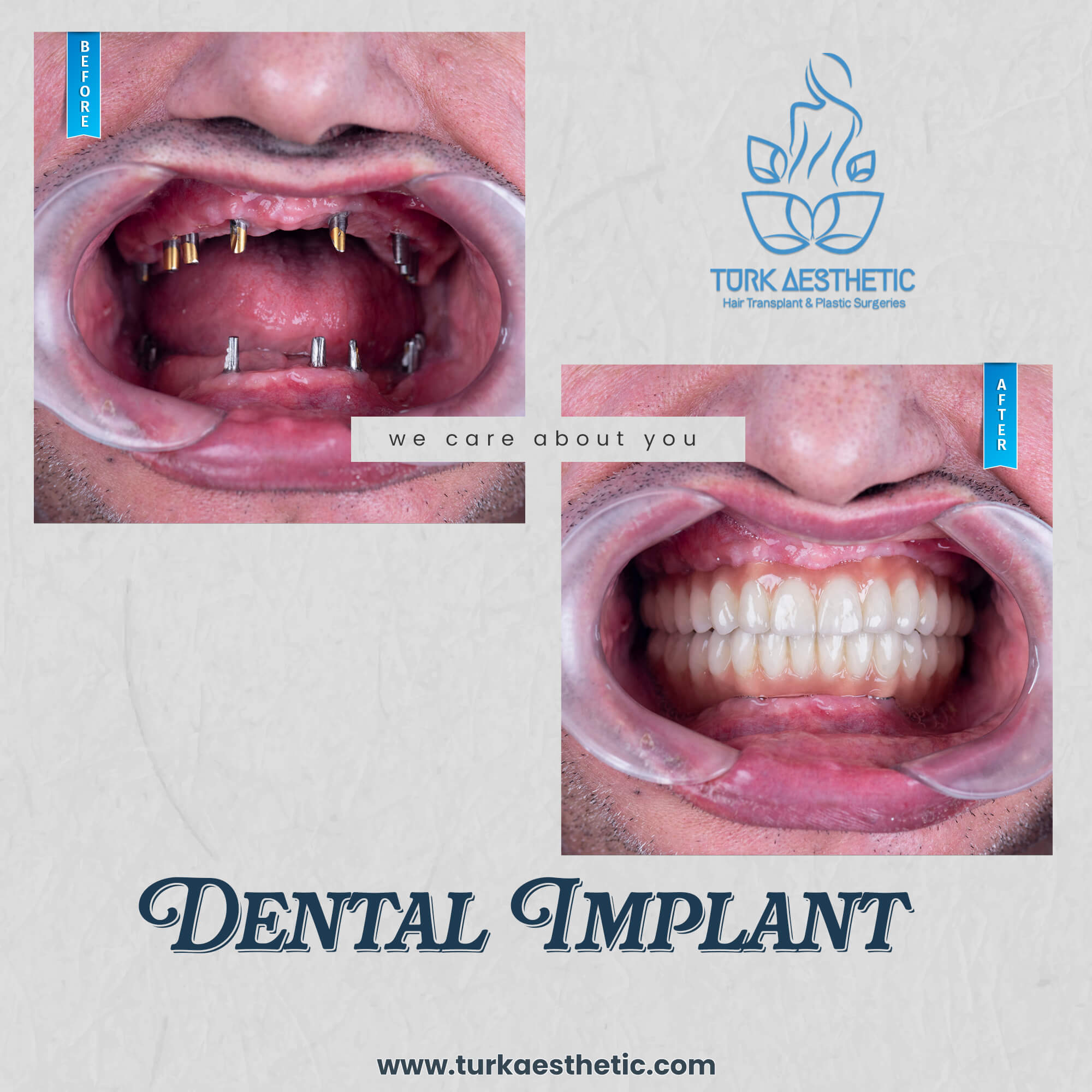
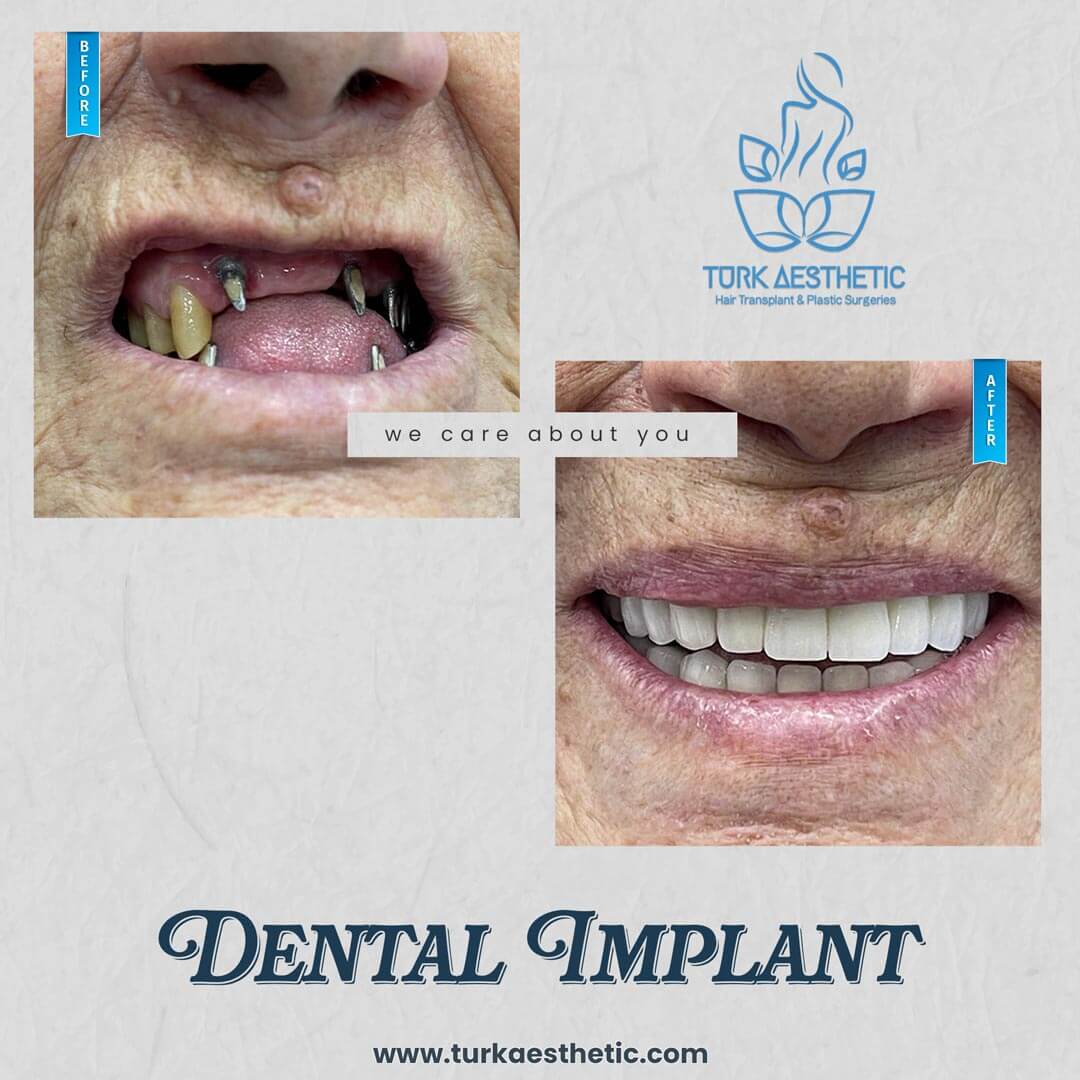
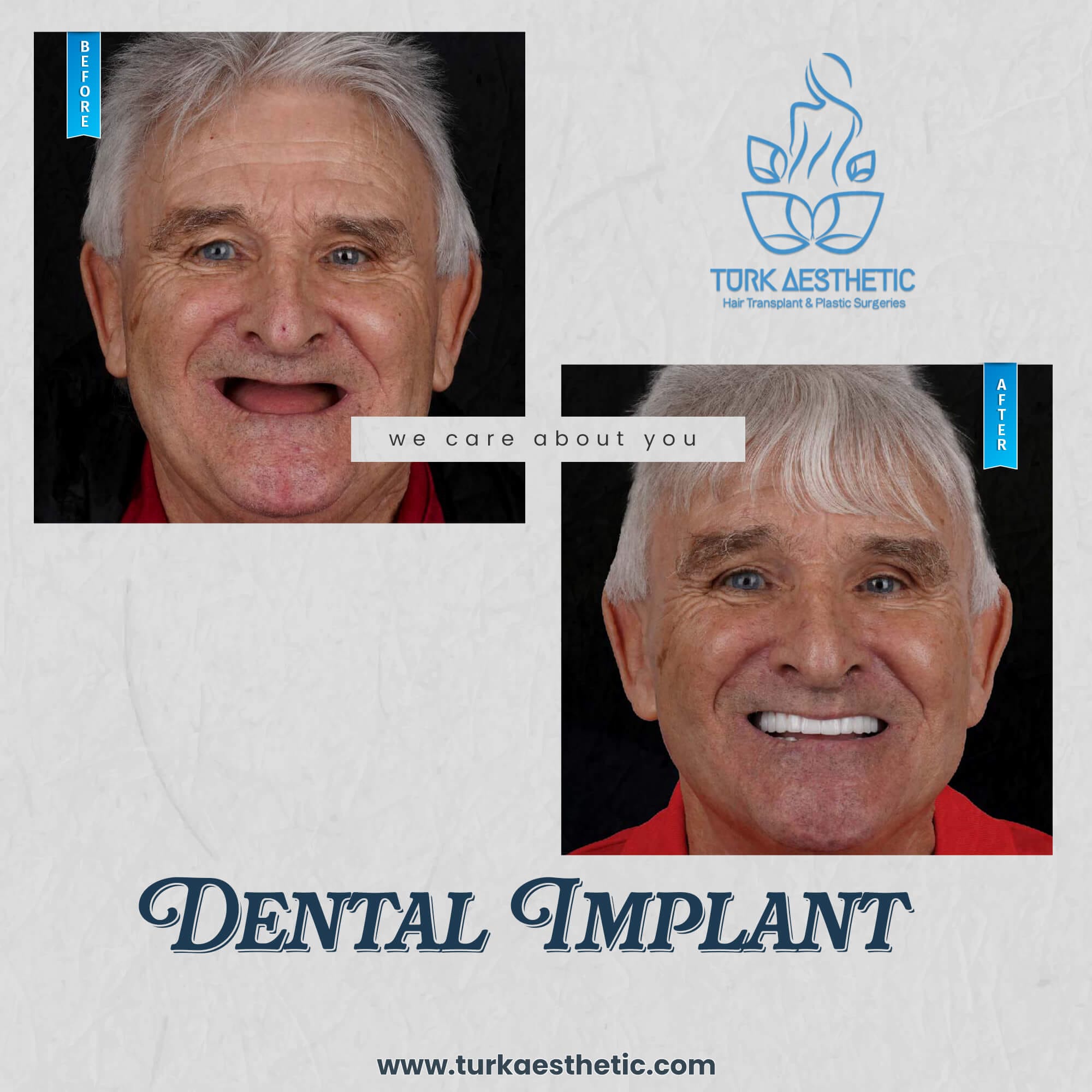
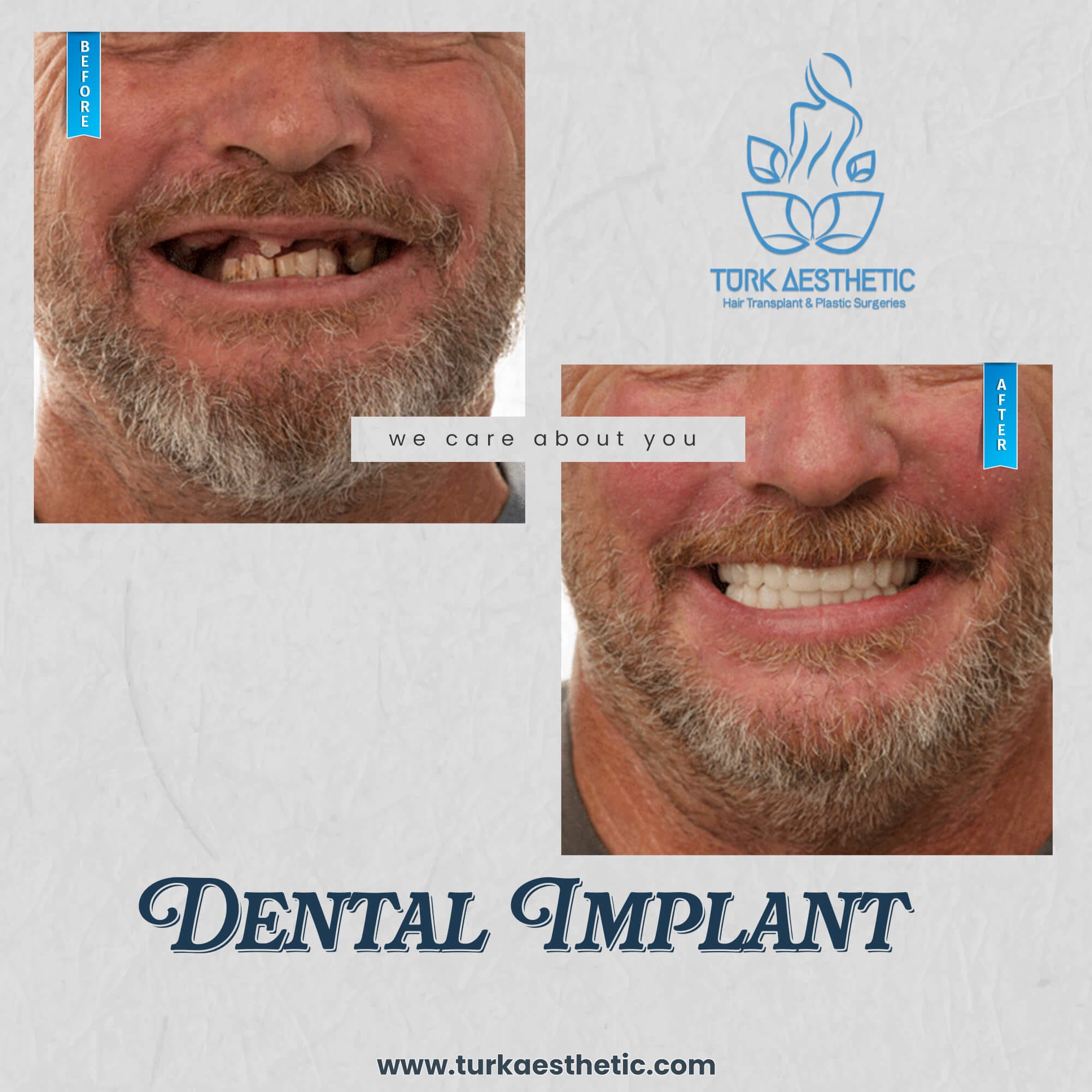
Before-and-after images clearly demonstrate the transformation that dental implants can achieve. Missing teeth are replaced with fixed implants designed to match the shape and color of natural teeth. Thanks to advancements in dental technology, results today are more precise and natural than ever, giving patients a balanced smile and a healthier appearance.
Benefits of Dental Implants
Dental implants offer many advantages compared to traditional methods of replacing missing teeth, such as bridges or removable dentures. They provide a stable and natural solution that helps restore both the function of the teeth and the appearance of the smile.
The main benefits include:
Restoring a Natural Smile
Dental crowns are designed to match the shape and color of natural teeth, giving the patient a balanced and natural-looking smile.
Improved Chewing Ability
Dental implants help restore strong chewing ability compared to removable dentures, allowing patients to eat comfortably.
Preserving the Jawbone
When teeth are lost, the jawbone may begin to shrink over time. Dental implants help preserve the bone by stimulating it in a similar way to natural tooth roots.
Long-Term Solution
Dental implants are considered a long-lasting solution for replacing missing teeth and can last for many years or even a lifetime with proper oral care.
Best Dental Implant Brands
The quality of dental implant treatment depends largely on the type of implants used. Most modern implants are made from titanium, a material known for its high ability to integrate with the jawbone, helping achieve strong stability and long-lasting results.
Many specialized clinics use internationally recognized implant brands known for their high manufacturing quality and success rates. Among the most well-known brands are Straumann from Switzerland, Nobel Biocare, and the Korean brand Osstem. These implant systems are widely used in modern dentistry due to their reliability and consistent results.
The dentist determines the most suitable implant type for each patient based on the condition of the jawbone and the proposed treatment plan.

If you would like to learn more details about the procedure of dental implants in Turkey, you can read the dedicated article that explains the treatment steps and important information related to the procedure. You can also visit the page about dental implant cost in Turkey to learn about the prices and the factors that may affect the cost of treatment.
Dental implants help restore a natural smile and significantly improve quality of life.
Frequently Asked Questions About Dental Implants
Are dental implants painful?
Dental implant procedures are usually not painful because they are performed under local anesthesia. Some mild discomfort or swelling may occur after the procedure, but these symptoms usually disappear within a few days and can be managed with medication prescribed by the dentist.
How long does a dental implant procedure take?
The treatment time varies depending on the patient’s condition and the number of implants needed. The implant placement itself usually takes about 30 to 60 minutes per implant, while the healing phase may take several weeks or months before the final crown is placed.
How long do dental implants last?
Dental implants are considered a long-term solution for replacing missing teeth and can last for many years or even a lifetime with proper oral hygiene and regular dental check-ups.
Can more than one tooth be replaced with dental implants?
Yes, dental implants can replace a single missing tooth, several teeth, or even a full set of teeth using techniques such as All-on-4 or All-on-6.
Who is a good candidate for dental implants?
Most people with good general health and sufficient jawbone are suitable candidates for dental implants. However, a dentist must perform a full examination before treatment to determine whether the procedure is appropriate.
When can I eat after dental implant surgery?
After the procedure, it is recommended to eat soft foods during the first few days and avoid hard foods until the area heals properly. The dentist will provide specific instructions depending on the patient’s condition.